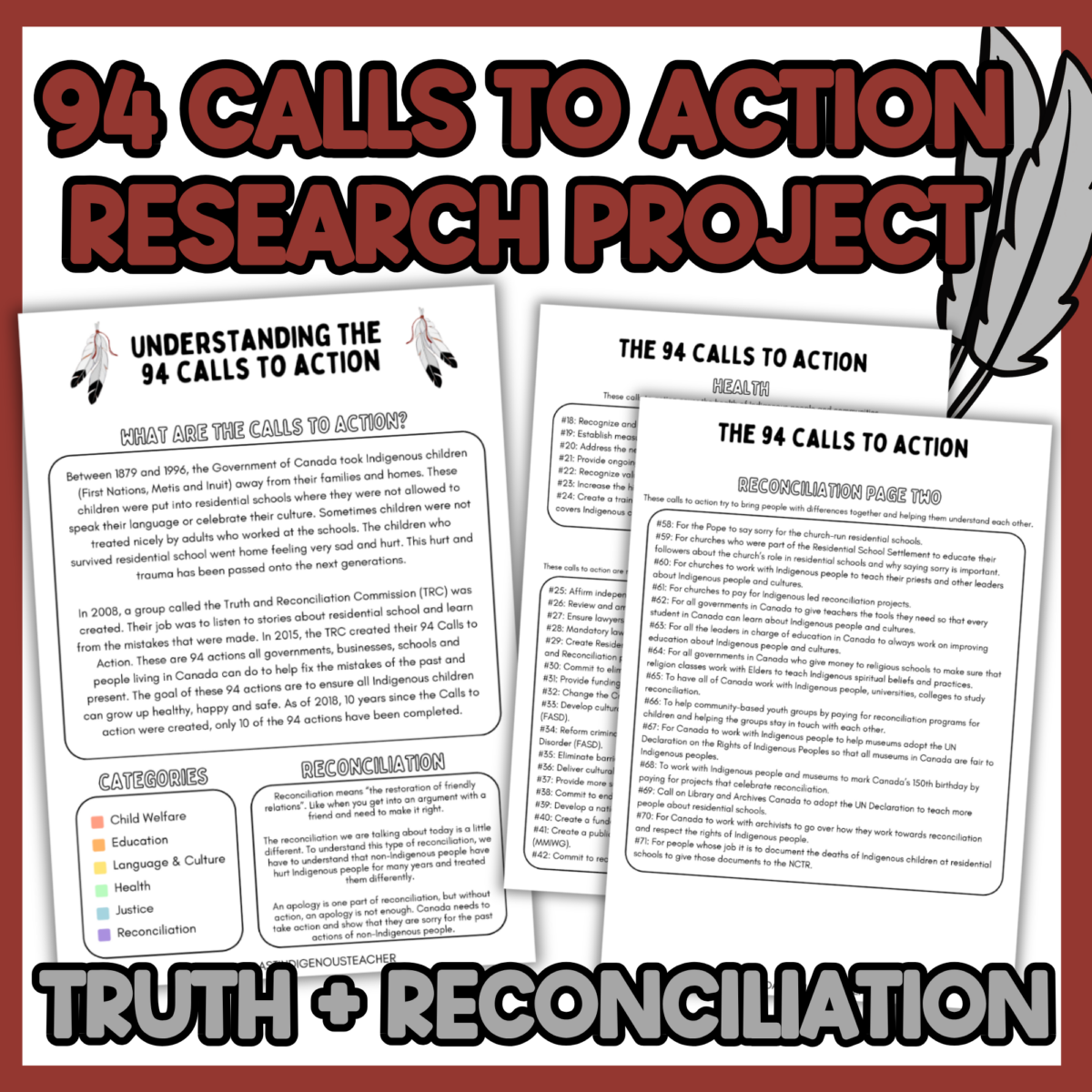
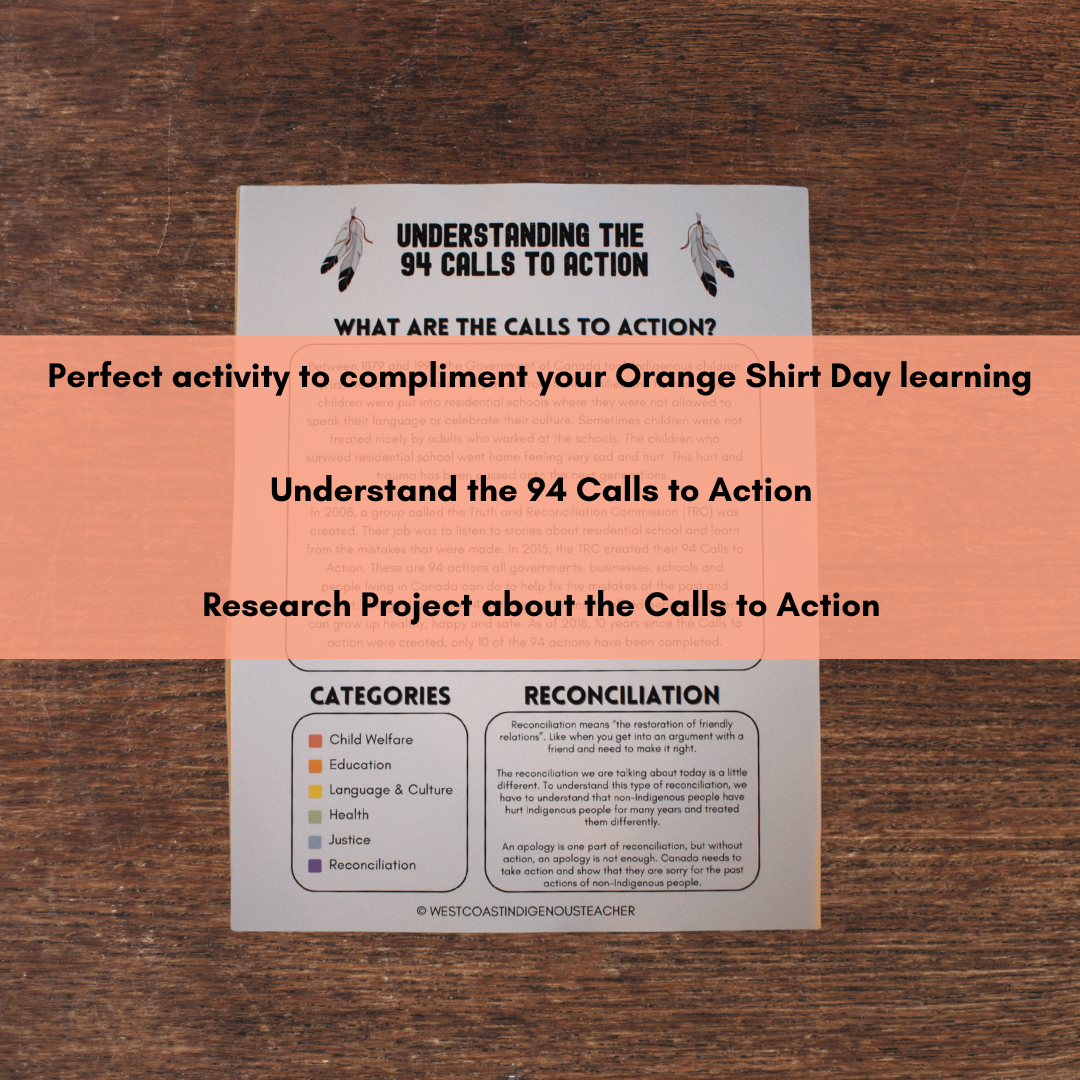
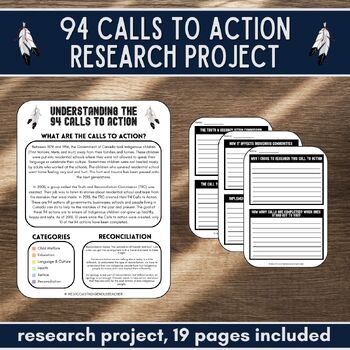

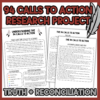
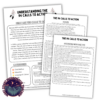

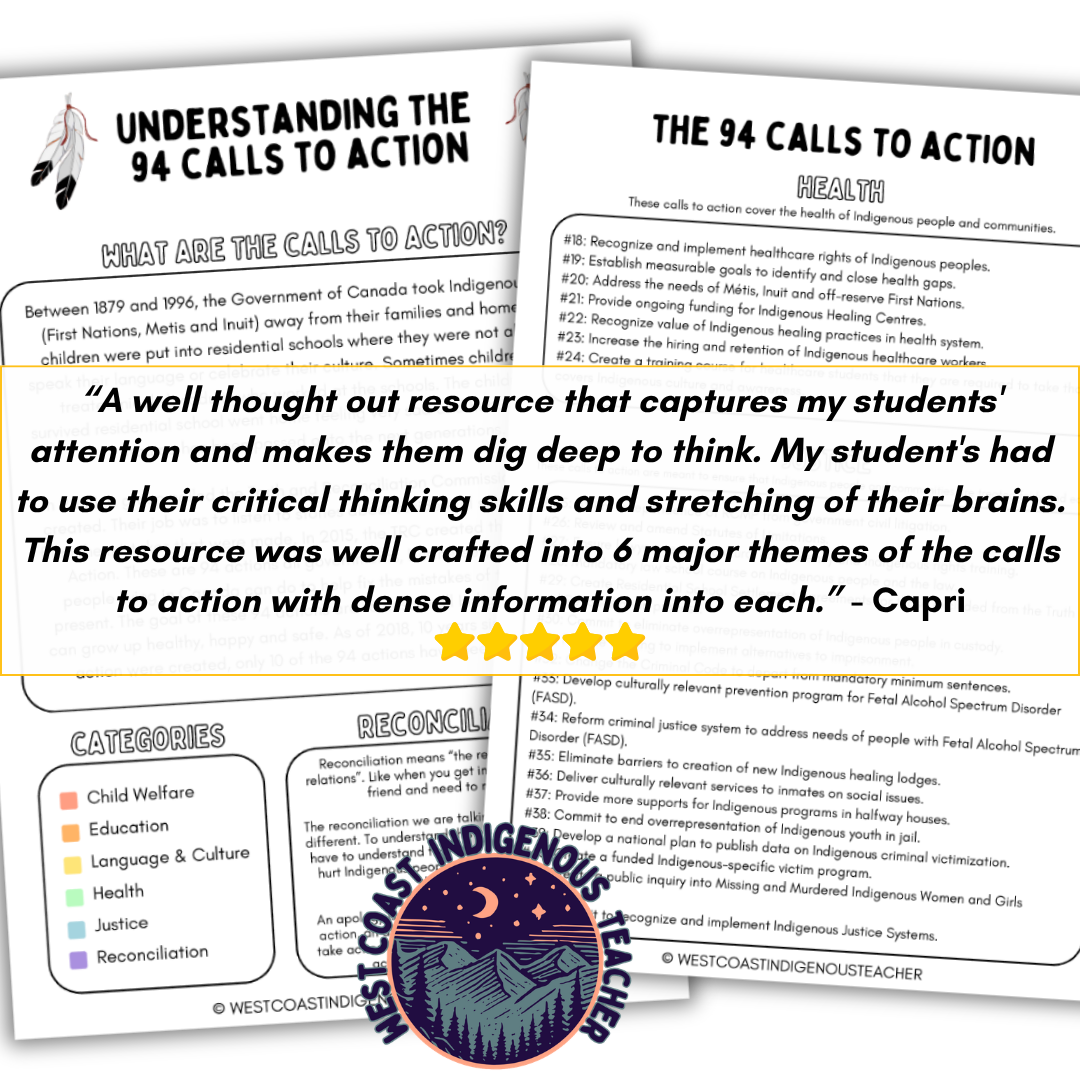
Looking for a meaningful 94 Calls to Action research project for intermediate or middle school students? This printable resource helps students understand the Truth and Reconciliation Commission’s Calls to Action and investigate Canada’s ongoing responsibilities toward reconciliation.
The Calls to Action were released in 2015 to address the legacy of residential schools and advance reconciliation in Canada. Students use the complete list, checklist and guiding questions to select and research a Call to Action in greater depth.
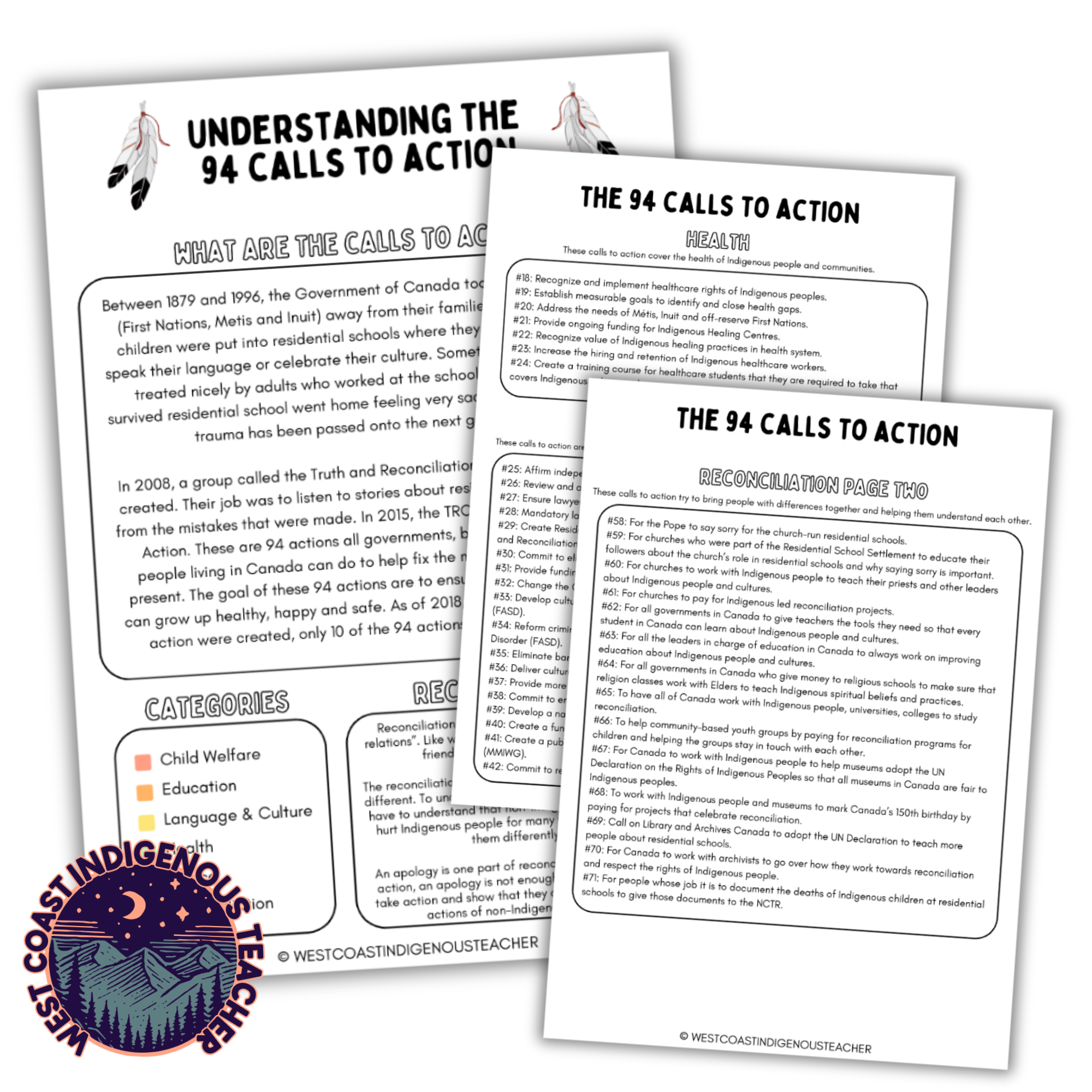
94 Calls to Action Project Includes
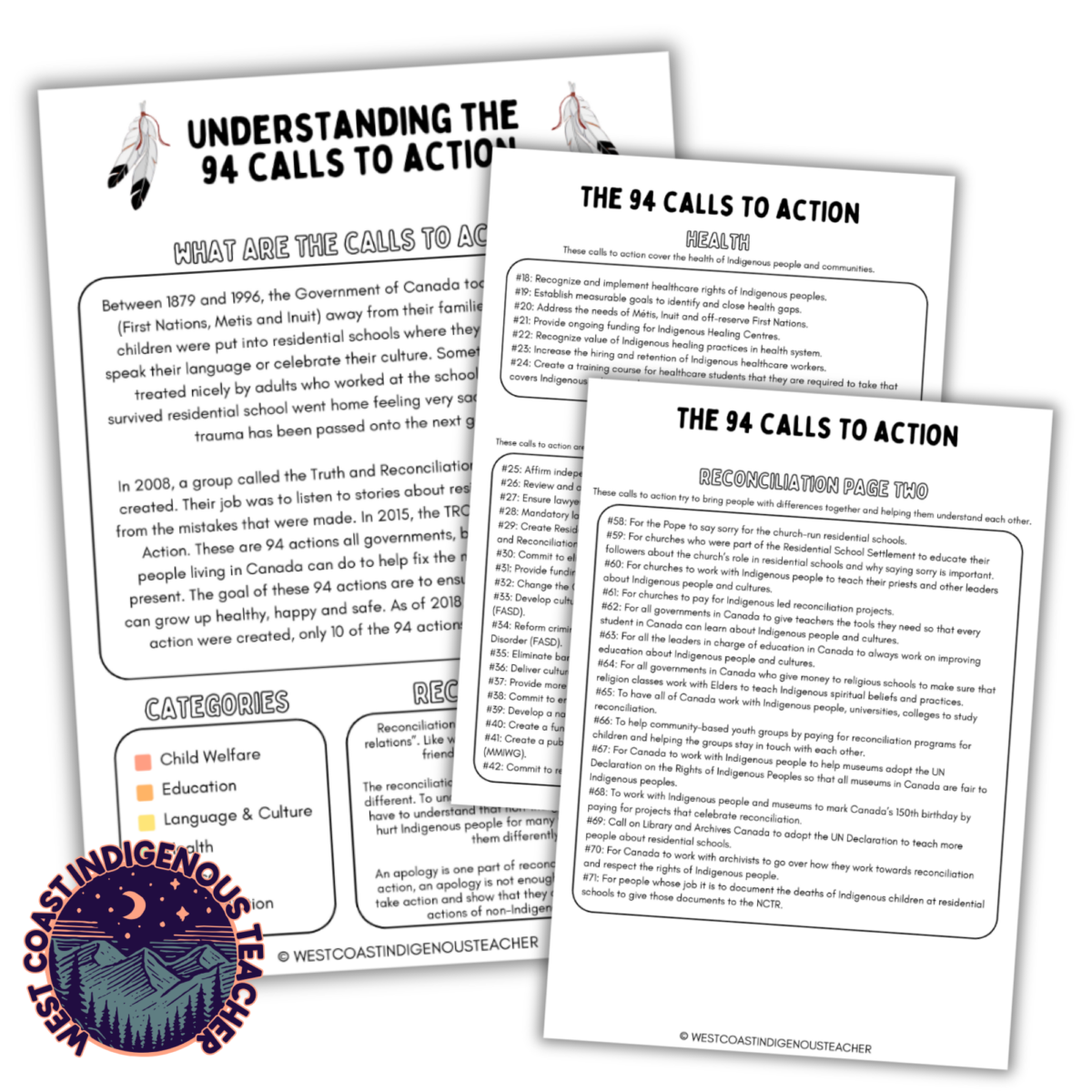
⟡ Introduction to the 94 Calls to Action
⟡ Complete list of all 94 Calls to Action
⟡ Calls to Action checklist
⟡ December 2023 progress snapshot
⟡ Guided student research project
⟡ Research questions and project directions
A Meaningful Reconciliation Research Project
Students select a Call to Action and investigate:
⟡ What the Call asks governments, institutions or Canadians to do
⟡ Why the Call is important
⟡ Who is responsible for implementing it
⟡ What progress has been made
⟡ What barriers may remain
⟡ Why continued action and accountability matter
This project encourages students to move beyond simply reading the Calls. They examine current progress, consider the responsibilities connected to reconciliation and communicate their findings through research and reflection.
Perfect For
⟡ Grades 5 and above
⟡ Intermediate and middle school classrooms
⟡ Truth and Reconciliation activities
⟡ Orange Shirt Day learning
⟡ National Day for Truth and Reconciliation
⟡ Indigenous education
⟡ Canadian history and social studies
⟡ Student inquiry and research
⟡ Learning beyond September 30
This 94 Calls to Action research project provides students with a structured way to investigate reconciliation in Canada while developing research, critical-thinking and communication skills.
Please note: The included progress information reflects reporting available in December 2023. Because assessments and implementation statuses change, teachers are encouraged to connect student research with current reporting from Indigenous-led and official sources.
IMPORTANT INFORMATION
The resources provided here are designed to support the teaching of Indigenous cultures, including First Nations, Métis, and Inuit peoples. It is important to recognize that these communities are not monolithic; beliefs, traditions, and practices vary greatly from Nation to Nation, and even from community to community. The content shared in these materials reflects my own lived experience and understanding of Indigenous cultures, but it does not encompass the full diversity or richness of these traditions.
I encourage educators to approach these resources with respect, sensitivity, and openness to learning. When possible, please engage with local Indigenous communities or cultural experts to ensure that the information shared is accurate and culturally appropriate for the specific Nations or groups you are teaching about.
These resources are intended to foster understanding and appreciation for Indigenous people.
Reviews
There are no reviews yet.