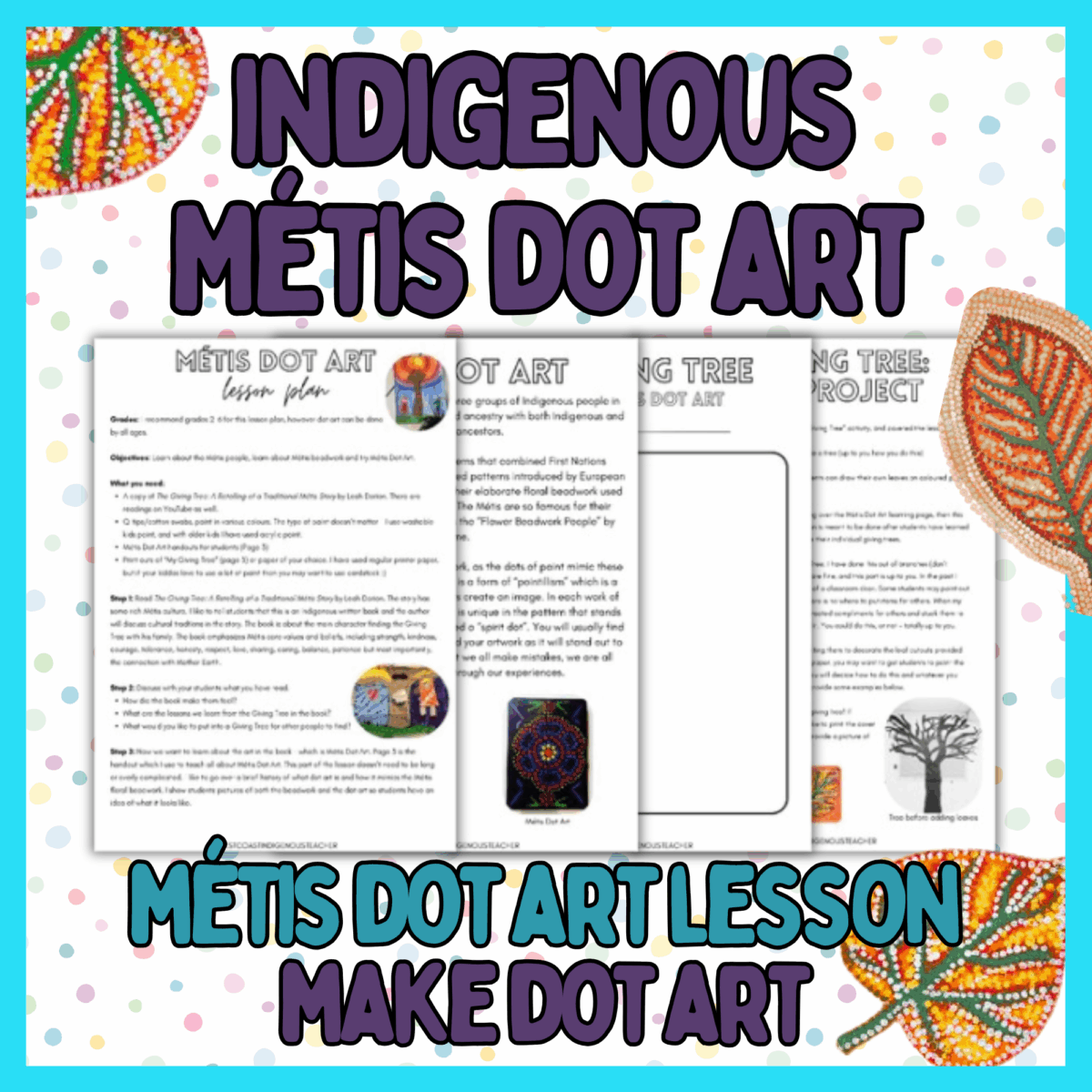

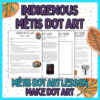
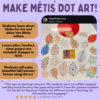

Looking for a meaningful Métis Dot Art activity for your fall classroom? This eight-page Indigenous art resource combines cultural learning with an individual autumn leaf activity and a collaborative Giving Tree class project.
Students learn about Métis culture, beadwork and contemporary dot-painting techniques before creating their own artwork. Printable leaf templates make this an approachable fall leaf art activity for a range of ages and artistic abilities.
Métis Dot Art Lesson and Activities
✧ Métis Dot Art lesson
✧ Introduction to Métis culture and art
✧ Learning about Métis beadwork
✧ Teacher lesson plan
✧ Student handout
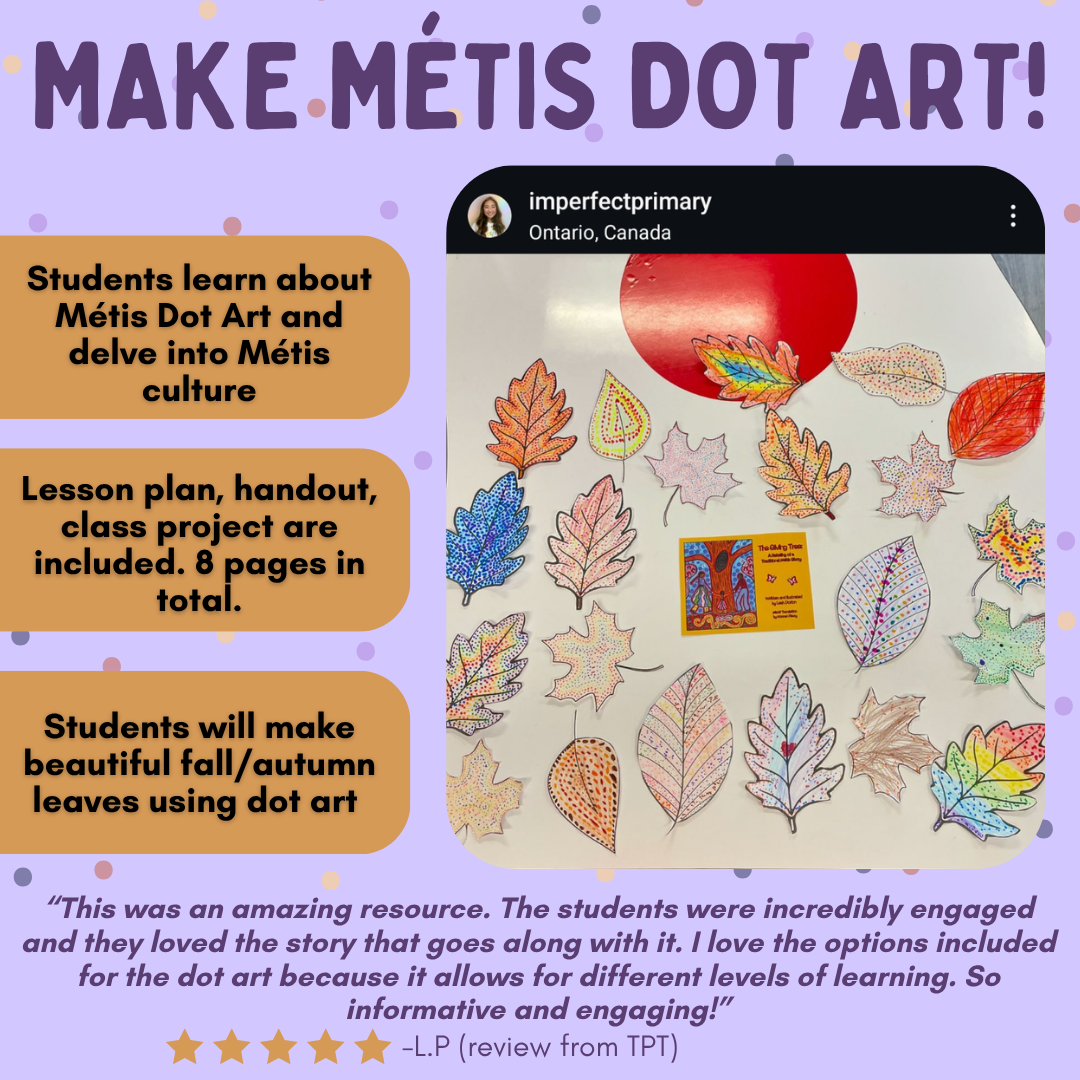
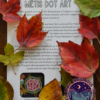
✧ Individual fall leaf art activity
✧ Printable autumn leaf templates
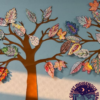
✧ Collaborative Giving Tree project
✧ Indigenous art class display
✧ Eight-page printable resource
Learn About Métis Dot Art
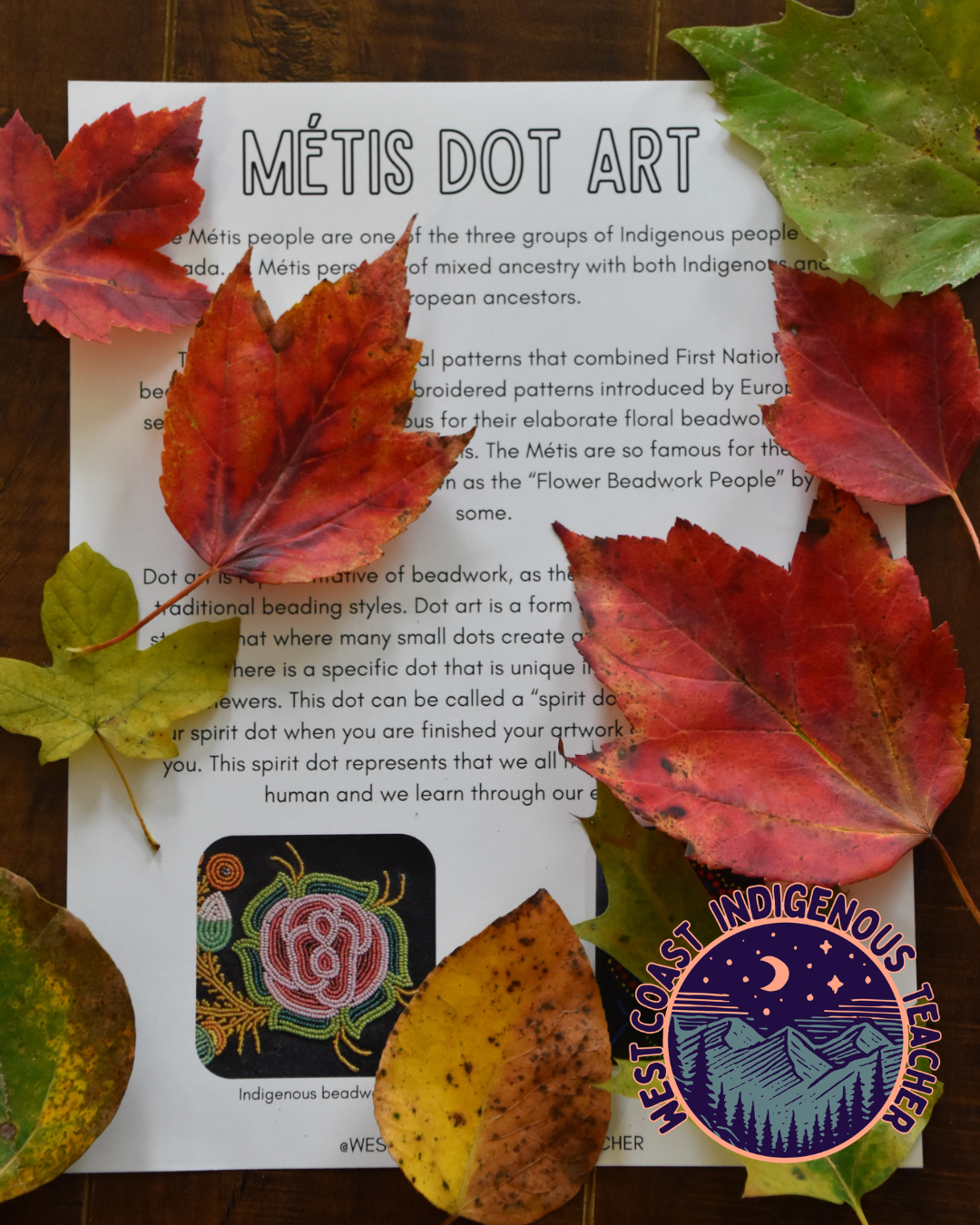
Métis Peoples are widely known for their detailed floral beadwork, which has earned the Métis the historical description “Flower Beadwork People.”
Students learn how a contemporary Métis Dot Art activity uses small dots of paint to visually echo the detailed appearance of beadwork. The lesson provides cultural context before students begin creating so the project is connected to learning rather than presented as a disconnected fall craft.
Fall Leaf Art Activity
Students use the included leaf printables to create individual dot-art designs. They can experiment with colour, pattern, spacing and symmetry while developing patience and fine motor control.
The autumn leaves make this resource especially useful as a:
✧ September art activity
✧ October art project
✧ Fall leaf craft
✧ Indigenous Peoples Day activity
✧ Métis culture lesson
✧ Visual arts and social studies connection
Collaborative Giving Tree Project
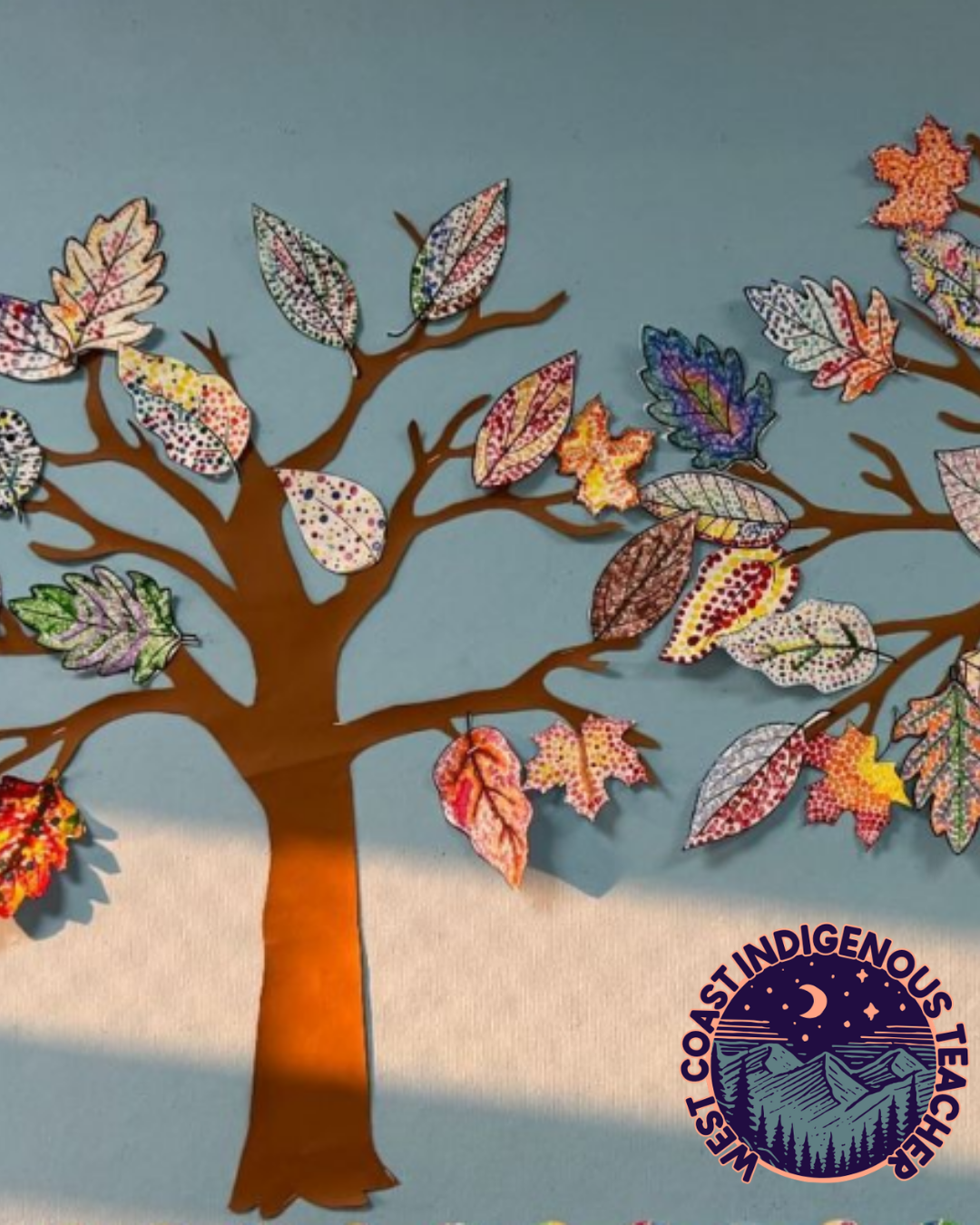
Individual student leaves can be combined to create a colourful collaborative Giving Tree.
This class project allows every student to contribute a unique piece to one larger display. The completed tree works beautifully on a classroom bulletin board or hallway display throughout the fall.
Created With Métis Guidance
Because I am First Nations rather than Métis, this lesson and art activity was created with help and guidance from a Métis educator.
This resource introduces one accessible Métis art connection. Teachers should continue learning from Métis artists, authors, educators and organizations whenever possible.
Perfect For
✧ Métis Dot Art activities
✧ Indigenous art lessons
✧ Fall art activities
✧ Autumn leaf crafts
✧ Elementary visual arts
✧ Canadian social studies
✧ Métis culture lessons
✧ Indigenous education
✧ National Indigenous History Month
✧ Indigenous Peoples Day
✧ Collaborative classroom displays
✧ Art and social studies integration
This printable Métis Dot Art activity helps students explore Métis culture and beadwork before completing an engaging individual art activity and collaborative fall classroom project.
Explore More Indigenous Art Activities
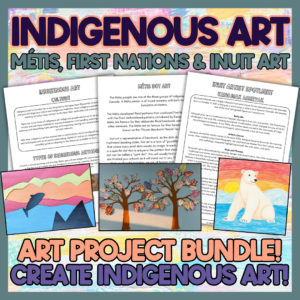
This resource is included in the Indigenous Art Lesson Plans Bundle, featuring First Nations, Métis and Inuit art lessons and projects.
Continue learning about Métis Dot Art with these related resources:
- 7 Sacred Teachings Métis Dot Art Activity
- Four Seasons Métis Dot Art Activity
- Métis Dot Art Poppy Wreath
- Métis Culture, History and Art Bundle
Explore additional Indigenous art projects:
- First Nations Art Lesson and Bulletin Board
- Inukshuk Art Project and Inuit Lesson
- Indigenous Art Animal Directed Drawing Bundle
- Browse the complete shop
IMPORTANT INFORMATION
The resources provided here are designed to support the teaching of Indigenous cultures, including First Nations, Métis, and Inuit peoples. It is important to recognize that these communities are not monolithic; beliefs, traditions, and practices vary greatly from Nation to Nation, and even from community to community. The content shared in these materials reflects my own lived experience and understanding of Indigenous cultures, but it does not encompass the full diversity or richness of these traditions.
I encourage educators to approach these resources with respect, sensitivity, and openness to learning. When possible, please engage with local Indigenous communities or cultural experts to ensure that the information shared is accurate and culturally appropriate for the specific Nations or groups you are teaching about.
These resources are intended to foster understanding and appreciation for Indigenous people.