Looking for Treaties Recognition Week activities to help you introduce treaties in your elementary classroom? A student booklet, a map activity, and thoughtful discussion can give students a starting point for learning about treaties in Canada and why they continue to matter today.
As an Indigenous educator, I create resources to help teachers approach Indigenous content with confidence and care. My Treaty Week Booklet and Treaty Recognition Week resource offer two ways to bring this learning into your classroom, during a recognition week or throughout the school year.
What Is Treaties Recognition Week?
Treaties Recognition Week is an opportunity to learn about treaties, treaty relationships, and the responsibilities connected to them. Ontario recognizes the week in November, while other places may recognize treaties at different times of the year. Check local information when planning your lessons.
Treaties are not simply events from the past. They are living agreements with ongoing significance. Helping students understand that connection is an important part of treaty education.
Your Treaties Recognition Week activities can begin with a few questions:
- What is a treaty?
- Who are the treaty partners?
- Why do treaties matter today?
- What can we learn about treaties and the land where we live?
Students do not need to understand every detail in one lesson. The goal is to build a foundation that you can return to and deepen over time.
Teaching Treaties in Canada: Where to Begin
Before choosing activities, make space for local learning. Treaty histories and relationships differ across Canada, and not all land is covered by a treaty.
Look for information shared by the local First Nation, a treaty education organization, or your school district’s Indigenous education team. These sources can help connect a general introduction to the specific place where your students live and learn.
It is also helpful to introduce treaties as agreements between Nations. Familiar examples of promises and responsibilities can support discussion, but students should understand that treaties involve rights, relationships, and obligations that extend far beyond an everyday classroom promise.
Explore Treaties With a Student Booklet
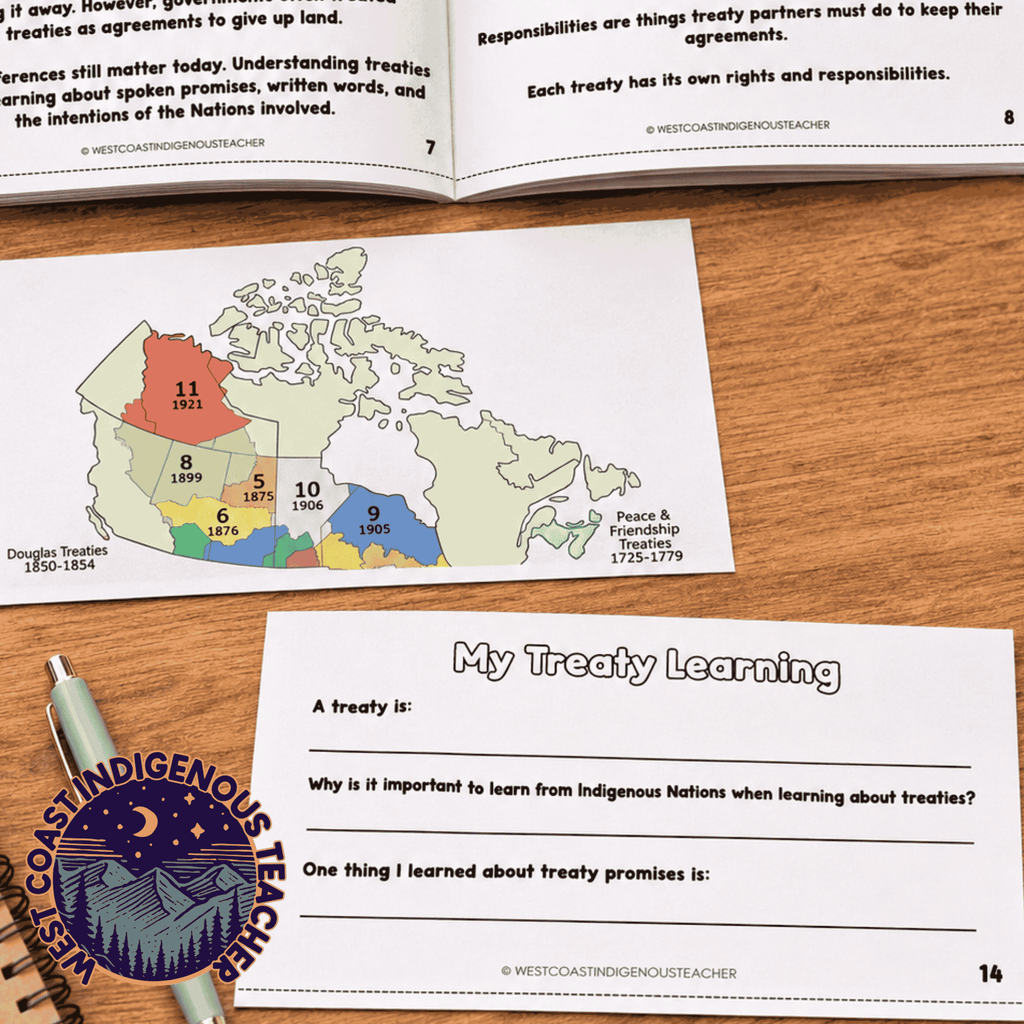
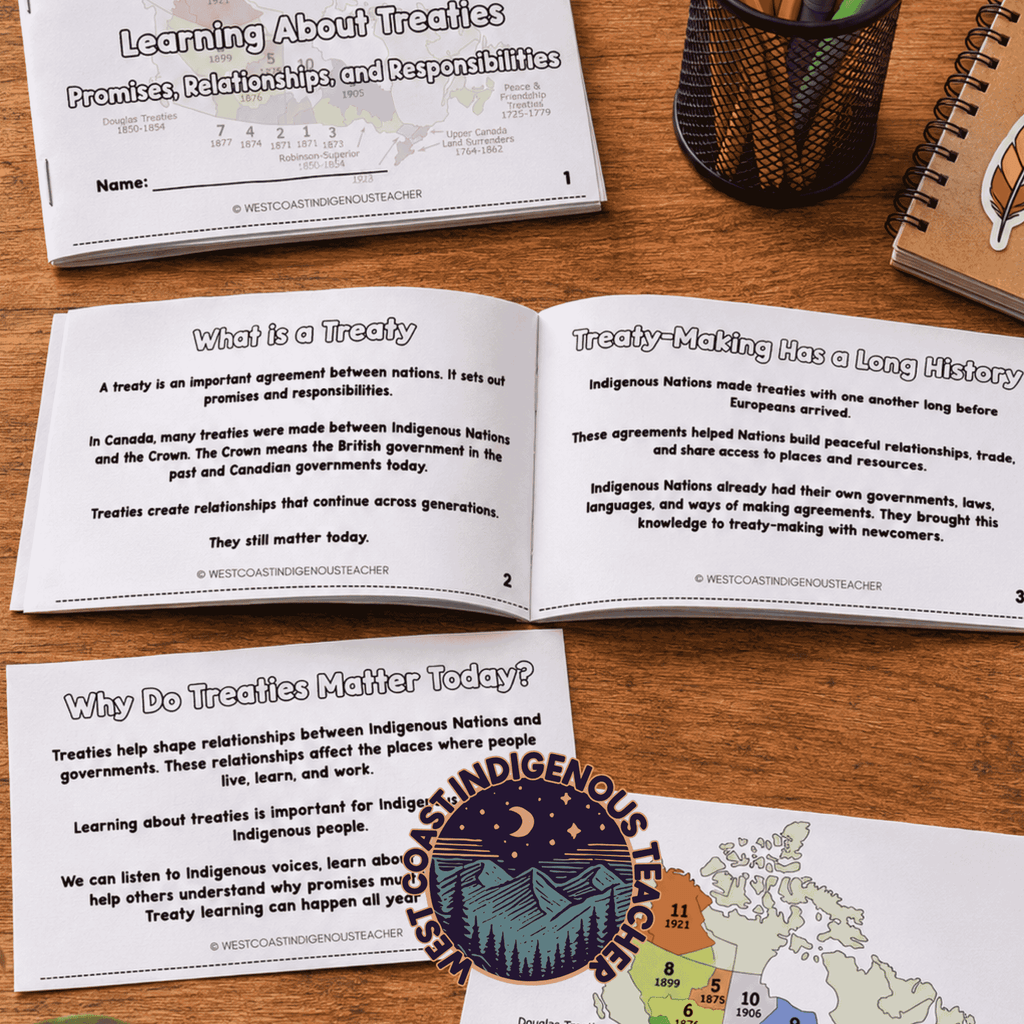
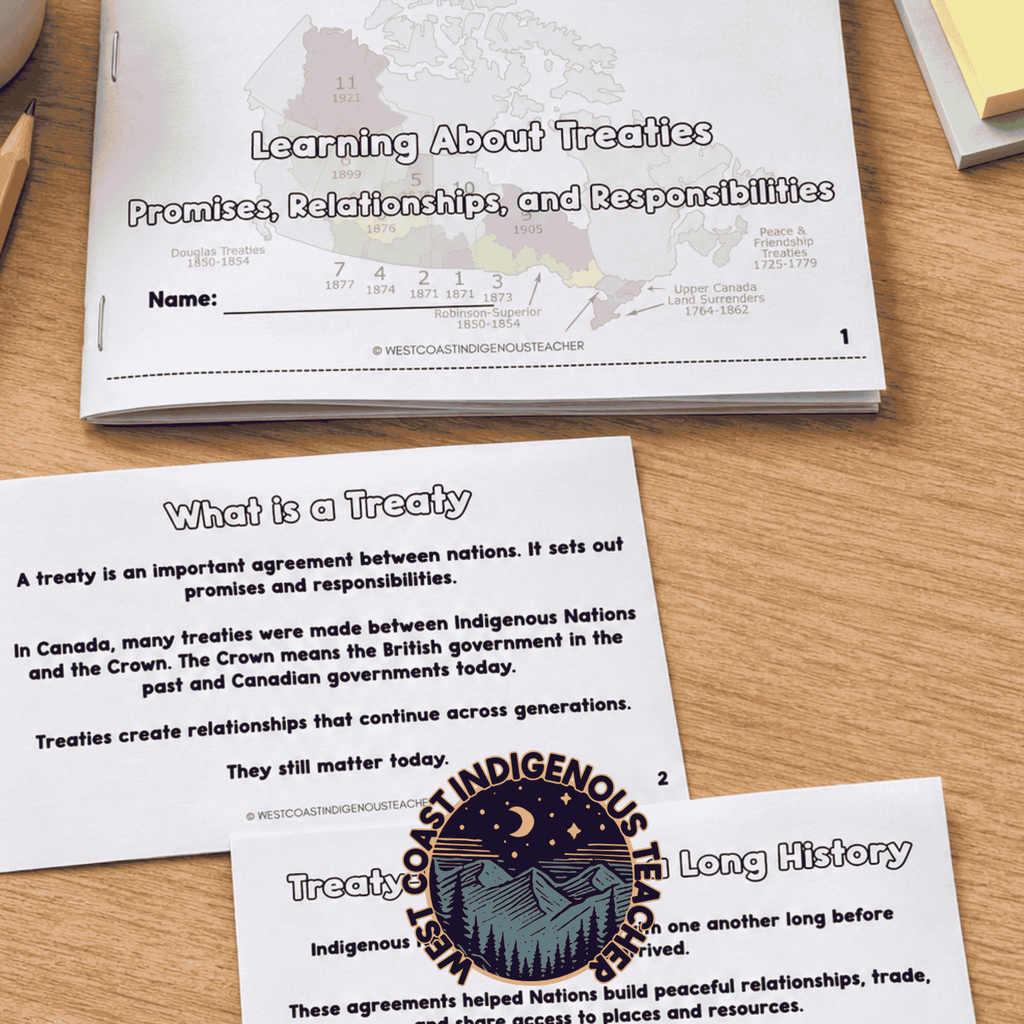
My Treaty Week Booklet gives students a resource of their own as they learn about treaties in Canada.
The half-page booklet format offers a way to work through the topic in smaller sections. You can read together, pause to explain unfamiliar vocabulary, and invite students to share questions before moving on.
A few ways to use the booklet include:
- Reading a section together during a social studies lesson.
- Building a class list of new words and questions.
- Revisiting the booklet during later learning about land, relationships, and responsibilities.
- Inviting students to share something they learned with someone at home.
You can spread the reading across several lessons to give students time to think and make connections.
Explore the Treaty Week Booklet here.
Extend Learning With Treaty Activities and Reflection
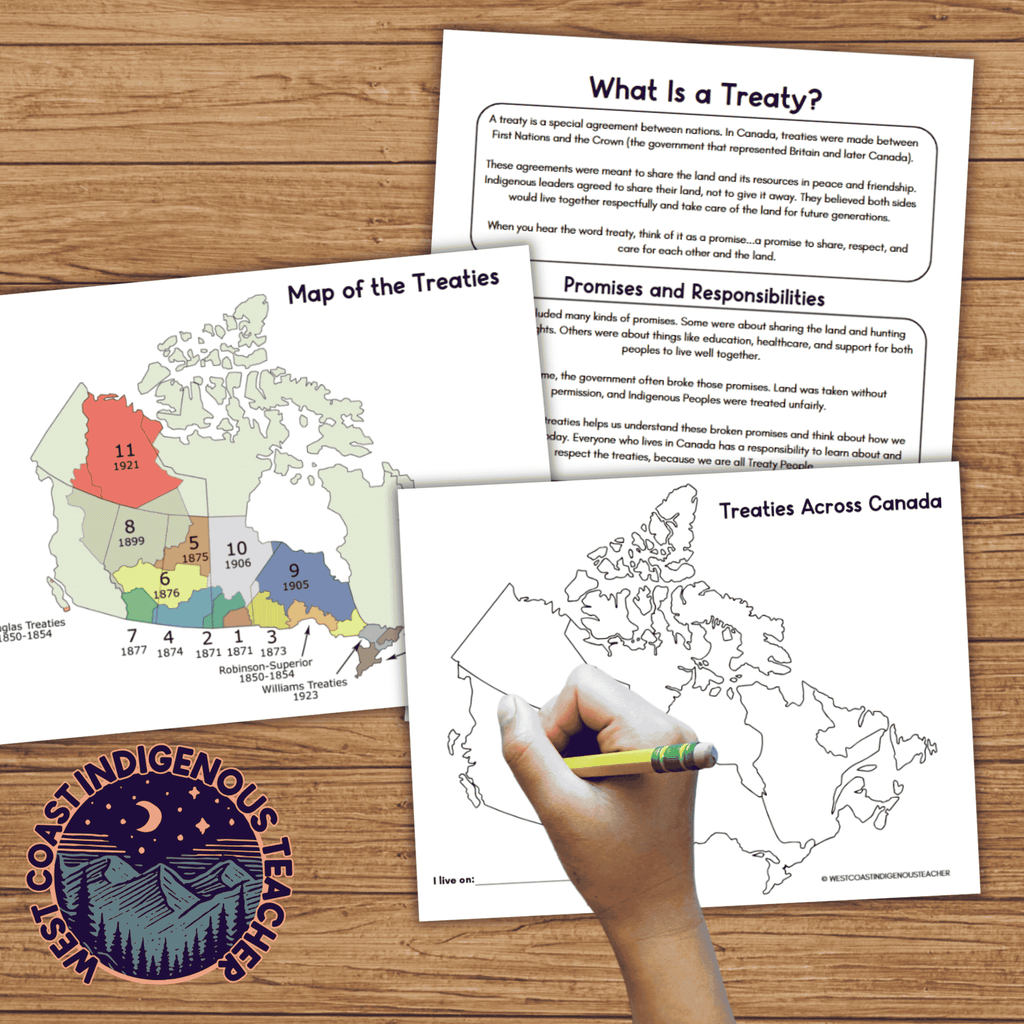
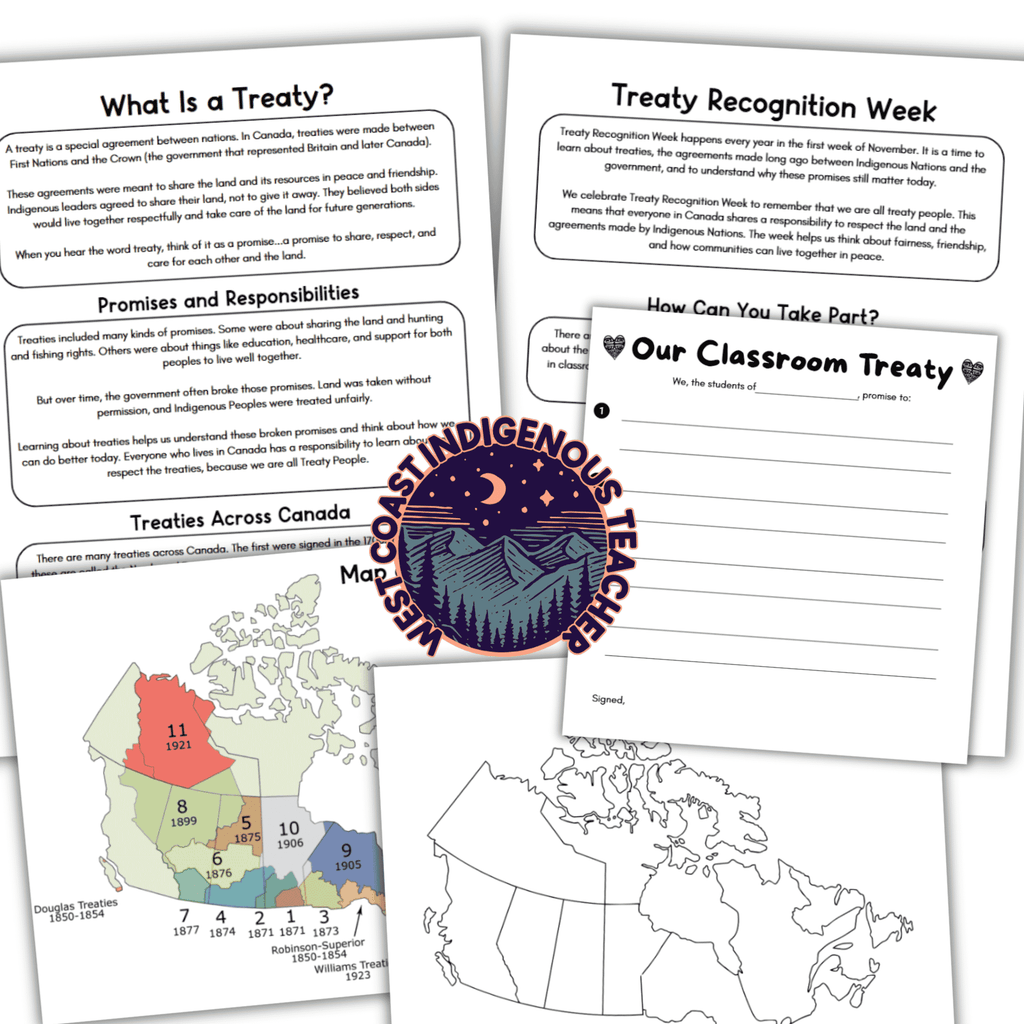
If you are looking for additional Treaties Recognition Week activities, my Treaty Recognition Week resource includes:
- A seven-page lesson.
- Treaty reflection questions.
- A treaty map activity.
- A classroom treaty activity.
- A treaty bulletin board kit.
The map activity offers a starting point for exploring place and asking questions about treaty relationships. Pair it with reliable local information so students can connect their learning to the area where they live.
Reflection questions give students time to think about what they have learned and identify what they still wonder about. You can use these for class discussions, partner conversations, or written responses.
The classroom treaty activity can support conversations about shared responsibilities and honouring commitments. When introducing it, explain that a classroom agreement is a learning activity; it does not carry the same meaning or legal status as a treaty between Nations.
Explore the Treaty Recognition Week resource here.
Using These Two Resources Together
You can begin with the booklet to introduce the topic, then extend learning with the lesson, map activity, and reflection questions.
Choose the parts that suit your students’ needs and the time you have available. Leave room for questions, revisit ideas that need more explanation, and bring in local Indigenous voices and sources throughout your learning.
The resources can support your planning while you build connections to your own classroom and community.
Continue Treaty Learning Throughout the Year
Treaties Recognition Week activities can open an important conversation, but treaty learning belongs throughout the school year.
Return to students’ questions during social studies, local history, mapping, and learning about land and community. Help students recognize that Indigenous Nations are present-day communities and that treaty relationships continue today.
You do not need to have every answer before you begin. Prepare thoughtfully, use reliable sources, and show students that learning includes asking questions and returning to them.