Finding meaningful Indigenous education resources for teachers isn’t always easy. There are so many topics to explore, perspectives to consider, and resources to choose from. And when you’re already juggling everything else that comes with teaching, it can feel like a lot.
As a Nuučaan̓ułʔatḥ educator and former elementary classroom teacher, I understand how much time and care goes into planning meaningful learning experiences.
One of the reasons I started West Coast Indigenous Teacher was to help make Indigenous education more approachable for educators who want to include it in their classrooms with confidence and care.
And now, I’m trying something new!
Indigenous Education Belongs Throughout the School Year
Indigenous education isn’t something that should only happen on September 30, Indigenous Peoples Day, or other significant dates.
There are opportunities to include Indigenous perspectives throughout the school year, whether you’re exploring local landforms in science, learning about Indigenous veterans, reading books by Indigenous authors, or helping students understand whose traditional lands their school is on.
These don’t always need to be elaborate lessons.
Sometimes meaningful learning begins with a question, a story, a conversation, or a classroom activity that encourages students to think a little more deeply.
The important part is making sure the learning goes beyond simply completing an activity.
Finding Indigenous Teaching Resources That Support Meaningful Learning
When choosing Indigenous classroom resources, I encourage teachers to look beyond the printable itself.
Consider asking:
- Who created this resource, and whose perspectives are represented?
- Does it identify specific Indigenous Nations, communities, or cultures where appropriate?
- Does it include Indigenous Peoples and communities in the present day?
- Is there enough background information to help me teach the topic accurately?
- How can I connect this activity to further learning?
A beautiful classroom display can be a wonderful starting point, but the conversations and understanding behind it are what matter most.
I also encourage teachers to begin locally whenever possible. Learn about the Indigenous Nations connected to where you teach and look for information those Nations have chosen to share.
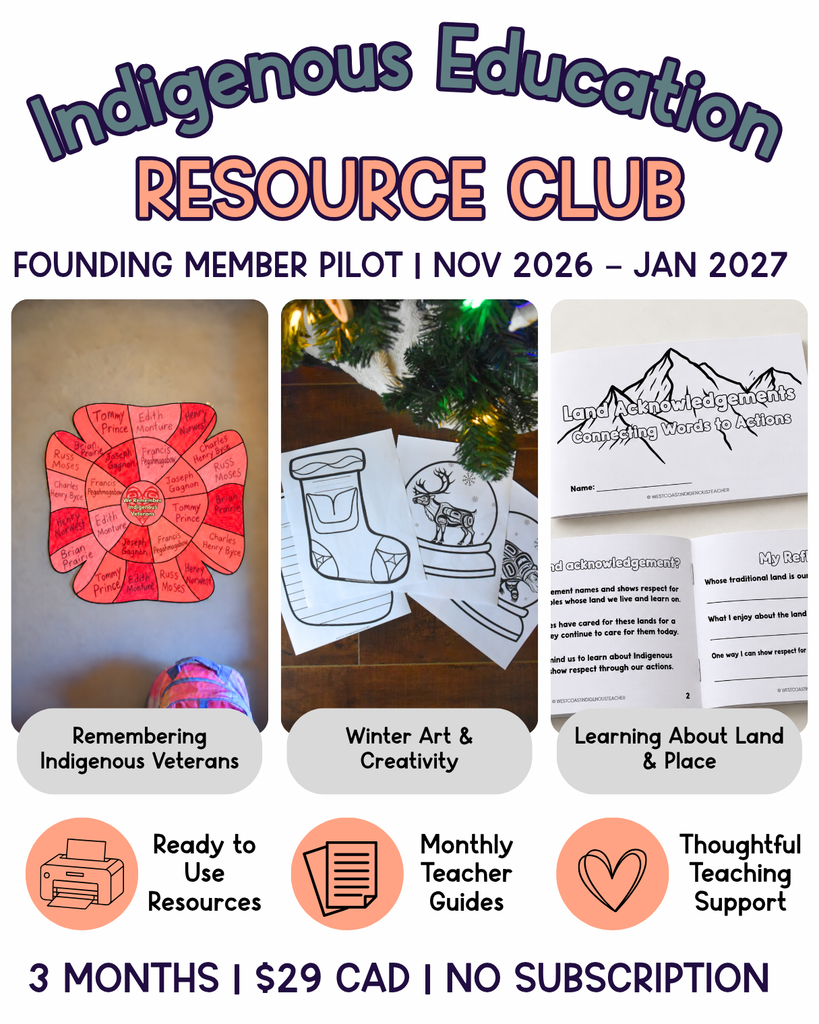
Introducing the Indigenous Education Resource Club!
I’ve been thinking about how I can offer teachers a little more support beyond my individual classroom resources.
That’s where the West Coast Indigenous Teacher Resource Club comes in!
I’m launching a small, three month founding member pilot that combines ready-to-use Indigenous education activities with practical teaching guidance.
Each month, members receive:
- Classroom ready resources: Printable activities that can be used with students.
- A teacher’s guide: Background information, teaching suggestions, discussion prompts, and meaningful learning connections.
- Thoughtful teaching support: Ideas to help educators feel more confident incorporating Indigenous content into their classrooms.
My hope is that these teaching companions help you understand not only what to teach, but also how to make the learning more meaningful.
What’s Included in the First Three Months?
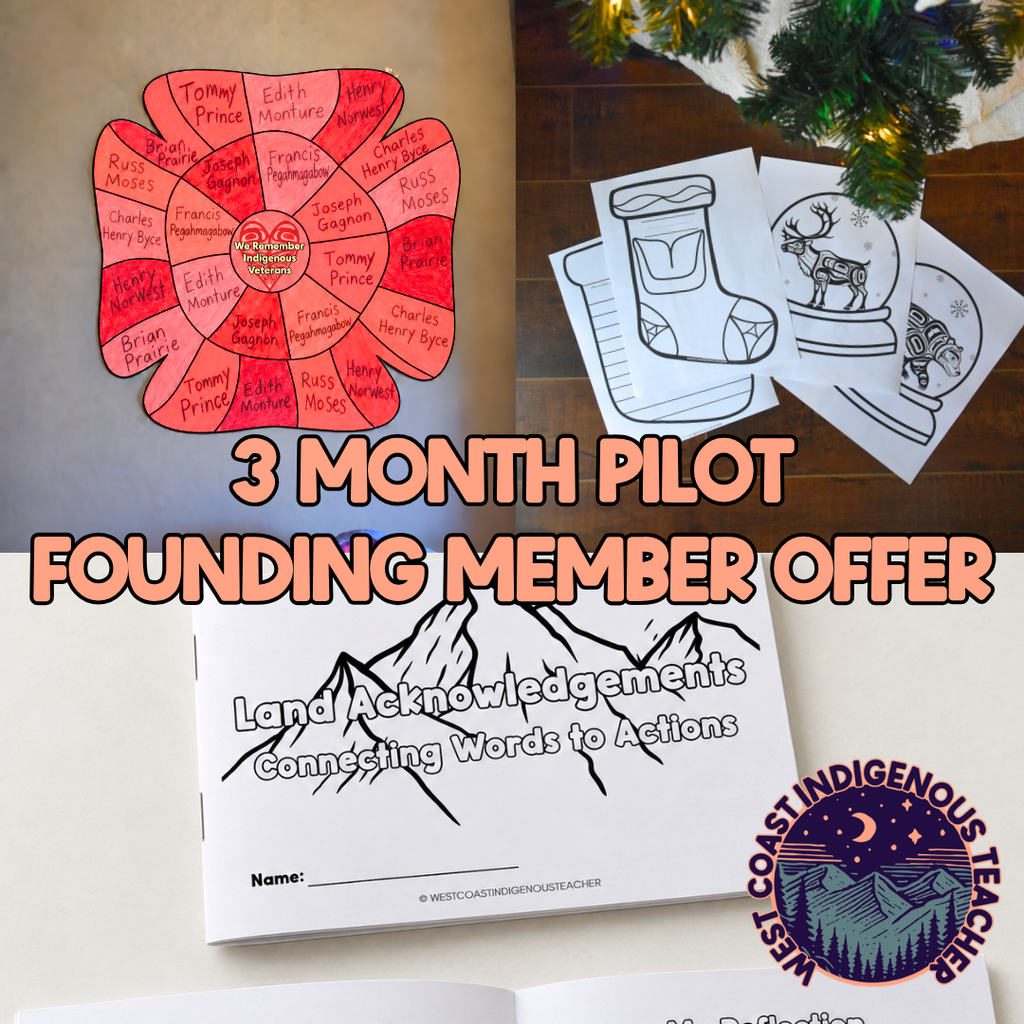
November: Remembering Indigenous Veterans
Our first collection features my Giant Collaborative Poppy resource, accompanied by a three-page teacher’s guide.
Students work together to create a large poppy display while learning about Indigenous veterans, their service, and their experiences.
The guide includes historical background, lesson suggestions, discussion questions, and opportunities to continue learning.
December: Winter Art & Creativity
December brings my snow globe and stocking crafts, winter writing activities, and a collaborative fireplace display.
The accompanying teacher’s guide explores gratitude, generosity, relationships, and community, with suggestions for connecting the activities to meaningful conversations.
January: Learning About Land & Place
We begin the new year with my Land Acknowledgements: Connecting Words to Actions mini booklet.
Students explore what land acknowledgements mean, learn about the Indigenous Nations whose lands their school is on, and consider ways they can demonstrate respect through their actions.
The teacher’s guide offers background information, practical teaching ideas, and suggestions for continuing the learning beyond the booklet.
How Does the Resource Club Work?
I’m keeping this first round simple!
The founding member price is $29 CAD for all three months, with one payment and no automatic renewal.
November’s resources are available immediately after purchase. December’s collection will arrive by email on November 25, followed by January’s resources on January 2.
You won’t need to manage another monthly subscription or pay for each collection separately.
Explore the Indigenous Education Resource Club
A Little More Support for Your Classroom
I’m excited to see where this first Resource Club pilot goes!
I know many teachers want to bring meaningful Indigenous education into their classrooms but aren’t always sure where to begin or which resources to use.
I created this club as one more way to support that learning while sharing more of the teaching guidance and knowledge behind my resources.
Whether you join the Resource Club or continue exploring the resources and ideas on my website, I hope you find something that helps you bring Indigenous education into your classroom with a little more confidence.
Thank you for being here and supporting my work!