
Orange Shirt Day is a powerful way to introduce students to the history of residential schools and the importance of truth and reconciliation. But the learning doesn’t have to stop there — in fact, it shouldn’t. The real work begins after Orange Shirt Day, when we continue to guide students toward deeper understanding, empathy, and meaningful action.
As educators, we have the opportunity to show what reconciliation looks like in practice, not just in theory. By continuing the conversation after Orange Shirt Day, we help students see that reconciliation is ongoing, and that every one of us has a role to play.
Here’s how you can continue the conversation in your classroom.
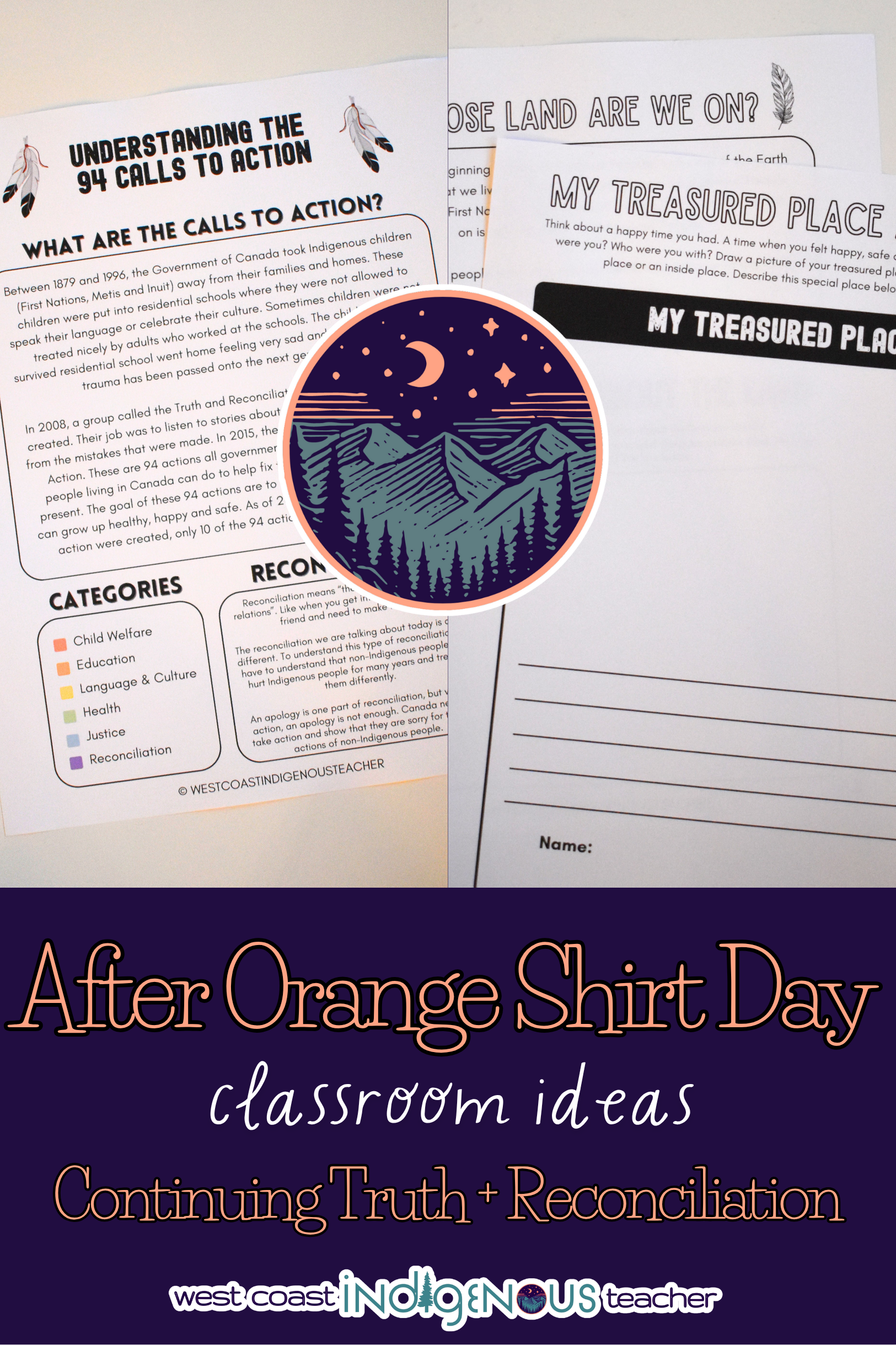
Step 1: Explore the 94 Calls to Action
Even younger students can grasp the concept of the Calls to Action, and older students can engage with them more deeply. I have created age-appropriate resources for both:
- Primary students: Lesson that introduces the Calls to Action in ways children can understand. Create a mini Calls to Action booklet.
- Older students: Projects and research activities that allow them to explore specific Calls, think critically, and connect them to current issues.
These activities show students that reconciliation isn’t just a word — it’s something we do, together, in small and meaningful ways.
👉 94 Calls to Action activity (primary)
👉 94 Calls to Action research project (older students)
Step 2: Practice Land Acknowledgements
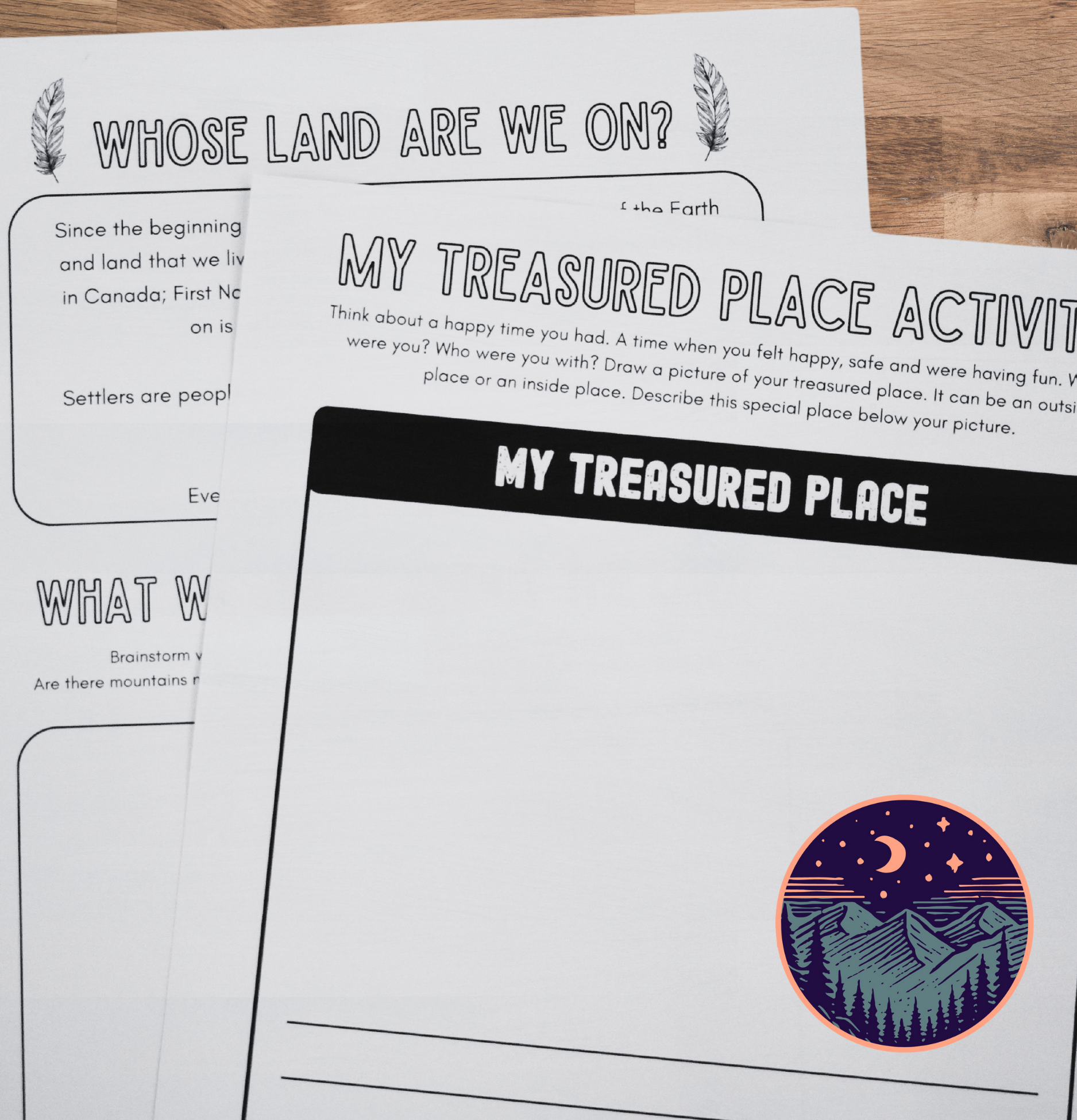
Land acknowledgements are a simple but impactful way for students to connect with the land and recognize whose territory they are on. Every one of us benefits from the land, which makes this an easy and meaningful next step after Orange Shirt Day.
Land Acknowledgement Activities:
🧡Land Acknowledgement activity for primary students
🧡Land Acknowledgement activity for intermediate students
🧡 Land Acknowledgement activity for middle & high school students
Step 3: Connect with Turtle Island Stories
Indigenous creation stories, like the Turtle Island story, are a beautiful way to engage students in Indigenous worldviews. Through these stories, students can explore themes of teamwork, respect for the Earth, and the richness of Indigenous storytelling traditions.
Sharing these stories helps students understand different perspectives and encourages them to reflect on their role in caring for the world around them.
👉 Learn about the Legend of Turtle Island
Step 4: Keep the Learning Ongoing
Reconciliation isn’t just about one day — it’s a continuous process. Consider weaving Indigenous perspectives into your curriculum throughout the year:
- Include Indigenous voices in social studies or science lessons.
- Read Indigenous stories during literacy blocks.
- Celebrate Indigenous artists, leaders, and community members all year.
- Use creative projects to explore Indigenous teachings about nature, community, and the seasons.
Step 5: Reflect and Foster Empathy
The most important part of this work isn’t just sharing information — it’s building empathy. Give students space to ask questions, reflect, write, draw, and connect. Encourage them to care about what they’re learning and consider ways they can take action in their own communities.
You’re Not Alone in This Work
Continuing the conversation after Orange Shirt Day helps students grow in empathy, awareness, and understanding. It supports survivors, uplifts Indigenous voices, and helps build a classroom culture rooted in respect and care.
My resources for primary and older students are designed to guide this ongoing learning — with age-appropriate lessons, stories, and activities for reflection and action.
👉 Explore all post-Orange Shirt Day resources!
🧡 Thank you for showing up for your students — and for reconciliation.