
September 30 can become a very full day in schools. Students wear orange, classrooms learn about residential schools and school communities gather to recognize the National Day for Truth and Reconciliation.
Then October 1 arrives.
If the books, conversations and orange displays are packed away until next September, students may begin to see reconciliation as something we recognize once a year instead of an ongoing responsibility.
So, what should teachers do after Orange Shirt Day?
The next step does not need to be another large unit or a perfectly planned project. It can begin with one meaningful lesson, one local connection or one question your class continues exploring together.
Here are six ways to continue truth and reconciliation learning throughout the school year.
1. Explore the 94 Calls to Action
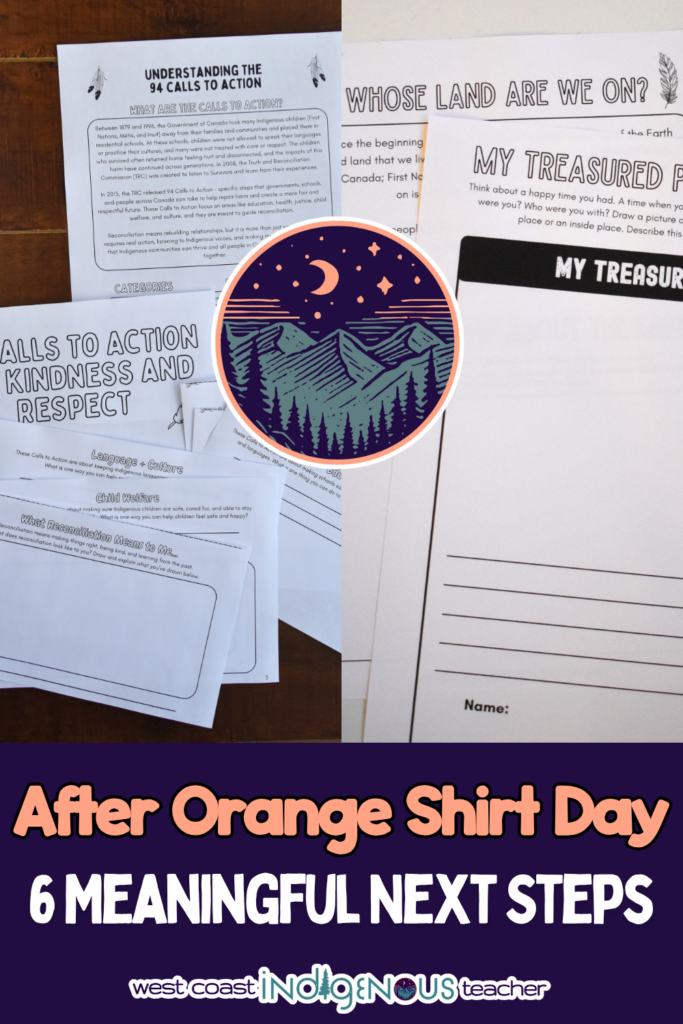
The Truth and Reconciliation Commission’s 94 Calls to Action give students a concrete way to understand that reconciliation involves more than awareness. It also involves responsibility, change and action.
Younger students can begin by learning what the Calls to Action are and exploring some of the areas they address. Older students can investigate individual Calls, learn who is responsible for completing them and consider what progress has or has not been made.
I have created two age-appropriate resources:
- Primary students: A four-page lesson and nine-page mini booklet with opportunities for writing and drawing
- Intermediate and older students: A guided research project that helps students investigate and reflect on specific Calls to Action
These activities help move the conversation after Orange Shirt Day from “What is reconciliation?” to “What does reconciliation ask us to do?”
👉 Explore the 94 Calls to Action activity for primary students
👉 Explore the 94 Calls to Action research project
2. Move From Land Acknowledgement to Local Learning
A meaningful land acknowledgement should begin with learning.
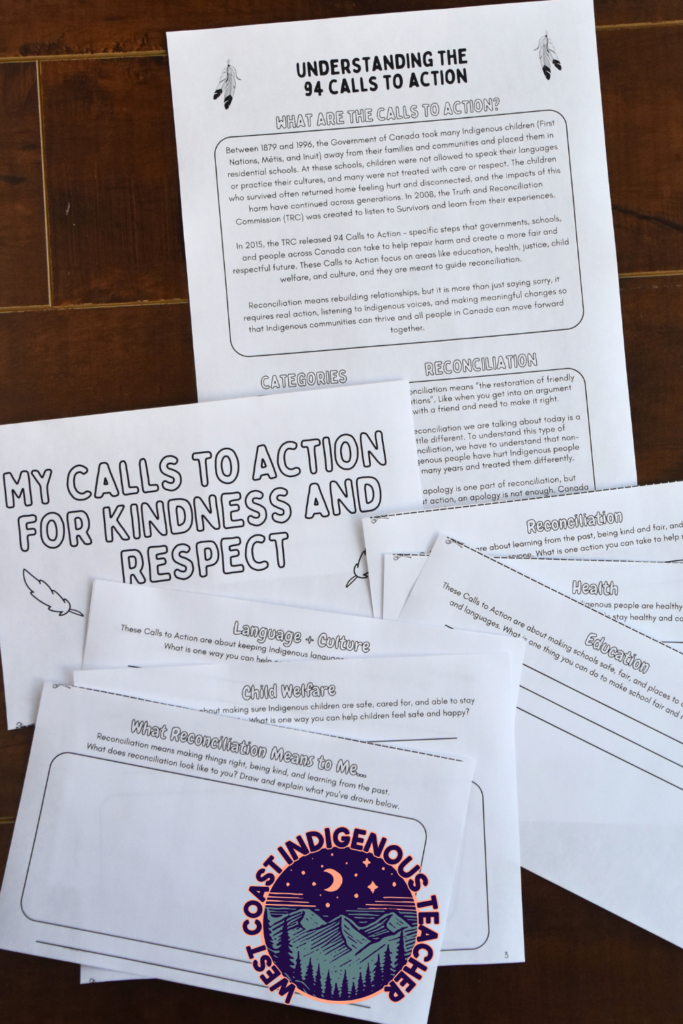
Students can investigate the Indigenous Nation or Nations connected to their local area, learn about those Nations as present-day communities and consider their own relationships and responsibilities to the land.
Rather than simply memorizing a prepared statement, students can explore questions such as:
- Whose lands do we live and learn on?
- What are the names of the local Indigenous Nations?
- Where can we find information created by those Nations?
- What does acknowledgement ask us to learn or do?
- How can our class continue building its understanding?
My land acknowledgement resources guide students through this learning before asking them to create an acknowledgement. Choose the version that best fits your students:
🧡 Land Acknowledgement Activities for Kindergarten and Early Primary
🧡 Land Acknowledgement Activity for Elementary Students
🧡 Land Acknowledgement Activities for Intermediate Students
🧡 Land Acknowledgement Activity for Middle and High School
3. Learn Through Indigenous Storytelling
Learning after Orange Shirt Day should not focus only on residential schools and harm. Students also need opportunities to learn about Indigenous knowledge, storytelling, creativity and relationships with the land.
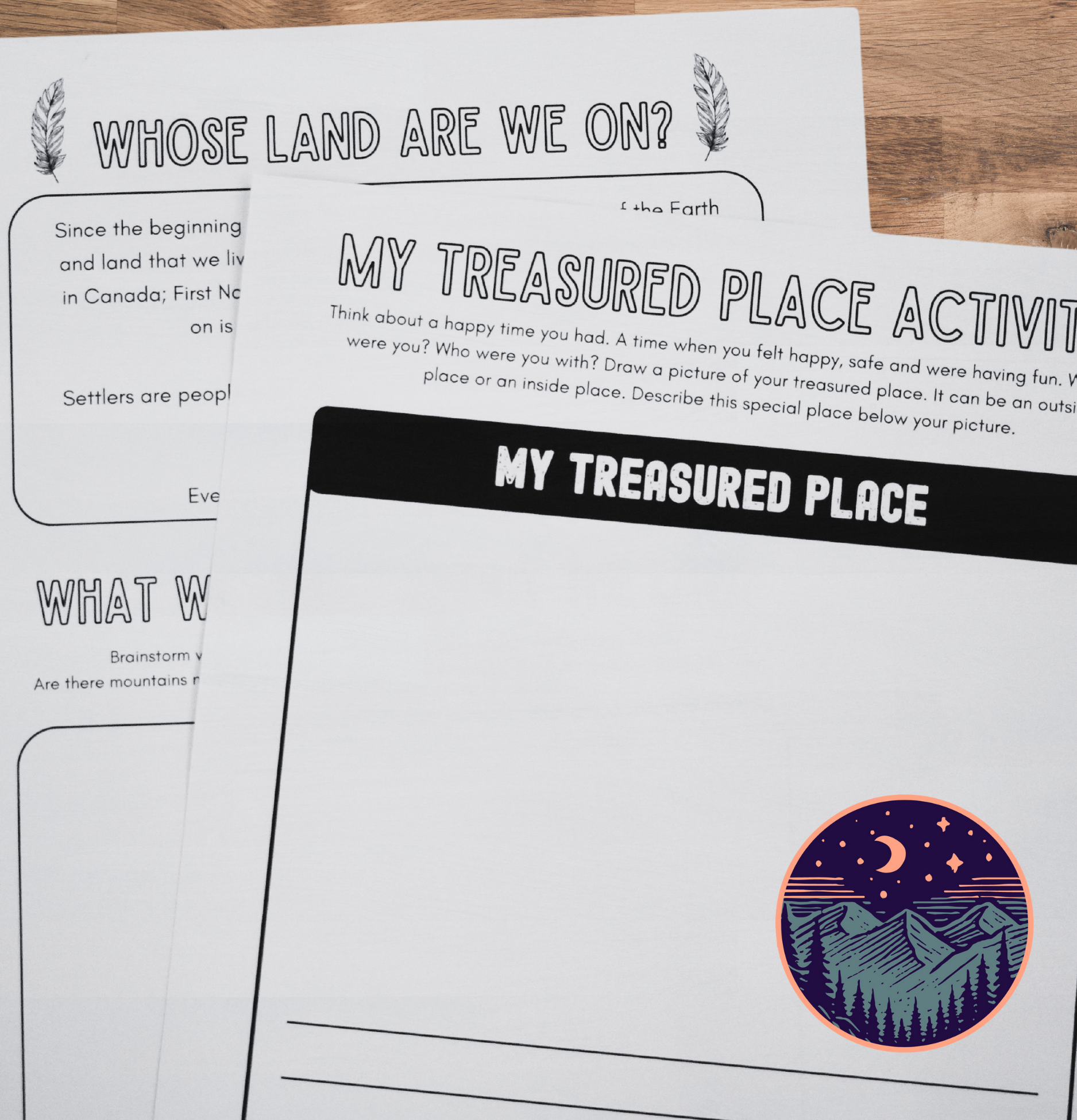
A Turtle Island creation story can introduce students to Indigenous oral traditions and help them consider how stories carry knowledge and teachings across generations.
It is important for students to understand that there is not one universal Indigenous creation story. Turtle Island is a name used by some Indigenous Peoples for North America or the Earth, and different Nations have their own stories, teachings, characters and versions.
My Turtle Island resource introduces this context before students complete reflection questions, creative writing and a hands-on writing craft.
👉 Explore the Turtle Island Creation Story Lesson
4. Include Indigenous Perspectives Throughout the Year
Indigenous education does not always need to be presented as a separate unit. Look at what you already teach and consider where Indigenous voices and perspectives fit naturally.
You might:
- Include Indigenous authors and illustrators in your literacy block
- Learn about present-day Indigenous artists, scientists and leaders
- Use Nation-specific examples in social studies
- Explore Indigenous relationships with plants, animals and the environment
- Learn from resources created by local Nations and communities
- Include Indigenous perspectives in science and outdoor education
- Revisit reconciliation during history, government and current-events lessons
This does not mean adding a generic “Indigenous perspective” to every topic. Whenever possible, identify the Nation, community, artist, author or source connected to the learning.
The goal is not to squeeze Indigenous content into every available space. It is to stop treating Indigenous education as something that belongs only on the September calendar.
5. Continue the Learning With Your Staff
Individual teachers can do meaningful work, but reconciliation should not rest entirely on individual classroom teachers.
A school-wide approach gives staff time to learn together, reflect on the activities they are using and make more intentional decisions about what happens before, during and after Orange Shirt Day.
My Beyond September 30 Staff Meeting Kit was created for principals, administrators, Indigenous education leads and teacher leaders. It includes:
- A 23-slide professional development presentation
- Complete presenter notes
- A printable facilitator guide
- A two-page staff reflection handout
- Discussion and reflection prompts
- Practical next steps for year round Indigenous education
- A one school staff use license
The session helps staff consider whether their Orange Shirt Day plans are contributing to meaningful learning or simply filling a space on the calendar.
👉 Explore the Orange Shirt Day Staff Meeting Kit
6. Make Space for Reflection and Action
Students need time to process what they are learning. Reflection can happen through writing, drawing, classroom conversation or personal commitments.
You might ask:
- What is something you understand differently now?
- Whose voices helped guide our learning?
- What questions do you still have?
- What would you like to learn next?
- What can our class do with what we have learned?
- How can we continue learning from local Indigenous communities?
Empathy matters, but the learning should not stop at feeling sad about the past. Students can also consider present-day responsibilities, relationships and actions.
Reconciliation is not something students are expected to solve through one classroom activity. Our role is to help them understand that their learning can continue and that their choices matter.
You’re Not Alone in This Work
Continuing the conversation after Orange Shirt Day does not require you to know everything or plan an enormous unit.
Choose one next step that fits naturally with your students and curriculum. Explore a Call to Action. Learn whose lands your school is on. Read a book by an Indigenous author. Introduce students to a present-day Indigenous leader. Bring the conversation to your next staff meeting.
The problem is not starting small. The problem is treating September 30 as the finish line.
My resources are designed to help educators continue this learning with age-appropriate lessons, Indigenous perspectives and meaningful opportunities for reflection and action.
👉 Explore all Orange Shirt Day and Truth and Reconciliation resources
👉 Browse my complete Indigenous education shop
Continue Your Learning
You may also find these articles helpful:
Teaching About Turtle Island Through Indigenous Storytelling
Orange Shirt Day Activities Beyond Crafts: What Comes Next
Orange Shirt Day Professional Development for Your Next Staff Meeting