Orange Shirt Day matters. Orange shirt day activities beyond crafts matter too. If you’ve never worn orange, talked about Phyllis Webstad’s story, or done a craft with your class to mark September 30th, please keep doing that. This post isn’t about stopping.
It’s about finding orange shirt day activities beyond crafts, the kind that let the learning keep growing instead of resetting every September.
I’ve been making Indigenous education resources for years now. I’ve watched thousands of classrooms mark this day with orange handprints, paper shirts, and heartfelt read-alouds. Those are good things. They matter, especially for little learners meeting this history for the first time.
But here’s the thing I keep noticing. And maybe you’ve noticed it too: a lot of our students aren’t meeting this history for the first time anymore. They did the orange handprint in Kindergarten. They did it again in Grade 2. By Grade 5, they can tell you Orange Shirt Day is “about the shirt that got taken away,” and that’s true, but it’s also where the learning stops. Every year, same craft, same slightly too brief explanation, same feeling of “we did the thing.”
I don’t think that’s anyone’s fault. Teachers are stretched thin, the resources that exist are often craft heavy because crafts are easy to slot into a busy day, and talking to kids about residential schools is genuinely hard. Of course the craft became the default.
But our students are ready for more, and so, I think, are we.

What orange shirt day activities beyond crafts can look like
This doesn’t mean scrapping the orange shirt entirely, or making September 30th feel heavier than a classroom can hold. It means letting the learning build across the year, and across the grades, instead of resetting every fall.
A few ways that can look in an actual classroom:
- Upper elementary and middle years students exploring the 94 Calls to Action, and picking one or two that connect to their own community, their own school, their own lives.
- Learning what the Indian Act actually did, in age-appropriate language, so students understand this isn’t only a “sad history” story, it’s a policy story with a straight line to today.
- Making space for joy and living culture, not just grief. Indigenous nations are still here, still creating, still celebrating. Kids deserve to learn that as much as they deserve to learn the hard parts.
- Connecting the dots between grades, so a student’s Orange Shirt Day learning in Grade 6 actually builds on what they learned in Grade 2, instead of repeating it.
None of this replaces the craft for your littlest learners. A five year old still needs the simple, gentle version. But your Grade 6s? They can hold more. They want to hold more, most of the time, if we give them the chance.
94 Calls to Action Activities for Every Grade
I know what it’s like to stare at September on the calendar and think “okay, what am I doing this year” with zero extra hours in the day to plan it. That’s exactly why I’ve spent the last few years building out resources that go beyond the craft table. I have over 180 activities now, covering the Calls to Action, the Indian Act, and Indigenous cultures and contributions far beyond residential school history.
If you’ve been doing the orange handprint every year because it’s what you had, I see you, and I’ve got you something new to reach for instead. Here’s a peek at two 94 Calls to Action activities for kids already in the shop:
For your Grade 5+ classroom: a full 94 Calls to Action research project. Students dig into the list, not just skim it, working through a comprehensive breakdown of all 94 Calls, a checklist, and an update on which ones have been completed as of December 2023. There’s a guided research project where students build their own booklet, plus a bulletin board component if you want the learning to spill out into the hallway. This is the one for classes who are ready to move from “we learned about it” to “we researched it ourselves.”
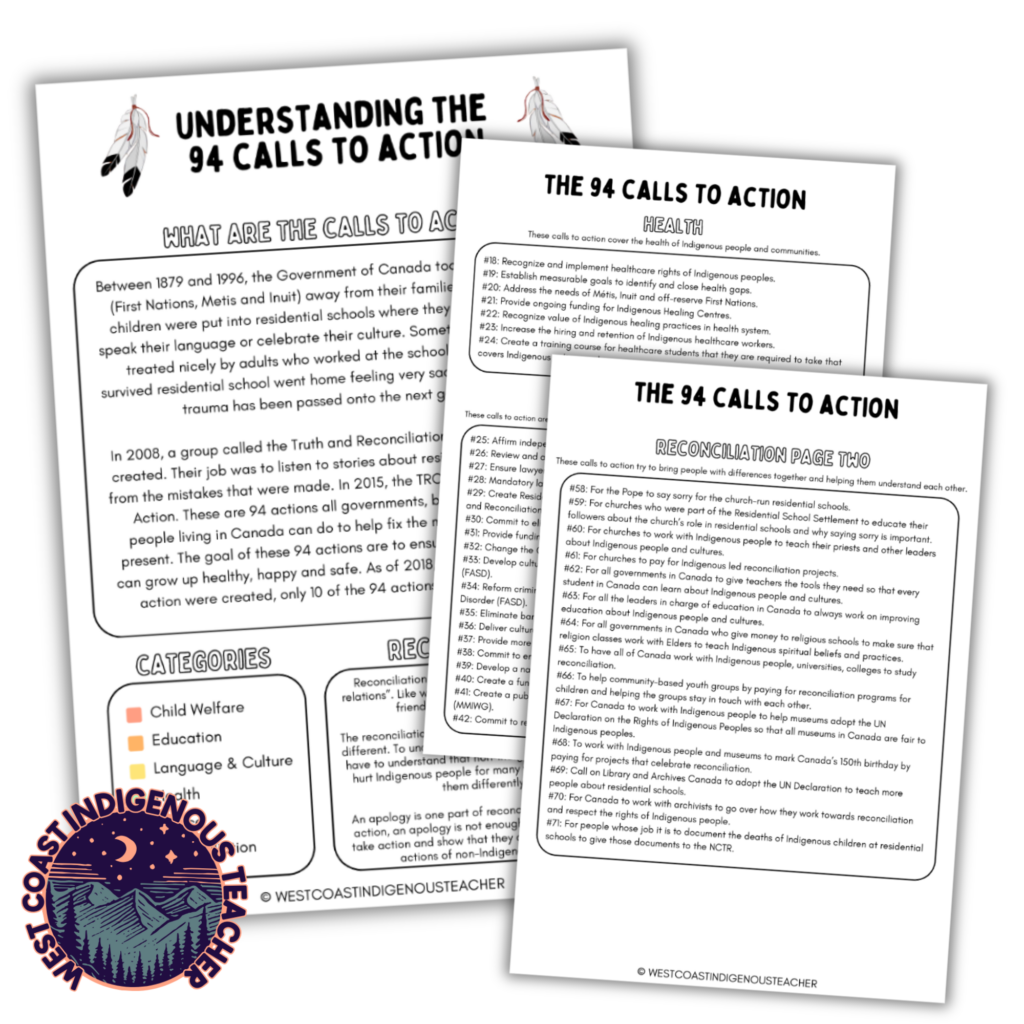
For your primary friends: a gentler, age-appropriate way into the same topic. Students learn what the Calls to Action are and explore the categories they fall into, in a way that makes sense for smaller humans, then build a 9-page mini booklet of reconciliation writing and drawing. It comes with the full checklist too, so even your youngest learners walk away understanding this is a real, trackable list, not just a vague idea of “being kind.”
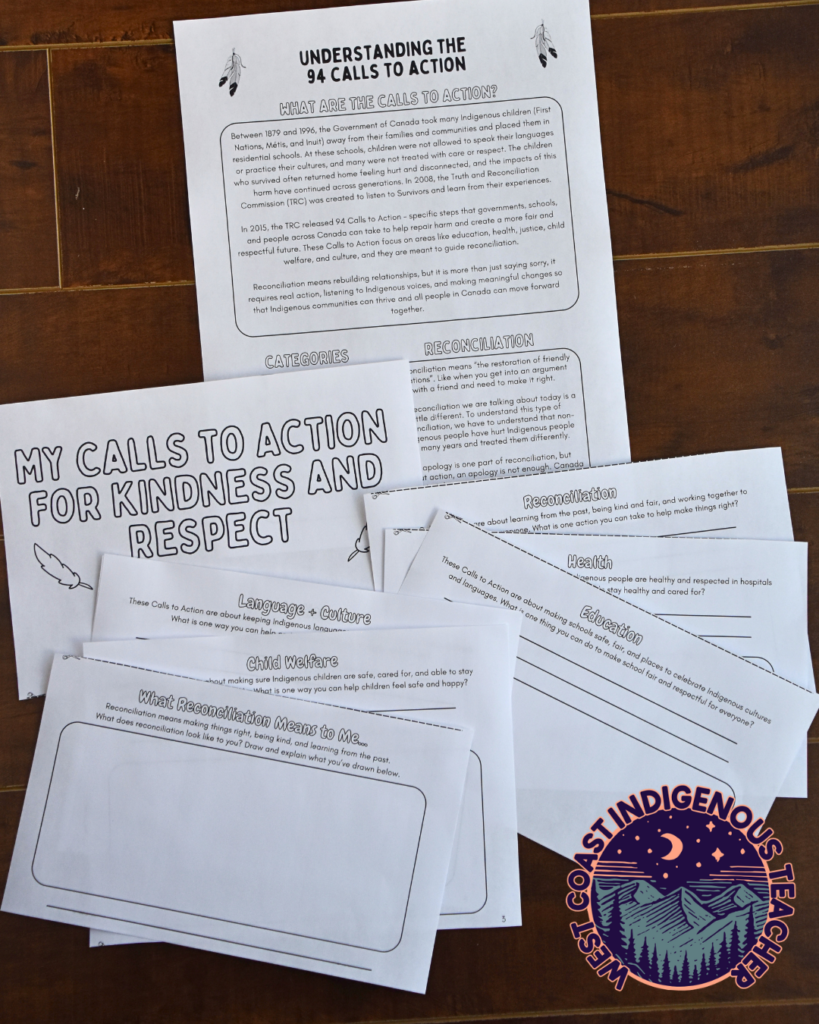
Both are ready to pull out this September, whether your class is craft-ready or research-ready.
Shop my 94 Calls to Action Primary resource here!
Shop my 94 Calls to Action Intermediate + Middle resource here!
Indian Act Resources for Every Grade
There’s also a full set of Indian Act lesson plans, because “the government made a law that controlled almost every part of life for Indigenous peoples, and a lot of it is still in effect” is not a topic that fits into a single craft, no matter how nice the paper feathers look.
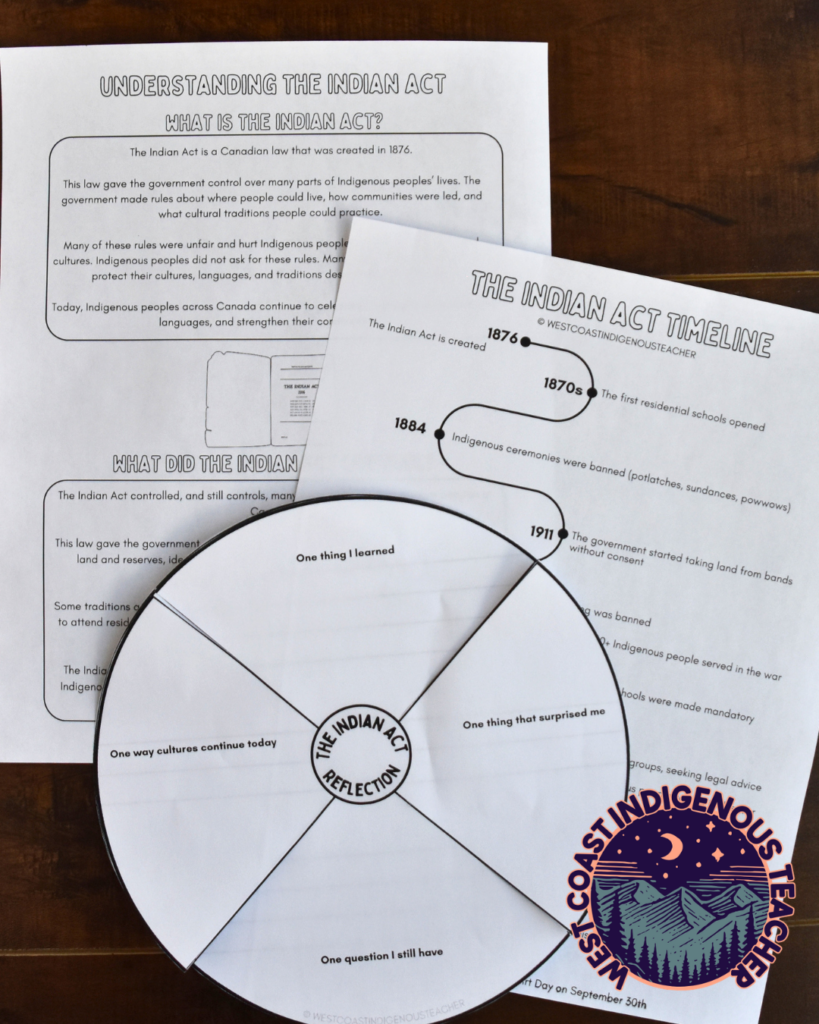
Primary friends get a 3-page Indian Act lesson plan plus two interactive activities, including a cut-and-sort on the impacts of the Indian Act and a reflection activity, so even your youngest students walk away understanding what the Act is and why it mattered.
Intermediate classes dig deeper with a 6-page Indian Act lesson plan, a look at the Act’s impacts, a specific look at how it discriminated against women, a timeline, and five separate activities to help the concept actually stick.
Middle and high schoolers get the full treatment: a 6-page Indian Act lesson plan, reflection questions, vocabulary and concept work, a case study project, and a creative response activity, for classes ready to analyze rather than just learn about.
Three grade options, one topic, no craft table required, just more orange shirt day activities beyond crafts for whichever age group is in front of you.
Indian Act resource for Primary can be found here!
Indian Act resource for Intermediate + Middle can be found here!
If you’re still looking for classic Orange Shirt Day activities, I have many to choose from, no judgment, sometimes that’s exactly what a busy September calls for.
Bring This Learning to Your Whole Staff
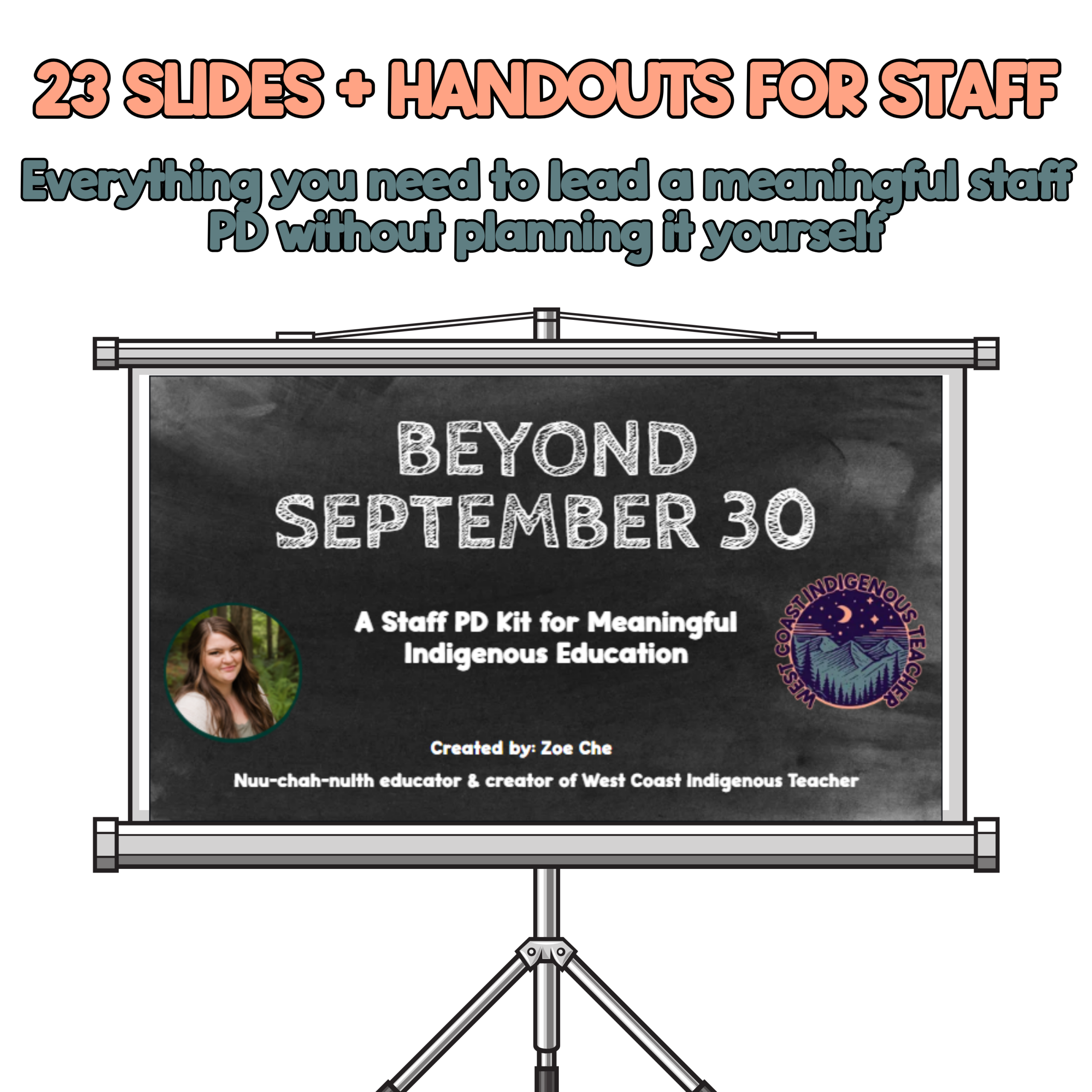
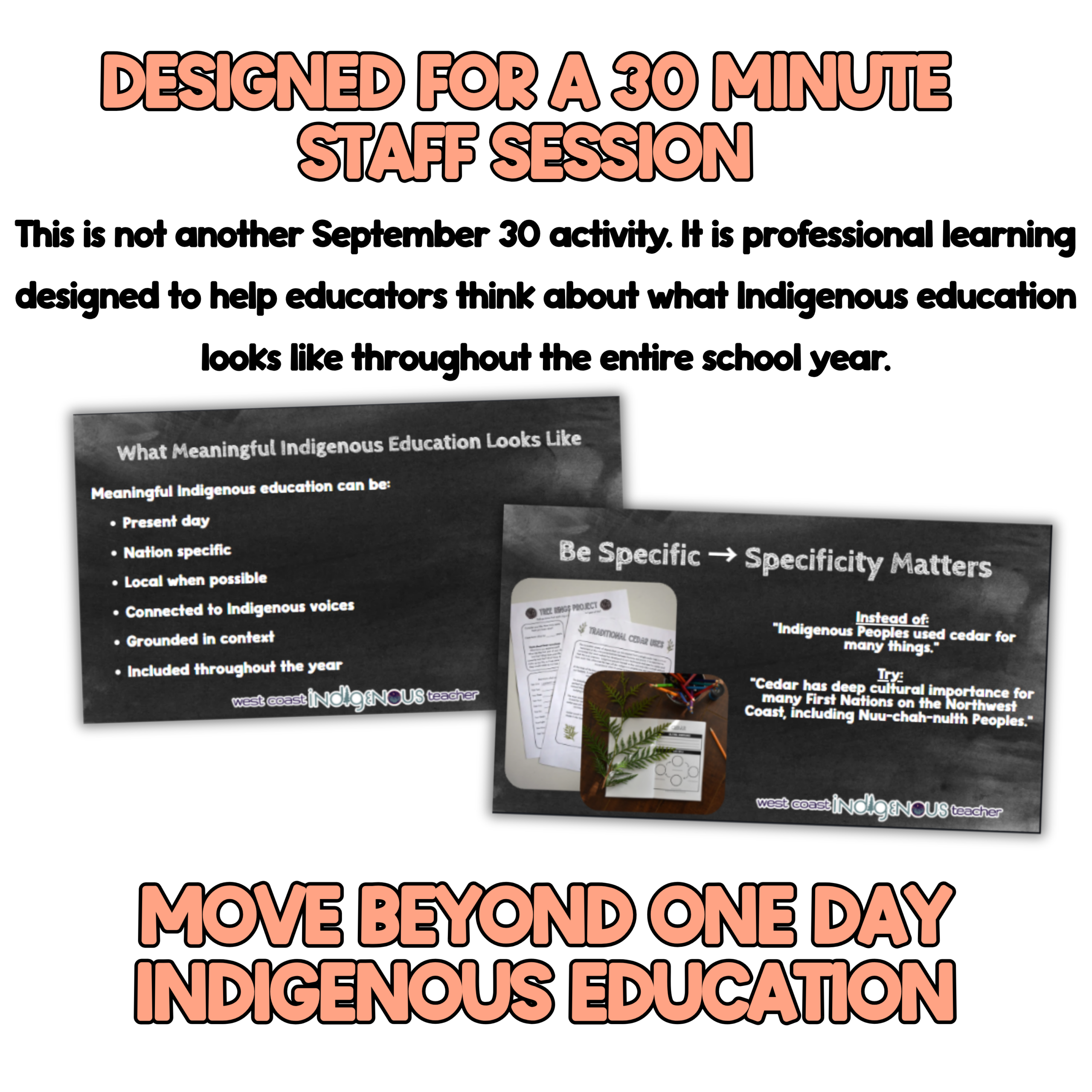
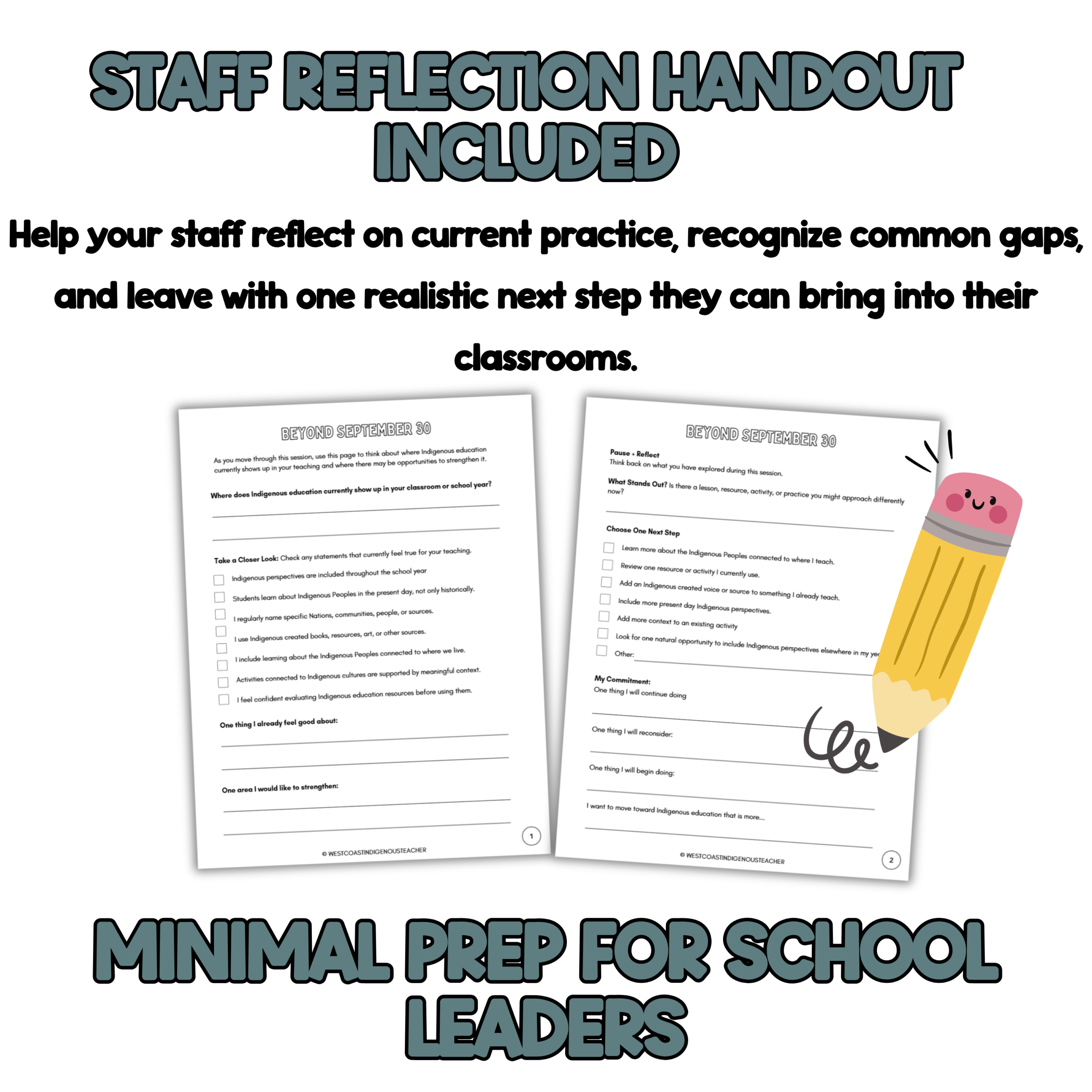
Want to continue this conversation with your whole school? Beyond September 30 is a ready-to-use Orange Shirt Day staff meeting resource created for principals, administrators and school leaders. It includes a 23-slide professional development presentation, detailed presenter notes, a facilitator guide and a two-page staff reflection handout. The session helps educators look beyond one-day Orange Shirt Day activities and choose practical next steps for meaningful Indigenous education throughout the school year. If you are a classroom teacher, send the link to your principal or professional development committee!
Find the Orange Shirt staff meeting resource here!