The Turtle Island creation story for kids offers a meaningful way to introduce students to Indigenous storytelling, relationships with the land and the importance of learning from Nation-specific stories.
Turtle Island is a name used by some Indigenous Peoples for North America or the Earth. The name is connected to creation stories that have been carried through generations using oral traditions and storytelling. These stories hold deep cultural and spiritual meaning, but they are not identical across Indigenous cultures and do not belong to every Indigenous Nation.
As a First Nations educator, I created a Turtle Island lesson and activity that introduces students to this important topic through reflection, creativity and storytelling. It is designed to help teachers approach Indigenous content in a meaningful and accessible way, whether they are planning for National Indigenous Peoples Day in Canada, Indigenous Peoples’ Day or Native American Heritage Month in the United States.
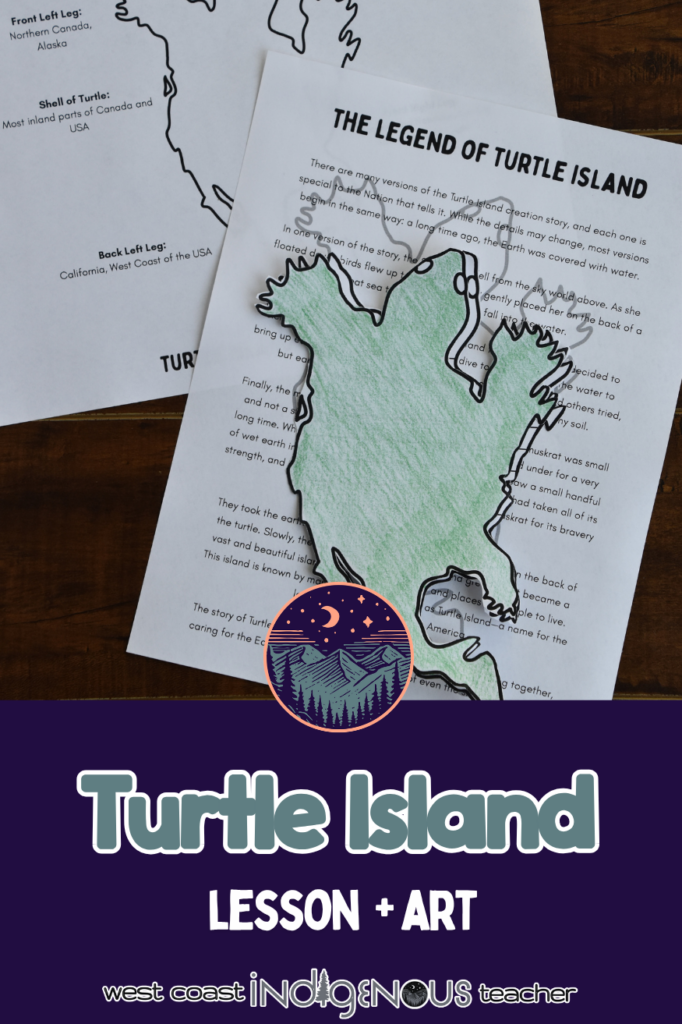
What Is Turtle Island?
Turtle Island is a name some Indigenous Peoples use for the land now commonly called North America. Turtle Island creation stories are connected to several Nations, particularly within the Northeastern Woodlands, and the details differ between Nations and communities.
In some versions, Sky Woman falls from the Sky World while the Earth is covered in water. Animals work together to retrieve soil, which is placed on the back of a turtle to create land. The stories may explore relationships, cooperation, responsibility, balance and connections between people, animals and the Earth.
It is important to explain to students that there is no single, universal Indigenous version of the story. The characters, events, language and teachings can differ depending on the Nation sharing it.
Turtle Island is also more than another name for a continent. It can help students consider different relationships with land and understand how stories carry teachings, histories and knowledge.
Many students may never have heard the name Turtle Island, and many teachers may be encountering it for the first time too. Introducing the topic carefully can open the door to deeper conversations about Indigenous identities, oral traditions and the importance of learning whose stories we are sharing.
What’s Included in the Turtle Island Resource?
I designed this Turtle Island creation story lesson to help students reflect on the story, practice creative writing and make connections between storytelling and the land.
Here’s what’s included:
- A five-page Turtle Island lesson introducing the story and its significance
- Learning about Indigenous storytelling and its role in carrying knowledge
- Reflection questions to help students respond thoughtfully
- A creative storytelling activity
- A writing craft that makes students’ work display-ready
- A bonus Turtle Island colouring page for early finishers or independent learning

This resource is designed for students in Grades 2–6 and can be adapted for different classroom settings.
Why Teaching About Turtle Island Matters
Teaching the Turtle Island creation story for kids is more than completing a social studies or literacy activity. It provides an opportunity to introduce students to Indigenous perspectives, oral storytelling traditions and relationships with land.
This Turtle Island activity encourages students to:
- Explore the role of oral storytelling as a source of knowledge
- Reflect on connections between land, animals and people
- Recognize that Indigenous Nations have distinct stories and teachings
- Respond thoughtfully through reflection and creative writing
- Understand why culturally meaningful stories require context and care
The goal is not to present one story as representative of all Indigenous Peoples. It is to help students understand that stories are connected to specific Nations, histories and relationships.
Perfect for Indigenous Peoples Day or Native American Heritage Month
After learning about Turtle Island and Indigenous storytelling, students complete reflection questions, a creative storytelling activity and a display ready writing craft. These Turtle Island activities for students bring together social studies, literacy, reflection and creativity.
Designed for Grades 2-6, the resource works well for National Indigenous Peoples Day in Canada, Indigenous Peoples’ Day, Native American Heritage Month or year-round Indigenous education.

Ready to bring this learning into your classroom?
🔗 Turtle Island Lesson + Activity
Want to explore Turtle Island as part of a broader unit? The Indigenous Education Activities Bundle includes this Turtle Island lesson along with land acknowledgement activities, Medicine Wheel teachings and an introduction to First Nations, Métis and Inuit Peoples in Canada. These ready to use lessons include the cultural learning that should come before each activity, helping teachers approach Indigenous education with greater context and care.