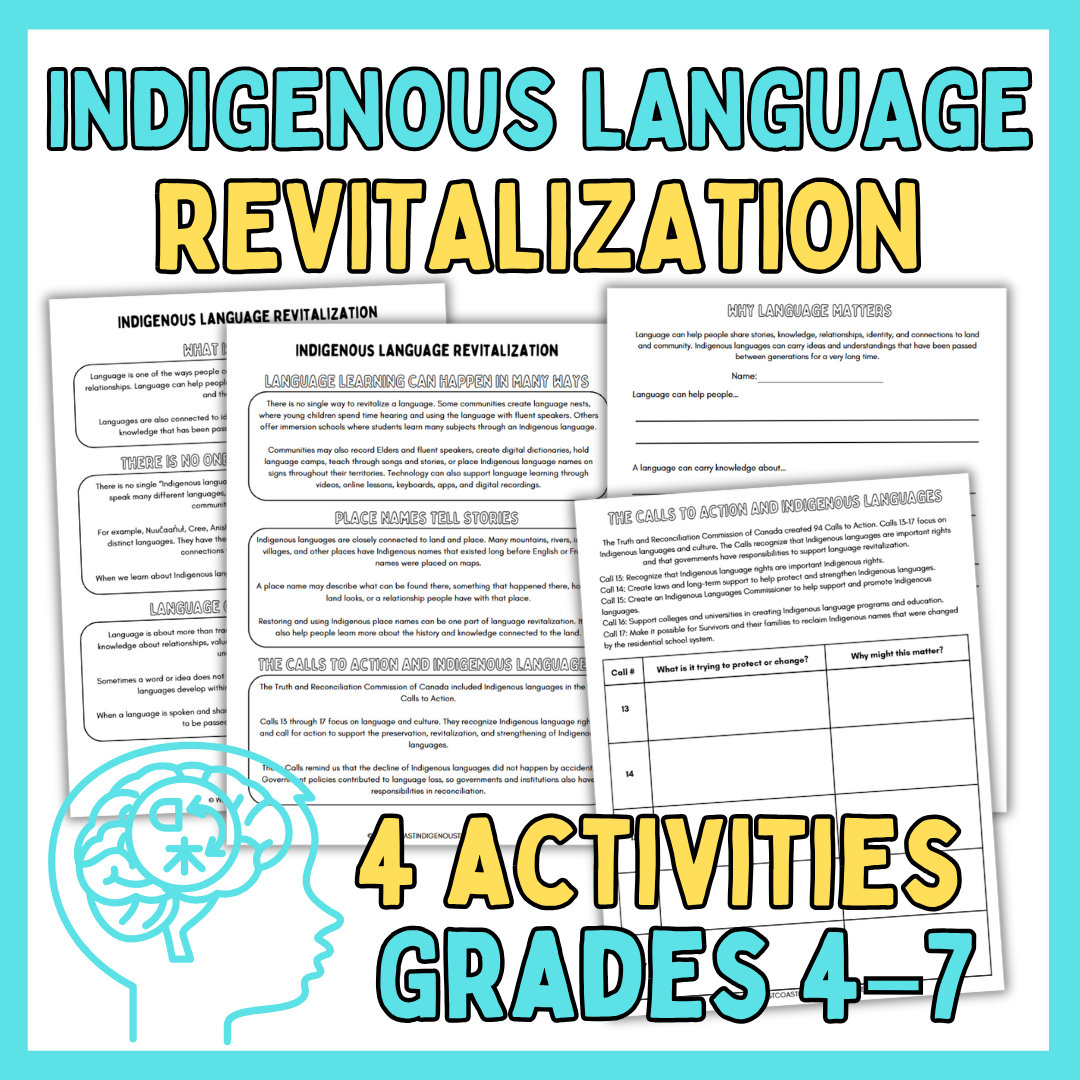
Looking for an Indigenous language revitalization lesson for Grades 4–7? This ready to use resource helps students understand why Indigenous languages matter, how colonization disrupted language transmission, and how Indigenous communities are strengthening their languages today.
Students learn that there is no single Indigenous language and that languages are connected to identity, culture, land, stories, knowledge, and community. They also explore present-day language revitalization, Indigenous place names, Calls to Action 13–17, and an Indigenous language connected to their own local area.
Indigenous Language Revitalization Resource Includes
♡ Complete teacher lesson plan
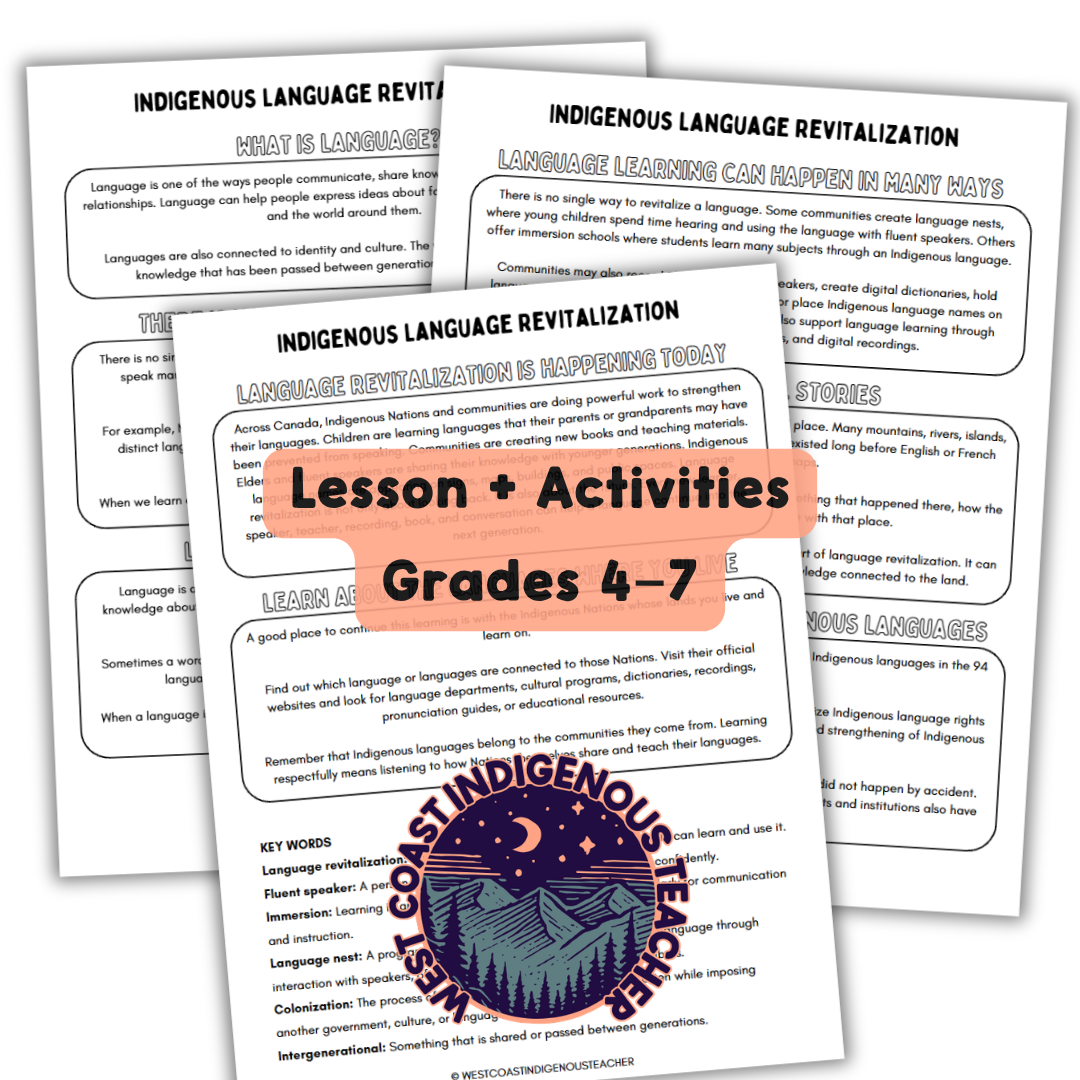
♡ Student-friendly Indigenous language revitalization lesson
♡ Why language matters learning pages
♡ Indigenous language diversity and Nation-specific learning
♡ Language loss and the impacts of colonization
♡ Present-day language revitalization examples
♡ Why Language Matters reflection activity
♡ Language Revitalization in Action activity
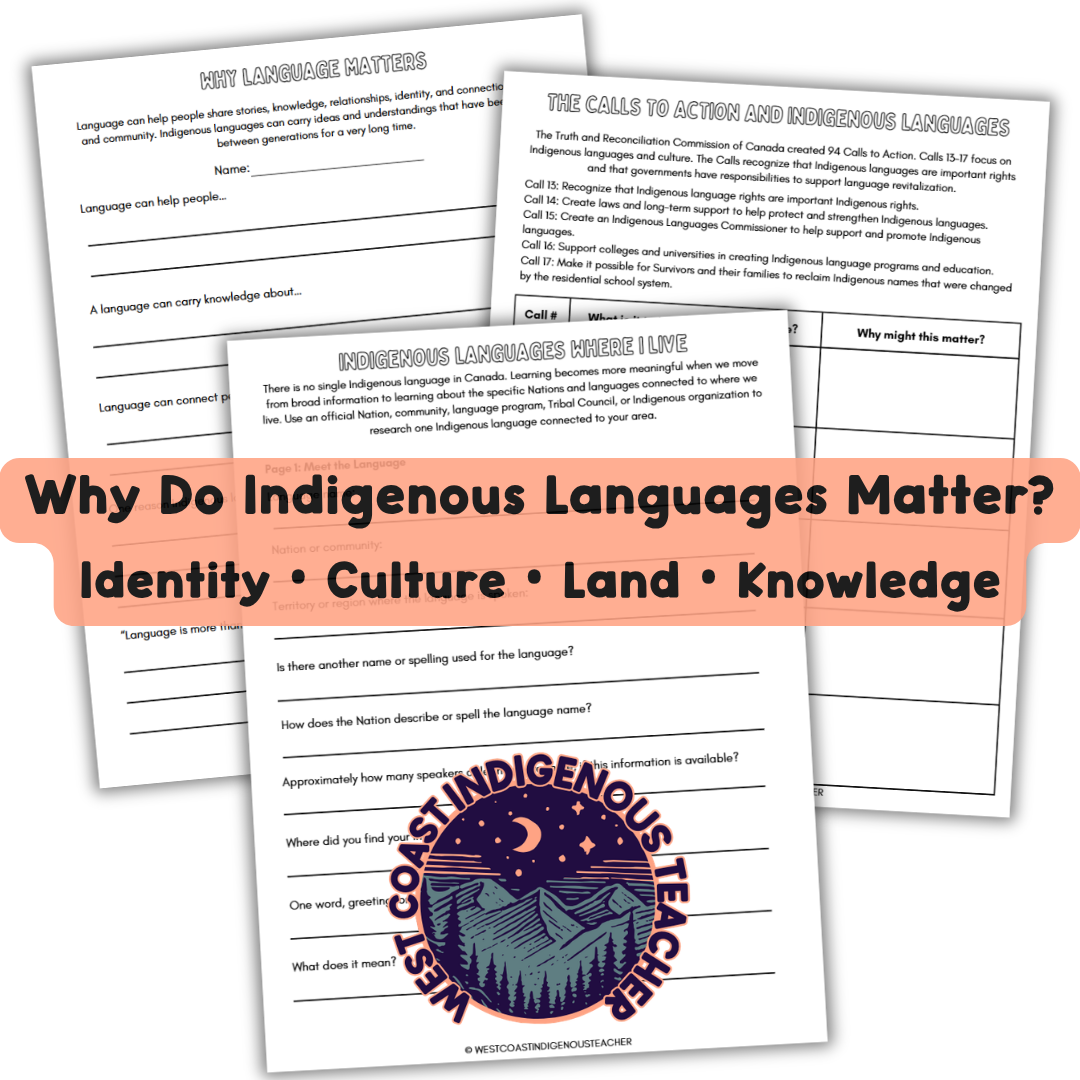
♡ Calls to Action 13–17 activity
♡ Indigenous place names research activity
♡ Local Indigenous language research activity
♡ Answer keys and teacher guidance
Indigenous Language Revitalization Activities for Grades 4–7
Students do more than simply read about language loss. They explore what Indigenous language revitalization looks like today through language classes, immersion programs, recordings, technology, place names, and community-led language learning.
The activities encourage students to think about why language matters, how language carries knowledge, and why communities are working to strengthen and reclaim their languages.
Truth and Reconciliation Connections
This resource also introduces students to Calls to Action 13–17, which focus on Indigenous languages and culture. Students explore why language rights and revitalization are an important part of Truth and Reconciliation in Canada.
The lesson helps students understand that the decline of many Indigenous languages was connected to colonial policies, including residential schools, and that language revitalization is part of ongoing reconciliation.
BC and Ontario Curriculum Connections
This Indigenous language revitalization lesson was created with Grades 4–7 learners in mind and connects especially well with BC and Ontario Social Studies.
In British Columbia, it supports Grade 4 learning about the impacts of colonization on First Peoples language and culture.
In Ontario, it connects with Grade 5 Social Studies learning about the preservation of Indigenous languages and the actions governments and communities are taking to support them.
It can also be used as a supplementary Indigenous Education or Canadian Social Studies resource in other provinces.
Start Local
One of the most important ideas throughout this resource is that Indigenous languages are Nation-specific.
Students finish by researching an Indigenous language connected to their local area using official Nation, community, or Indigenous language sources whenever possible.
This helps students move from broad learning about Indigenous languages in Canada toward a more specific understanding of the languages, communities, and revitalization work connected to where they live.
Use this resource during Social Studies, Indigenous Education, Truth and Reconciliation learning, or Canadian history for a meaningful way to introduce Indigenous language revitalization with context and care.