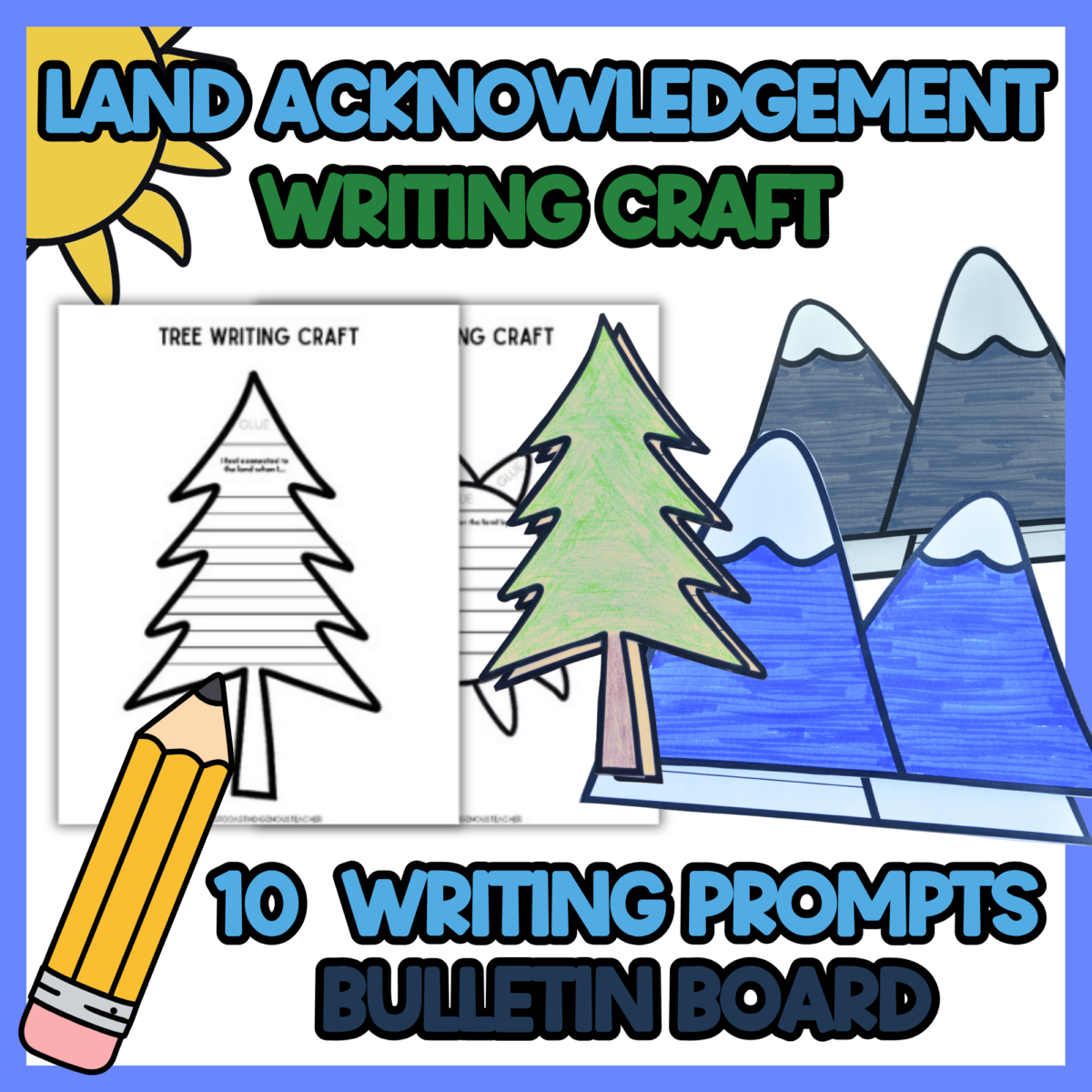
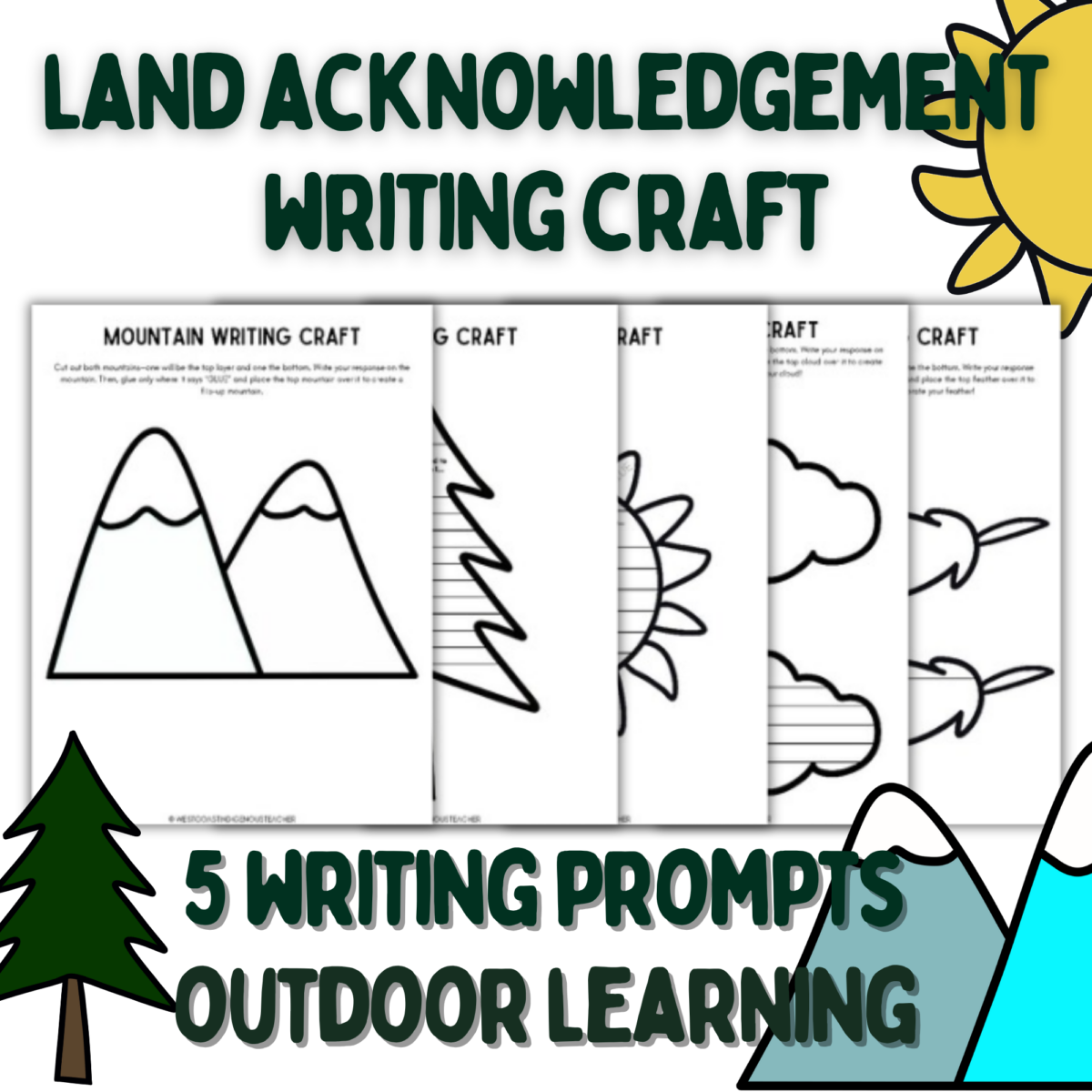

Looking for a meaningful land acknowledgement writing activity? This printable resource helps students reflect on their relationship with the land through 10 writing prompts and five nature-themed crafts. Completed writing can be displayed with two included land acknowledgement bulletin board headings.
Designed as an add-on to a land acknowledgement lesson, this activity gives students an opportunity to respond to what they have learned about land, place, gratitude and responsibility. It can also be used as an Earth Day writing activity, during outdoor learning or as part of year-round Indigenous education.
Land Acknowledgement Writing Activity Includes
ꕥ 10 land acknowledgement and Earth Day writing prompts
ꕥ Five nature-themed writing craft templates
ꕥ Mountain writing craft
ꕥ Tree writing craft
ꕥ Sun writing craft
ꕥ Feather writing craft
ꕥ Cloud writing craft
ꕥ Two classroom bulletin board headings
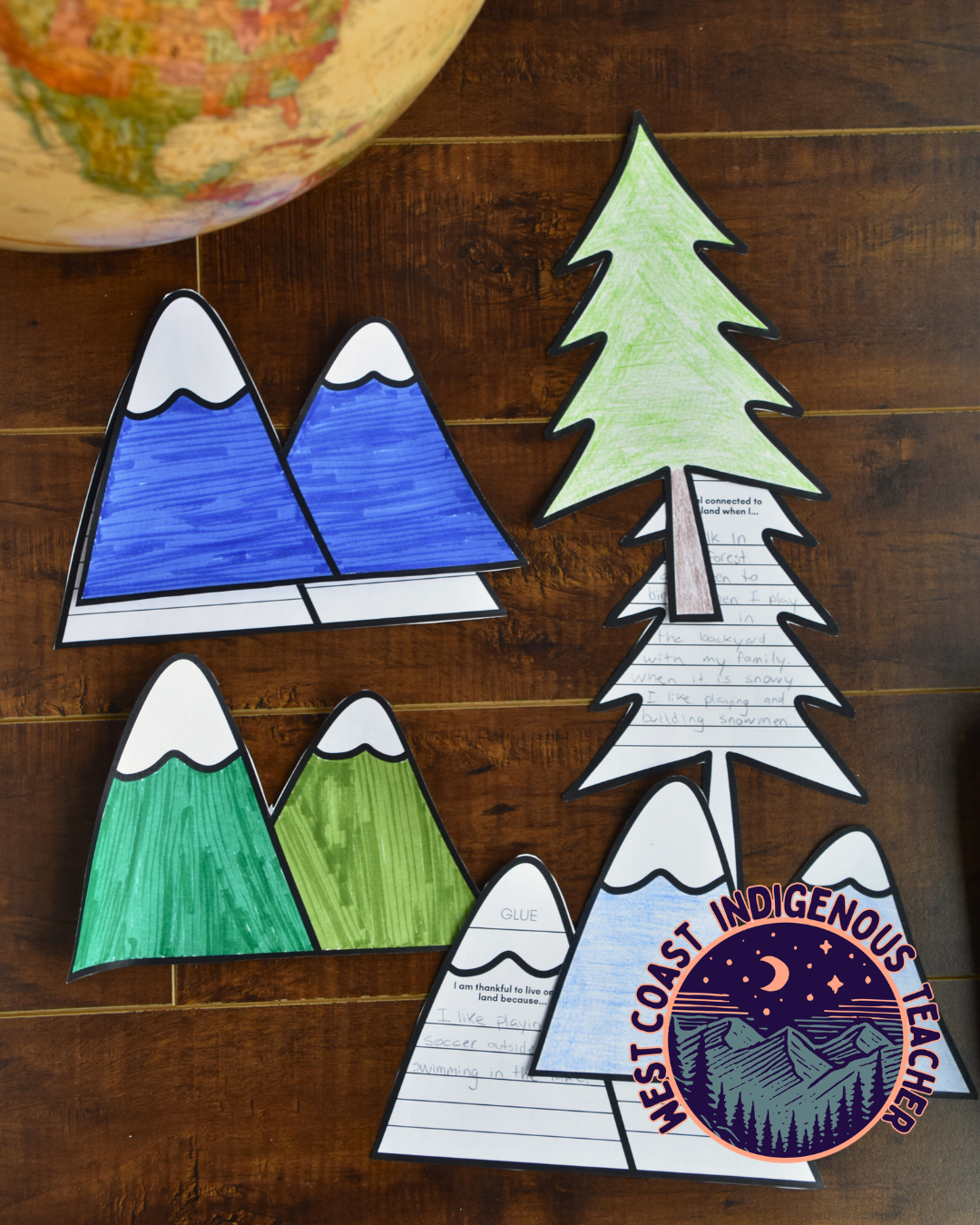
Reflect on Our Relationship With the Land
The writing prompts encourage students to consider their connection to the lands where they live and learn. Depending on the selected prompt, students can write about what they notice in nature, why the land matters to them, what they have learned and how they can care for the land through their choices and actions.
This resource works best after students have learned why land acknowledgements matter and have explored the Indigenous Nation or Nations connected to their local area. It is a reflective writing extension rather than a complete introductory land acknowledgement lesson.
Create a Land Acknowledgement Bulletin Board
Display students’ completed writing with either of the included bulletin board headings:
ꕥ “Grateful to Live on This Land”
ꕥ “Reconciliation Starts With Learning”
The finished land acknowledgement bulletin board creates a meaningful classroom display that connects student reflection with continued learning and responsibility.
Use This Activity For
ꕥ Land acknowledgement lessons
ꕥ Indigenous education activities
ꕥ Truth and Reconciliation learning
ꕥ Earth Day activities
ꕥ Outdoor education
ꕥ Nature-based learning
ꕥ Social studies
ꕥ Reflective writing
ꕥ Classroom bulletin boards
ꕥ Year-round learning about land and place
Use this printable land acknowledgement writing activity to help students move beyond repeating a statement and begin reflecting on their own relationships, learning and responsibilities.
More Land Acknowledgement Resources
Looking for a complete lesson or activities for a particular grade level? Explore more land acknowledgement activities for students:
♡ Land Acknowledgement Activities for Kindergarten
Hands-on activities for young learners featuring nature, maps, movement and classroom community.
♡ Land Acknowledgement Activity for Elementary Students
Help primary and elementary students learn about the land, reflect on a treasured place and create a class land acknowledgement.
♡ Land Acknowledgement Activities for Intermediate Students
Includes guided learning, research, reflection questions, a writing checklist and an individual land acknowledgement activity.
♡ Land Acknowledgement Activity for Middle and High School
Older students explore why land acknowledgements matter, consider meaningful action and write personalized acknowledgements.
IMPORTANT INFORMATION
The resources provided here are designed to support the teaching of Indigenous cultures, including First Nations, Métis, and Inuit peoples. It is important to recognize that these communities are not monolithic; beliefs, traditions, and practices vary greatly from Nation to Nation, and even from community to community. The content shared in these materials reflects my own lived experience and understanding of Indigenous cultures, but it does not encompass the full diversity or richness of these traditions.
I encourage educators to approach these resources with respect, sensitivity, and openness to learning. When possible, please engage with local Indigenous communities or cultural experts to ensure that the information shared is accurate and culturally appropriate for the specific Nations or groups you are teaching about.
These resources are intended to foster understanding and appreciation for Indigenous people.