
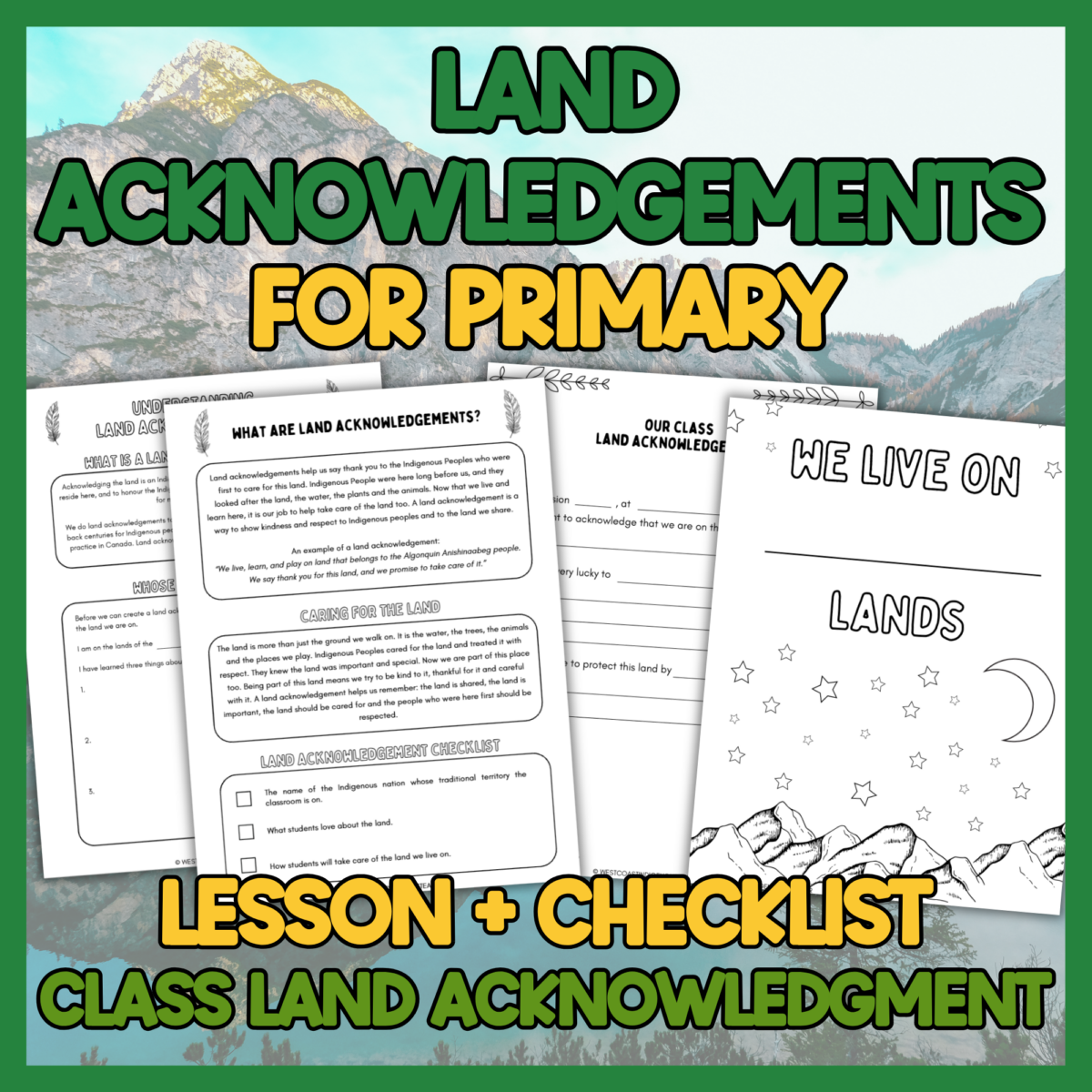
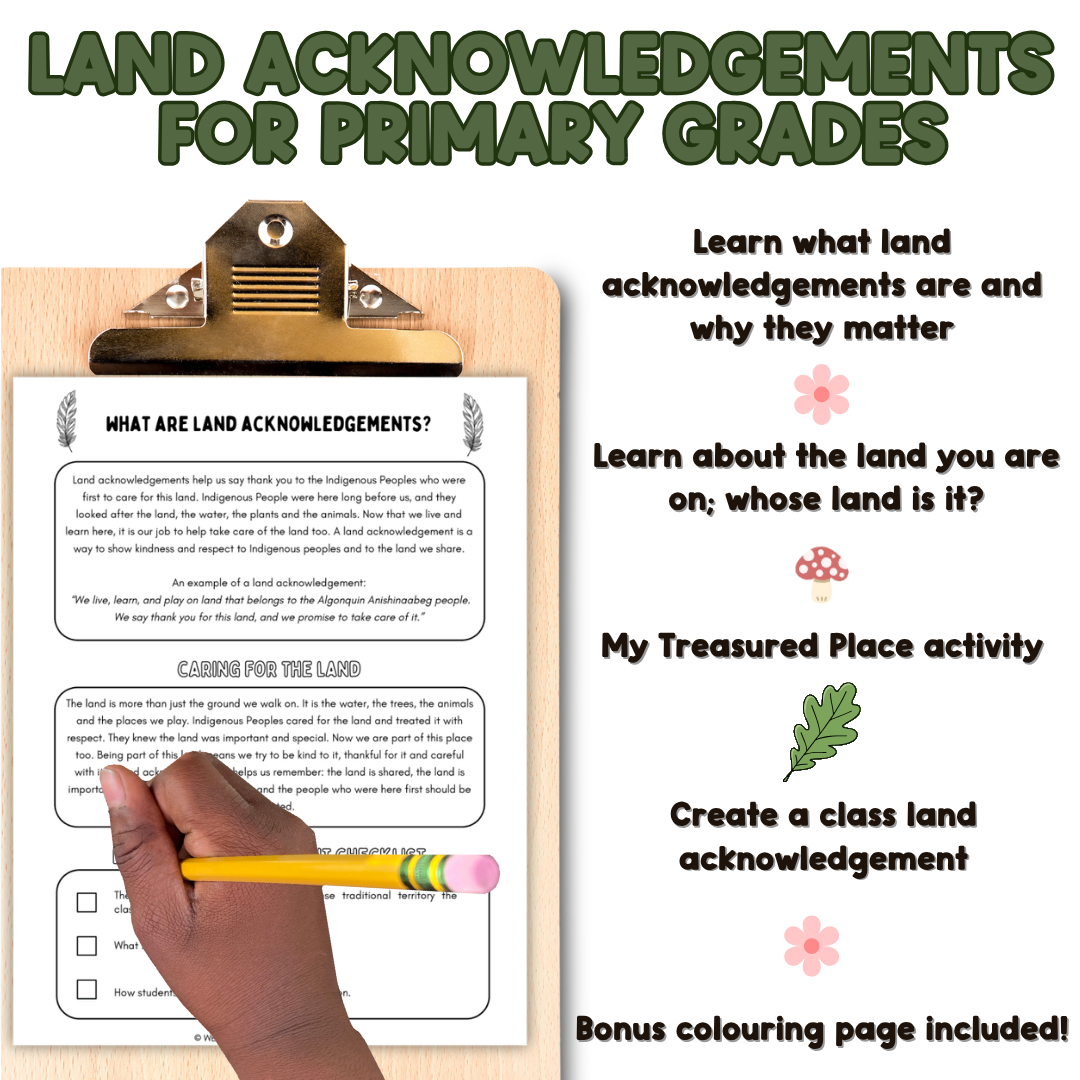

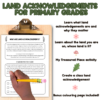
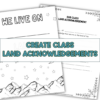

Looking for a meaningful land acknowledgement activity for elementary students? This ready-to-use resource helps students understand why land acknowledgements matter, learn about the lands where they live and create a thoughtful class land acknowledgement together.
Four engaging activities guide students through the learning and reflection that should come before writing an acknowledgement. Students explore their local area, consider their relationship with the land and reflect on a place that is personally important to them.
A bonus colouring page and complete land acknowledgement bulletin board kit are also included, making it easy to display and revisit your class learning throughout the year.
Four Land Acknowledgement Activities
1. Understanding Land Acknowledgements
Introduce students to what a land acknowledgement is, why land acknowledgements matter and what a meaningful acknowledgement can include.
2. Learning About the Land
Help students learn about the lands where they live and attend school. Students are encouraged to identify the Indigenous Nation or Nations connected to their local area and recognize that Indigenous Peoples are present-day communities.
3. My Treasured Place Activity
Students reflect on a place that is meaningful to them. This personal connection helps them consider why land, place and belonging matter before creating a class acknowledgement.
4. Create a Class Land Acknowledgement
Work together to create a meaningful class land acknowledgement based on what students have learned. Rather than simply copying a prepared statement, students contribute ideas and consider how acknowledgement can be connected to learning, gratitude and responsibility.
What Is Included?
♡ Introduction to land acknowledgements
♡ Why land acknowledgements matter
♡ Important elements to include
♡ Learning about the lands where students live and learn
♡ My Treasured Place reflection activity
♡ Collaborative class land acknowledgement activity
♡ “We Live On…” colouring page
♡ “Our Class Land Acknowledgement” bulletin board title
♡ Nature-themed bulletin board pieces
♡ Materials for creating a collaborative classroom display
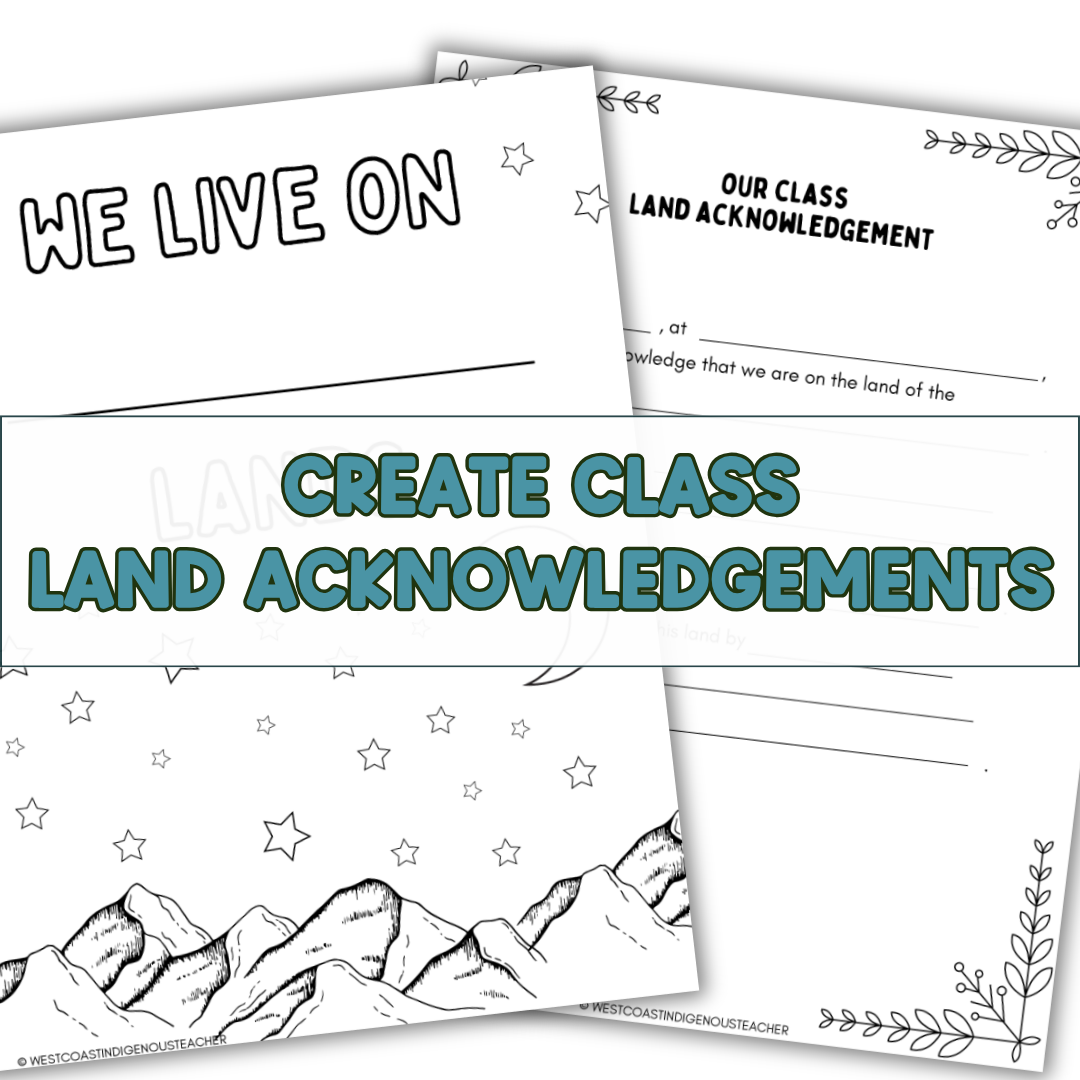
Our Class Land Acknowledgement Bulletin Board
Use the included bulletin board materials to share your class acknowledgement and student reflections.
The nature-themed display includes an “Our Class Land Acknowledgement” title and coordinating board pieces. Add students’ treasured-place reflections or colouring pages to create a collaborative display that keeps their learning visible beyond a single lesson.
More Than a Statement
This resource helps students understand that a land acknowledgement is more than a set of words to repeat. Meaningful acknowledgement begins with learning whose lands we are on, recognizing the longstanding and present-day relationships Indigenous Peoples have with those lands, and considering our own responsibilities.
The activities provide an approachable starting point while leaving room for teachers and students to continue learning from local Indigenous Nations, communities and sources.
Perfect For
♡ Elementary classrooms
♡ Land acknowledgement lessons
♡ Indigenous education
♡ Social studies
♡ Truth and Reconciliation learning
♡ Back-to-school community building
♡ Outdoor and land-based learning
♡ National Indigenous History Month
♡ Orange Shirt Day learning
♡ Classroom bulletin boards
♡ Year-round reflection
This land acknowledgement activity for elementary students combines learning, personal reflection and collaborative writing to help your class create an acknowledgement with greater understanding and care.
IMPORTANT INFORMATION
The resources provided here are designed to support the teaching of Indigenous cultures, including First Nations, Métis, and Inuit peoples. It is important to recognize that these communities are not monolithic; beliefs, traditions, and practices vary greatly from Nation to Nation, and even from community to community. The content shared in these materials reflects my own lived experience and understanding of Indigenous cultures, but it does not encompass the full diversity or richness of these traditions.
I encourage educators to approach these resources with respect, sensitivity, and openness to learning. When possible, please engage with local Indigenous communities or cultural experts to ensure that the information shared is accurate and culturally appropriate for the specific Nations or groups you are teaching about.
These resources are intended to foster understanding and appreciation for Indigenous people.
Anna D –
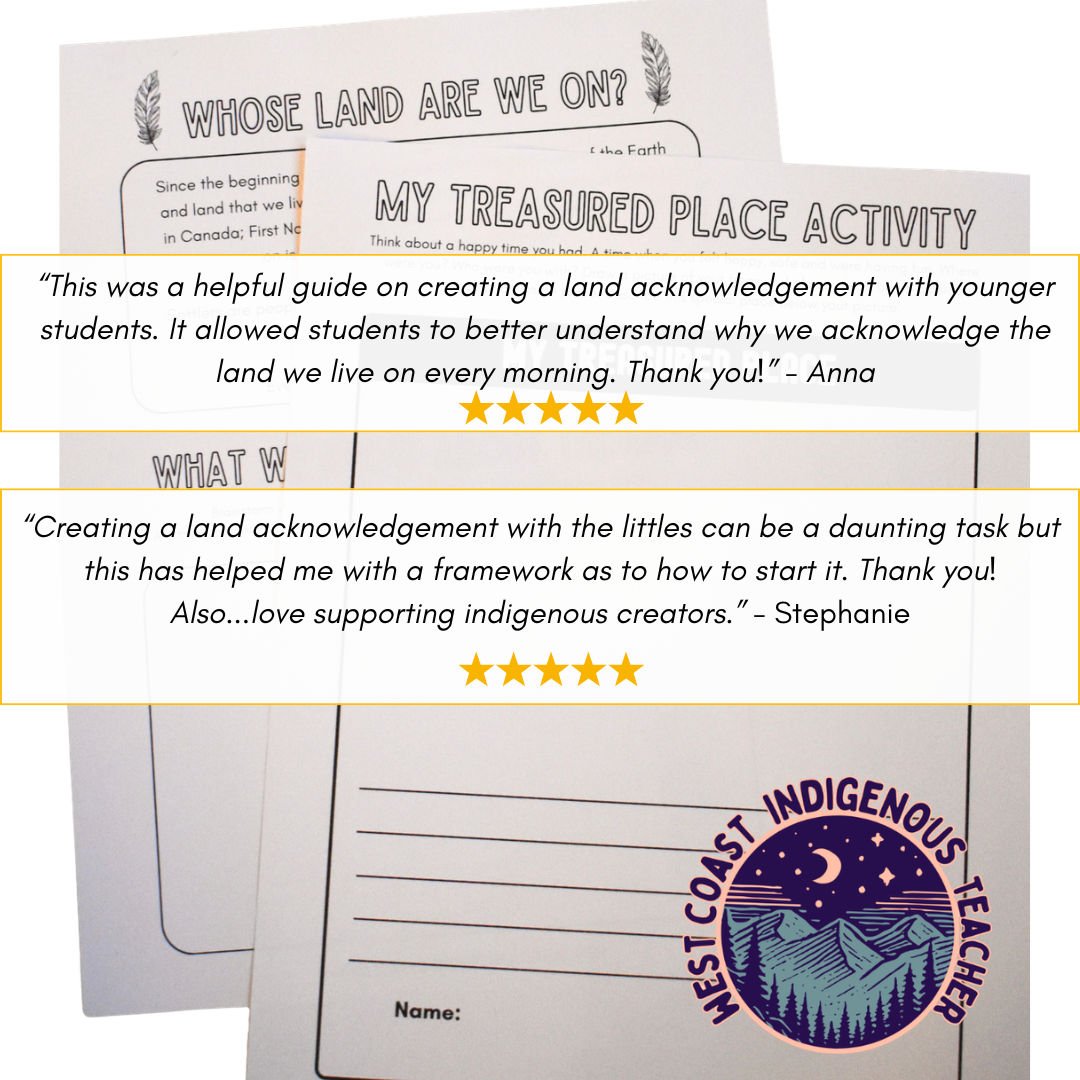
“This was a helpful guide on creating a land acknowledgement with younger students. It allowed students to better understand why we acknowledge the land we live on every morning. Thank you!”
5/5 stars – Anna D.
Stephanie N. –
“Creating a land acknowledgement with the littles can be a daunting task but this has helped me with a framework as to how to start it. Thank you! Also…love supporting indigenous creators. ”
5/5 stars