
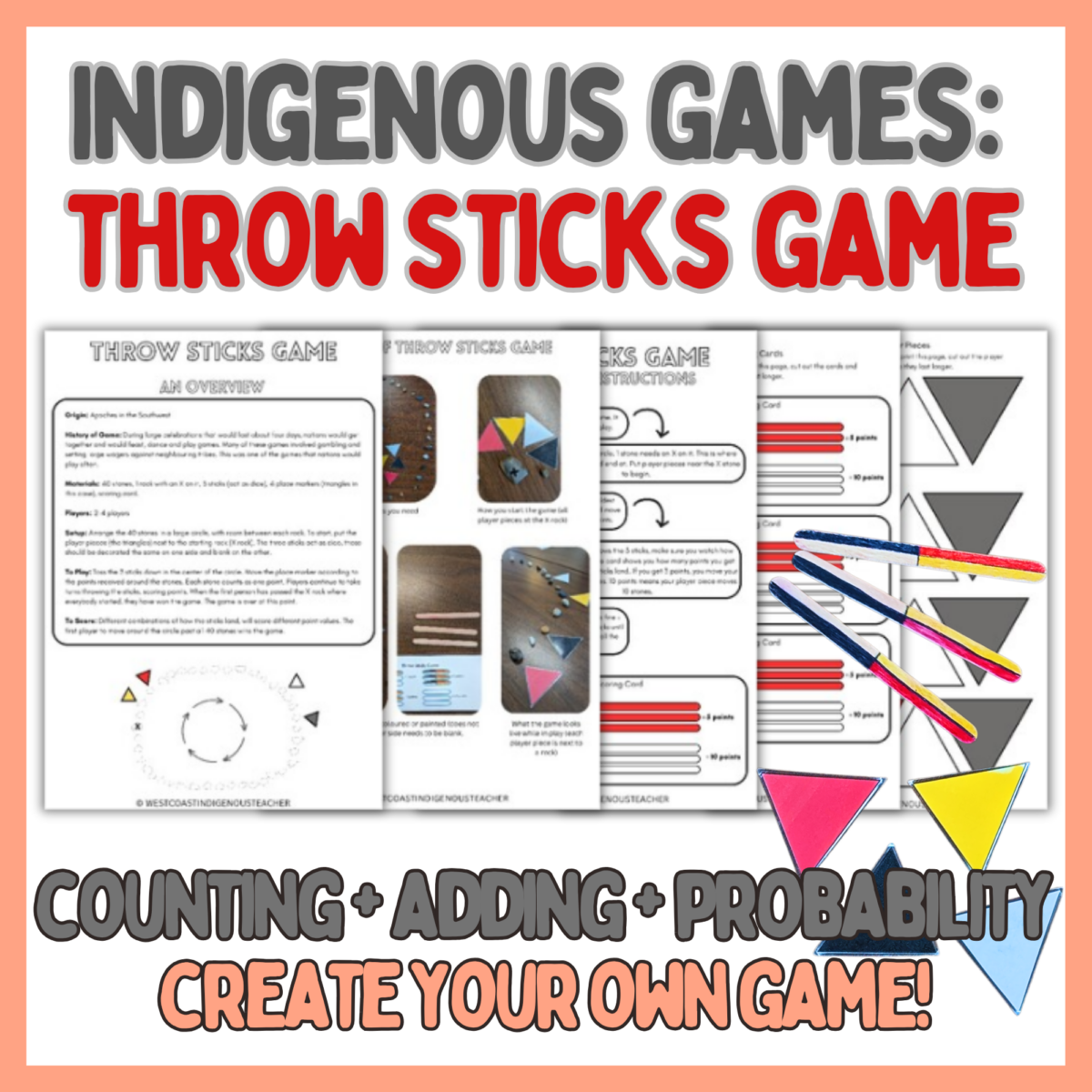
Looking for an engaging Indigenous math game that combines culture, movement and hands-on learning? This printable Throw Sticks activity helps students practice counting, addition and probability while creating and playing a game using sticks and stones.
The resource includes step-by-step instructions, scoring information and printable pieces for creating multiple game sets. It is recommended for Grade 2 and up and can be played outdoors or inside a classroom with enough space.
What Is the Throw Sticks Game?
Throw Sticks and related stick-dice games have been played in different forms by many Indigenous Peoples across North America.
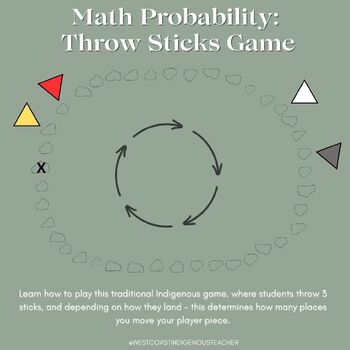
Students decorate sticks so that one side can be distinguished from the other. The sticks are tossed like dice, and players determine their score based on how the sticks land. Players then count and move their markers along a circular path made from stones.
Math Skills Students Practice
This Throw Sticks math game gives students an opportunity to practice:
♡ Counting
♡ Addition
♡ Mental math
♡ Number sense
♡ Scorekeeping
♡ Comparing possible outcomes
♡ Introductory probability
♡ Strategic thinking
Younger students can focus on counting spaces and adding points. Older students can investigate which outcomes occur most often and compare experimental results.
Indigenous Math Game Includes
♡ Teacher and student game instructions
♡ Step-by-step setup guidance
♡ Throw Sticks scoring information
♡ Printable scoring cards
♡ Printable player pieces
♡ Materials for creating multiple game sets
♡ Counting, addition and probability practice
♡ Suggestions for playing indoors or outside
Small stones and sticks used as dice are not included. Teachers and students can gather appropriate materials locally or substitute classroom materials such as counters and craft sticks.
A Hands-On Probability Game
Each throw produces a combination of decorated and undecorated sides. Students use the result to calculate their score and determine how many spaces to move.
This makes the game a natural introduction to probability. Students can discuss possible outcomes, make predictions and track what happens over several rounds.
The activity can be extended by having students:
♡ Tally the results of each throw
♡ Compare how frequently different outcomes occur
♡ Create a table or graph of their results
♡ Discuss whether every outcome is equally likely
♡ Calculate total scores using repeated addition
Perfect For
♡ Grade 2 and up
♡ Indigenous math activities
♡ Elementary probability lessons
♡ Addition and counting practice
♡ Outdoor math activities
♡ Math centres
♡ Small-group learning
♡ Indigenous education
♡ National Indigenous History Month
♡ Indigenous Peoples Day learning
♡ Hands-on numeracy activities
♡ Indoor or outdoor learning
Use this ready-to-print Indigenous math game to help students experience counting, addition and probability through movement, play and culturally connected learning.
IMPORTANT INFORMATION
The resources provided here are designed to support the teaching of Indigenous cultures, including First Nations, Métis, and Inuit peoples. It is important to recognize that these communities are not monolithic; beliefs, traditions, and practices vary greatly from Nation to Nation, and even from community to community. The content shared in these materials reflects my own lived experience and understanding of Indigenous cultures, but it does not encompass the full diversity or richness of these traditions.
I encourage educators to approach these resources with respect, sensitivity, and openness to learning. When possible, please engage with local Indigenous communities or cultural experts to ensure that the information shared is accurate and culturally appropriate for the specific Nations or groups you are teaching about.
These resources are intended to foster understanding and appreciation for Indigenous people.
Reviews
There are no reviews yet.