For many Indigenous Peoples across North America, the land we live on is known not simply as a continent—but as Turtle Island. This name is rooted in creation stories that have been passed down through generations, through oral traditions and storytelling. It holds deep cultural and spiritual meaning, and offers a beautiful opportunity for students to explore Indigenous worldviews in a respectful, age-appropriate way.
As a First Nations educator, I’ve created a Turtle Island lesson and activity that introduces students to this important concept through reflection, creativity, and storytelling. It’s designed to support you in teaching Indigenous content in a way that is both meaningful and accessible—especially during Indigenous Peoples Day in Canada or Native American Heritage Month in the U.S.

🌍 What Is Turtle Island?
Turtle Island is the name many Indigenous nations use to refer to the landmass we know as North America. The story of Turtle Island is not the same in every culture, but many share the belief that the world was formed on the back of a giant turtle, after Sky Woman fell from the sky world. Animals played a key role in helping to create the land, and the story often includes themes of cooperation, balance, and the sacred connection between people and the Earth.
Turtle Island is more than a story though—it’s a perspective. It reminds us that the land is alive, that we are part of it, and that stories carry knowledge and teachings that help us live in harmony with one another and with nature.
Many students may never have heard this name for the continent they live on, and many teachers may be encountering it for the first time too—and that’s okay. Introducing your students to Turtle Island in a gentle, respectful way opens the door to deeper conversations about Indigenous identity, worldviews, and the role of storytelling in cultural understanding.
✏️ What’s Included in the Turtle Island Resource?
I designed this Turtle Island activity to help students reflect on the meaning of the story, practice creative writing, and make connections between storytelling and the land.
Here’s what’s included:
- A 5-page Turtle Island lesson that introduces the story and explains its significance
- A section on Indigenous storytelling and its role in passing down knowledge
- Reflection questions to help students engage with the story
- A creative storytelling activity where students imagine and write their own version of a creation story
- A writing craft that makes their stories display-ready
- A bonus Turtle Island colouring page for early finishers or independent exploration
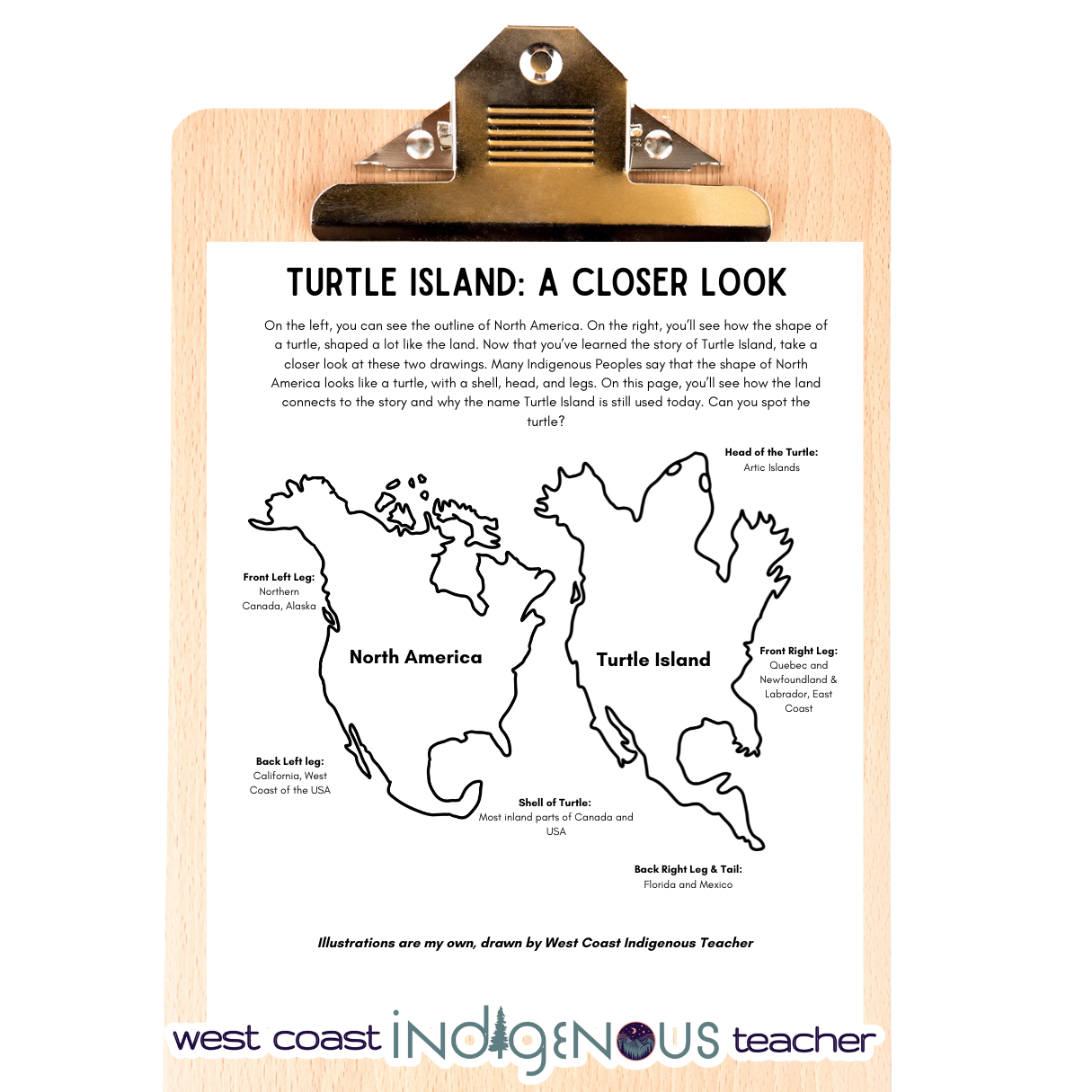
This resource is a great fit for students in Grades 2–6, and can be adapted for a variety of classroom settings.
🧡 Why Teaching About Turtle Island Matters
Teaching about Turtle Island is more than a social studies or literacy activity—it’s a way to honour and recognize Indigenous ways of knowing. It gives students a chance to see the world through another lens, and to understand that there are many stories about how the world came to be.
This activity encourages students to:
- Reflect on the importance of land and relationships in Indigenous cultures
- Explore the role of oral storytelling as a source of knowledge
- Think creatively about their own stories and cultural identities
Most importantly, it helps build understanding and respect—two things that are central to reconciliation and to creating inclusive learning environments.
✨ Perfect for Indigenous Peoples Day or Native American Heritage Month
Whether you’re recognizing Indigenous Peoples Day in Canada or Native American Heritage Month in the United States, this Turtle Island activity makes a powerful addition to your classroom. It’s designed to help students reflect, create, and connect in a way that’s both meaningful and respectful.
👉 You can find the full resource in my shop here:
🔗 Turtle Island Lesson + Activity