The Medicine Wheel is a sacred symbol in many Indigenous cultures across Turtle Island. While the teachings vary between nations, the wheel is often used to represent balance and the interconnectedness of all aspects of life: mental, emotional, physical, and spiritual. Bringing medicine wheel activities into your classroom is a meaningful way to introduce these important teachings in a respectful and age appropriate way.
As a First Nations educator, I’ve created three medicine wheel activities to support classroom learning through creativity, reflection, and wellness. These resources are designed to help students build self-awareness, explore identity, and learn about Indigenous perspectives through engaging, hands-on experiences. Whether you’re looking for art based lessons, SEL projects, or a bulletin board with purpose, these medicine wheel activities offer powerful ways to deepen classroom learning.
What Is the Medicine Wheel?
There is no single Medicine Wheel teaching that represents all Indigenous Peoples.
The meanings, colours, directions, animals and teachings connected to Medicine Wheels can vary among Indigenous Nations, communities and Knowledge Keepers. Not all Indigenous Peoples use the Medicine Wheel.
Some teachings focus on the four directions, elements, seasons or stages of life. Others explore four interconnected areas of wellness:
- Mental
- Emotional
- Physical
- Spiritual
When introducing the Medicine Wheel in the classroom, it is important to explain this diversity. If possible, connect your lesson with information shared by the local Indigenous Nations and communities where you live and teach.
The three Medicine Wheel activities for students below focus primarily on balance, interconnectedness and the four aspects of wellness.
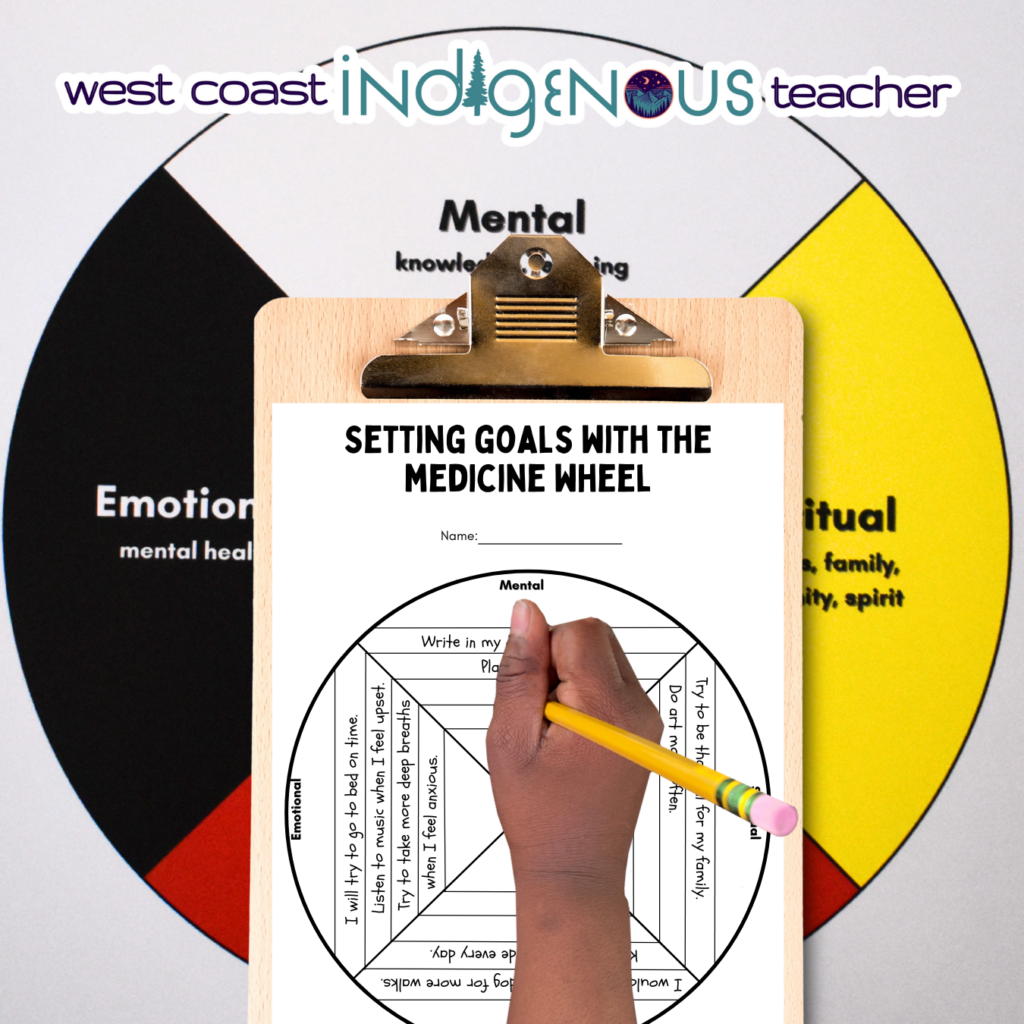
1. Medicine Wheel SEL + Goal Setting Activity
This Medicine Wheel SEL activity helps students reflect on their well-being and create goals connected to their mental, emotional, physical and spiritual wellness.
Students first learn about the cultural significance of the Medicine Wheel and the importance of balance. They then consider how they currently care for each area of their wellness and choose personal goals they would like to work toward.
The resource includes:
- A Medicine Wheel lesson
- Cultural background and context
- Four aspects of holistic wellness
- Student reflection prompts
- Personal goal-setting sheets
- A printable Medicine Wheel craft
This activity works especially well at the beginning of the school year, during a health or wellness unit, after a school break or anytime students need an opportunity to pause and check in with themselves.
It brings goal setting and social-emotional learning together while helping students understand that wellness includes more than physical health.
👉 Explore the Medicine Wheel Goal-Setting Activity
2. Medicine Wheel Craft for Wellness and Personal Growth
This hands on Medicine Wheel craft invites students to reflect on how they have grown and changed throughout their lives.
Students use a baby photo and a current photo to represent their personal life journey. They then reflect on their mental, emotional, physical and spiritual growth before creating a Medicine Wheel featuring their photos and written responses.
The resource includes:
- A teacher lesson plan
- A two-page introduction to the Medicine Wheel
- Cultural context and background information
- Four wellness reflection activities
- A personal growth and life journey activity
- A printable Medicine Wheel photo craft
This activity can support lessons about identity, personal growth, transitions and self-awareness. It also works well for beginning of year reflection, year end activities, health lessons and social-emotional learning.
The completed Medicine Wheel crafts can be displayed together to create a meaningful classroom display about wellness and growth.
👉 Explore the Medicine Wheel Craft and SEL Activity

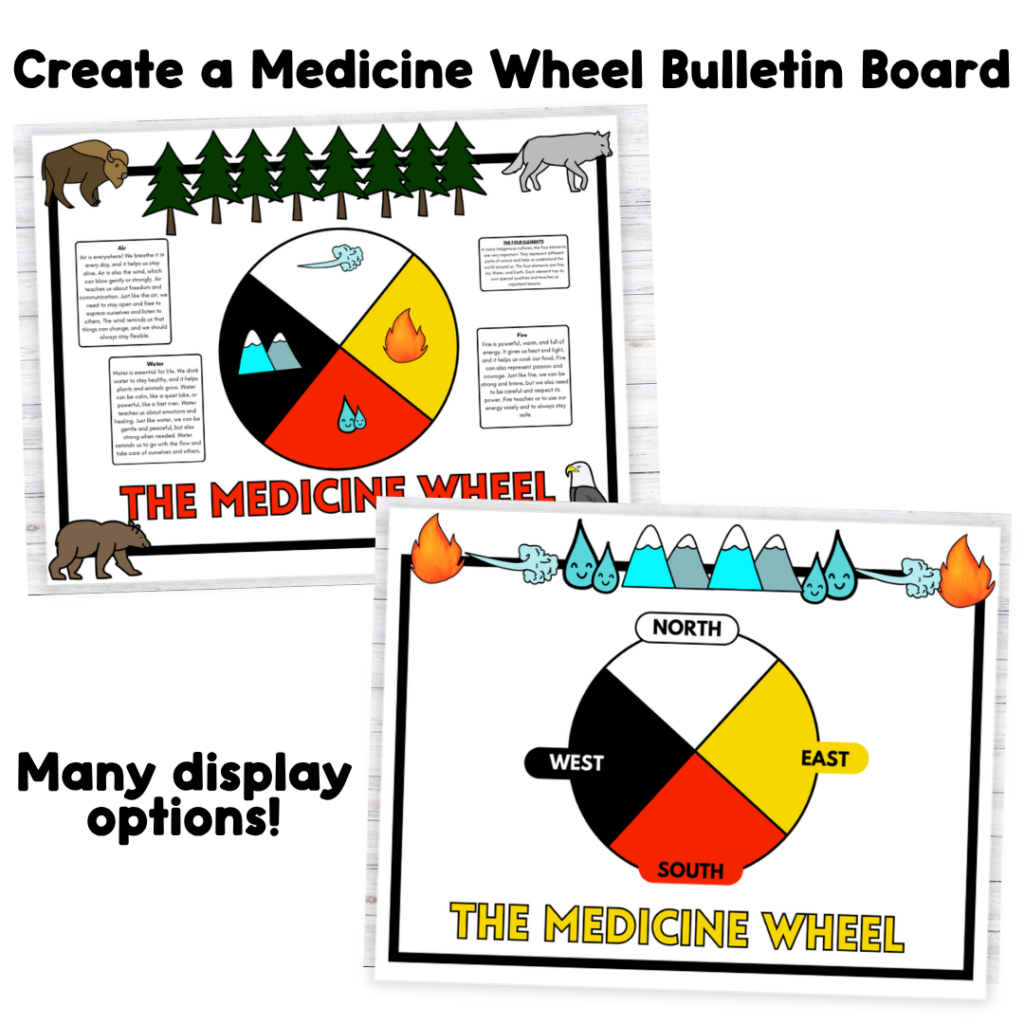
3. Medicine Wheel Bulletin Board and Writing Activity
A classroom display becomes more meaningful when students understand and contribute to what is being displayed.
This interactive Medicine Wheel bulletin board includes a lesson, writing activities and descriptive teaching cards. Students learn about one commonly shared interpretation of the Medicine Wheel before completing a written reflection and adding their work to the class display.
The resource includes:
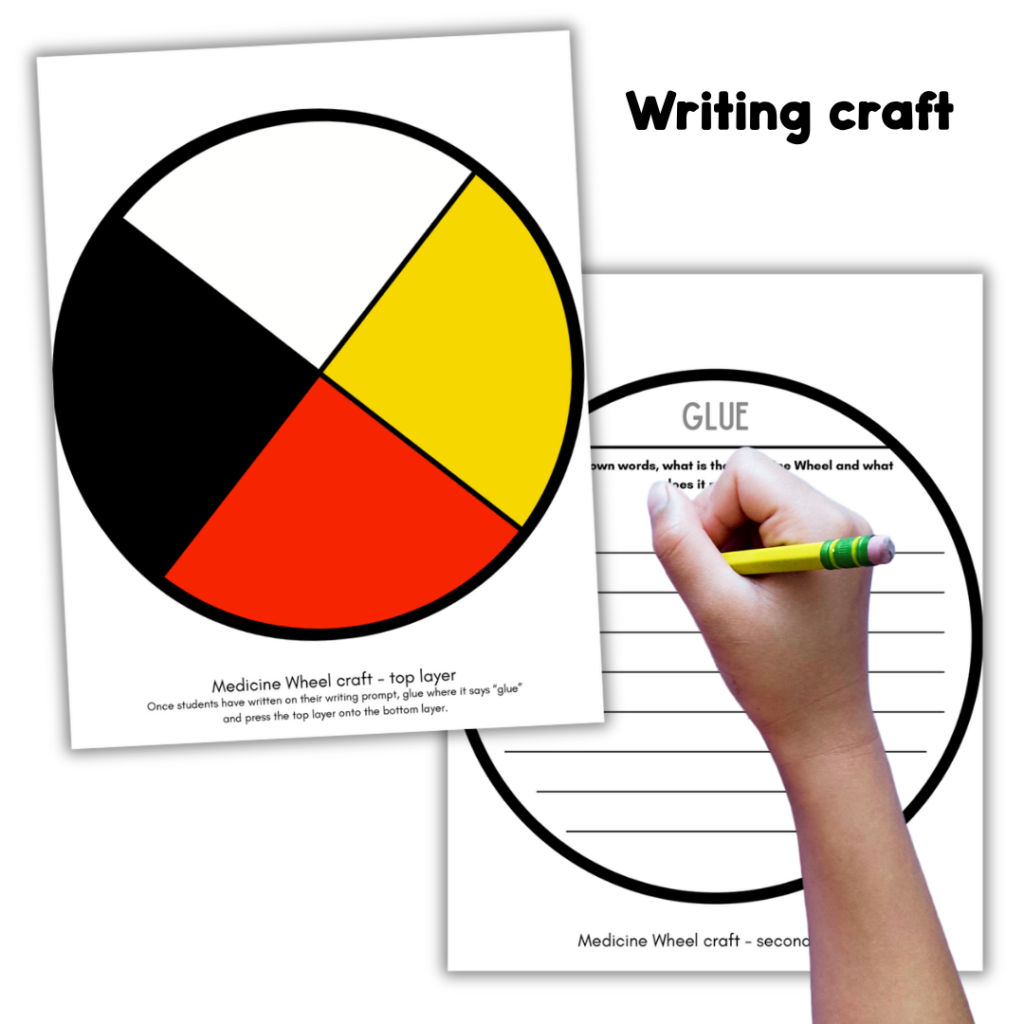
- Three Medicine Wheel writing crafts
- Medicine Wheels in three sizes
- Bear, bald eagle, wolf and buffalo pieces
- Fire, water, earth and air pieces
- North, east, south and west direction pieces
- Mental, emotional, physical and spiritual wellness pieces
- Twenty descriptive teaching paragraphs
- Two colour options for the bulletin board title
Students can choose from three writing prompts connected to wellness, balance and personal learning. Their finished work can then be displayed alongside the teaching cards and visual pieces.
This turns the bulletin board into an educational display students can continue referring to throughout the year, rather than using Indigenous imagery only as classroom decoration.
👉 Explore the Medicine Wheel Bulletin Board and Writing Craft
How to Teach the Medicine Wheel Respectfully
Before beginning any Medicine Wheel craft or activity, provide students with the cultural context behind it.
Remind students that:
- Medicine Wheel teachings vary between Indigenous Nations and communities
- There is no universal arrangement of colours, directions, animals or meanings
- Not all Indigenous Peoples use the Medicine Wheel
- The Medicine Wheel should not be presented as representing every Indigenous culture
- Local and Nation-specific learning should be included whenever possible
- The learning should come before the craft or classroom display
The Medicine Wheel can support student reflection, but it should not be reduced to a generic wellness graphic. Naming its Indigenous context and acknowledging the diversity of the teachings are important parts of using it respectfully.
Why Medicine Wheel Activities Matter
These Medicine Wheel activities for the classroom help students explore more than academic content. Students consider how different parts of their well-being are connected and what balance might look like in their own lives.
The activities can support:
- Social-emotional learning
- Health and wellness
- Personal goal setting
- Identity and personal growth
- Student reflection
- Indigenous education
- Art and social studies integration
- Classroom community building
They also give teachers an opportunity to introduce Indigenous perspectives without treating all Indigenous cultures as the same.
As a First Nations educator, I create resources that help educators approach Indigenous learning with greater confidence, care and context. All the artwork included in these Medicine Wheel resources was drawn by me and created specifically for classroom learning.
Explore the Medicine Wheel Resources
Choose the activity that best fits your classroom:
🌀 Medicine Wheel Goal-Setting and SEL Activity
🎨 Medicine Wheel Craft for Wellness and Personal Growth
📌 Medicine Wheel Bulletin Board and Writing Craft
These Medicine Wheel activities can help students explore balance, wellness and interconnectedness through learning, reflection and creativity.
Explore More Indigenous Education Ideas
You may also enjoy:
Orange Shirt Day Activities for the Classroom
How to Start Teaching Indigenous Content
Teaching About Turtle Island Through Indigenous Storytelling