Northern Lights activities for kids immediately capture students’ attention. The colours, movement and mystery of the Aurora Borealis feel almost magical, making this natural wonder a perfect starting point for learning across several subjects.
These activities can go much deeper than creating a beautiful winter picture. Students can explore the science behind the Northern Lights, learn about Inuit perspectives and turn their learning into a meaningful art project.
Explore the Science Behind the Northern Lights
Before students begin creating, it helps to understand what they are actually seeing.
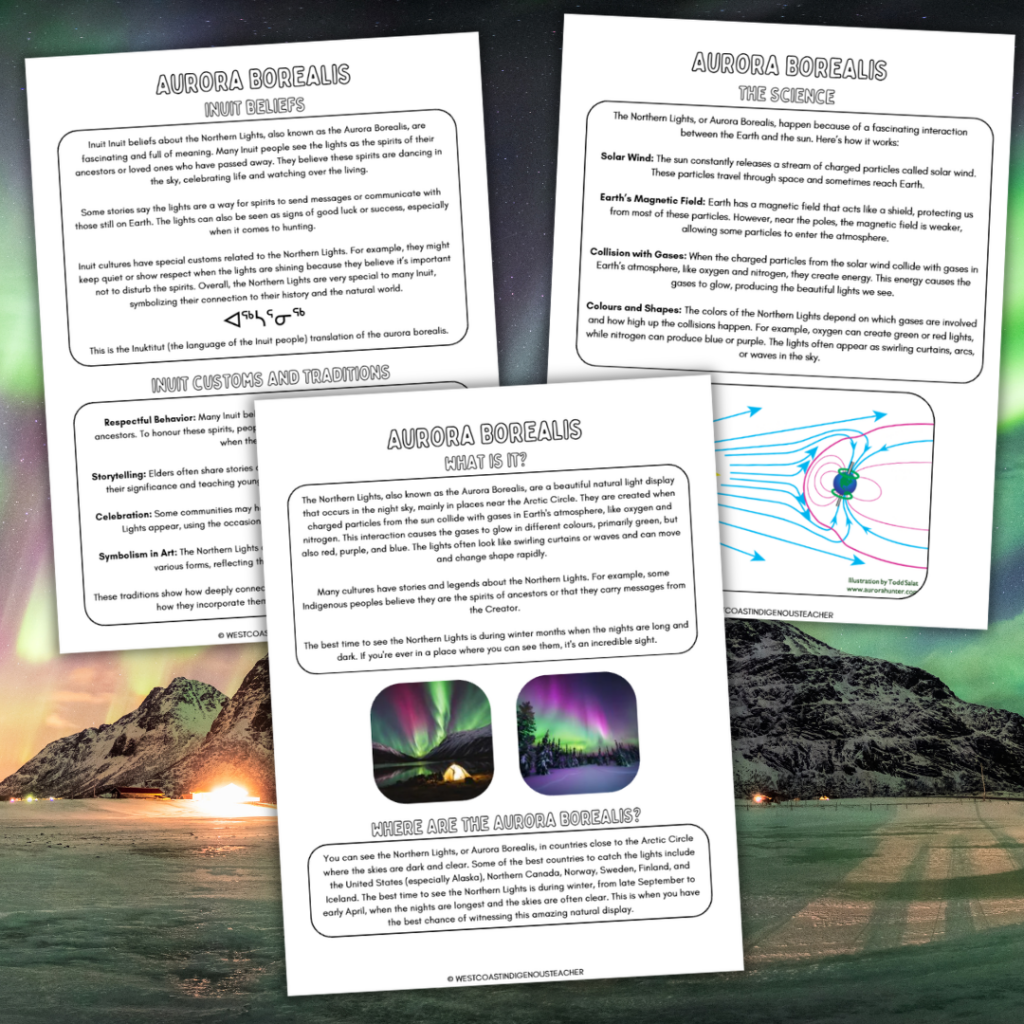
The Northern Lights occur when particles from the Sun interact with Earth’s magnetic field and gases in the upper atmosphere. These interactions create the colourful lights that appear to move across the sky. Different gases can produce different colours, including the greens, pinks, purples and reds that students may recognize in photographs.
NASA’s explanation of the Aurora Borealis is a helpful additional source if you want to show students photographs, videos or a simple scientific explanation.
This makes the topic a natural fit for elementary science. Students can learn about the Sun, Earth’s atmosphere, magnetic fields, geography and the Arctic while exploring one unforgettable natural phenomenon.
Include Inuit Perspectives With Care
Science is only one way of understanding and connecting with the Northern Lights.
Inuit communities have lived beneath the Northern Lights for generations, and cultural stories and understandings have been shared in different regions. It is important not to present one story as a belief held by all Inuit people. Perspectives can vary between communities, families and storytellers.
Introducing students to particular Inuit perspectives gives them an opportunity to recognize that people understand the natural world through science, lived experience, culture and story.
It also helps move an Arctic lesson beyond igloos, polar bears and other topics that can easily become disconnected from the people who continue to live in the North today.
Create a Northern Lights Art Project
Once students have explored the science and cultural learning, they can respond through art.
Northern Lights art is especially effective because there is so much room for creativity. No two skies need to look the same. Students can experiment with colour, movement, shape and contrast as they create their own interpretation of the Aurora Borealis.
My Northern Lights Art Project and Science Lesson brings these areas of learning together. Students learn about the Aurora Borealis, explore Inuit cultural perspectives and create artwork inspired by a featured Indigenous artist.
The resource includes:
- A Northern Lights science lesson
- An introduction to the Aurora Borealis
- Inuit perspectives connected to the Northern Lights
- A featured Indigenous artist study
- A Northern Lights art activity
- Bulletin board pieces
- An “Exploring the North Through Art” display title
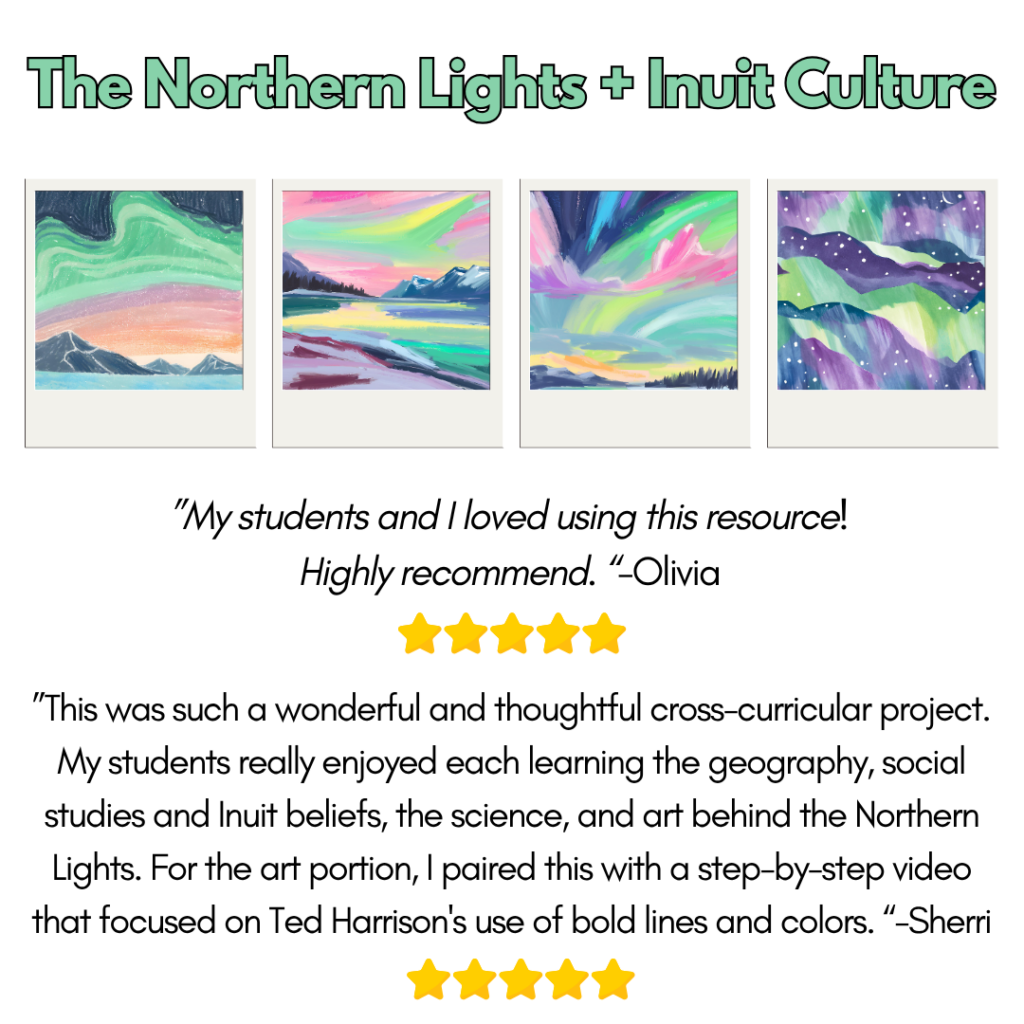
The finished artwork creates a colourful winter classroom display, but the real value is in the learning that happens before students begin creating.
One teacher described this as a thoughtful cross curricular project that allowed students to connect geography, social studies, science, Inuit perspectives and art. That is exactly why the Northern Lights work so beautifully as a classroom topic. They invite students to wonder, investigate and create.
If you are planning winter learning, these Northern Lights activities for kids offer much more than a seasonal craft. They provide a meaningful way to connect science, Indigenous education and art in one memorable project.
🌌Explore the complete Northern Lights lesson and art project here.🌌
You can also find this resource inside my Inuit Culture Activities and Indigenous Winter Art Bundle, along with additional activities for learning about Inuit culture, Arctic life and Indigenous art.