Students often hear a land acknowledgement during morning announcements or school assemblies. Teaching the meaning of a land acknowledgement for kids takes time, conversation, and opportunities to connect learning with the place where they live.
Begin with a few questions: Whose territory are we learning on? What do we know about the Indigenous Nations connected to this place? How can we show respect through our actions?
The activities below offer starting points for kindergarten, primary, and intermediate learners, with room to deepen understanding throughout the school year.
How to explain a land acknowledgement for kids
When explaining a land acknowledgement for kids, simple language gives students a place to begin:
“A land acknowledgement recognizes the Indigenous Peoples whose territory we are on and their continuing relationships with this place. It reminds us to learn about these Nations and think about our responsibilities.”
Take time to unpack this explanation. Introduce the names of the local Nations, talk about what students already know, and make space for questions.
As you teach, help students understand that Indigenous Peoples are here today. Different Nations have their own languages, histories, cultures, and relationships with their territories. Use specific Nation names and include contemporary communities in your classroom learning.
Children’s understanding will grow through repeated conversations. They need time to connect unfamiliar words with people, places, and ideas they are learning about.
Begin by learning about local Nations
Preparing to teach a land acknowledgement for kids begins with learning about the Indigenous Nation or Nations connected to your school’s location.
Start with the Nations’ official websites and educational materials they have shared publicly. Your school district’s Indigenous education team may also help you find local resources and guidance.
Find out which Nation names to use, how they are spelled, and how to pronounce them. When publicly shared pronunciation recordings are available, listen and practise.
Bring this learning into the classroom through photographs, maps, books, language resources, and information about communities today. Explain where the information comes from so students begin to understand whose knowledge they are learning from.
Keep a class list of questions. You do not need to answer everything in one lesson, and those questions can guide future learning.
Land acknowledgement activities for kindergarten
For kindergarten students, begin with experiences they can see, hear, and participate in.
When introducing a land acknowledgement for kids in kindergarten, begin with experiences they can see, hear, and participate in.
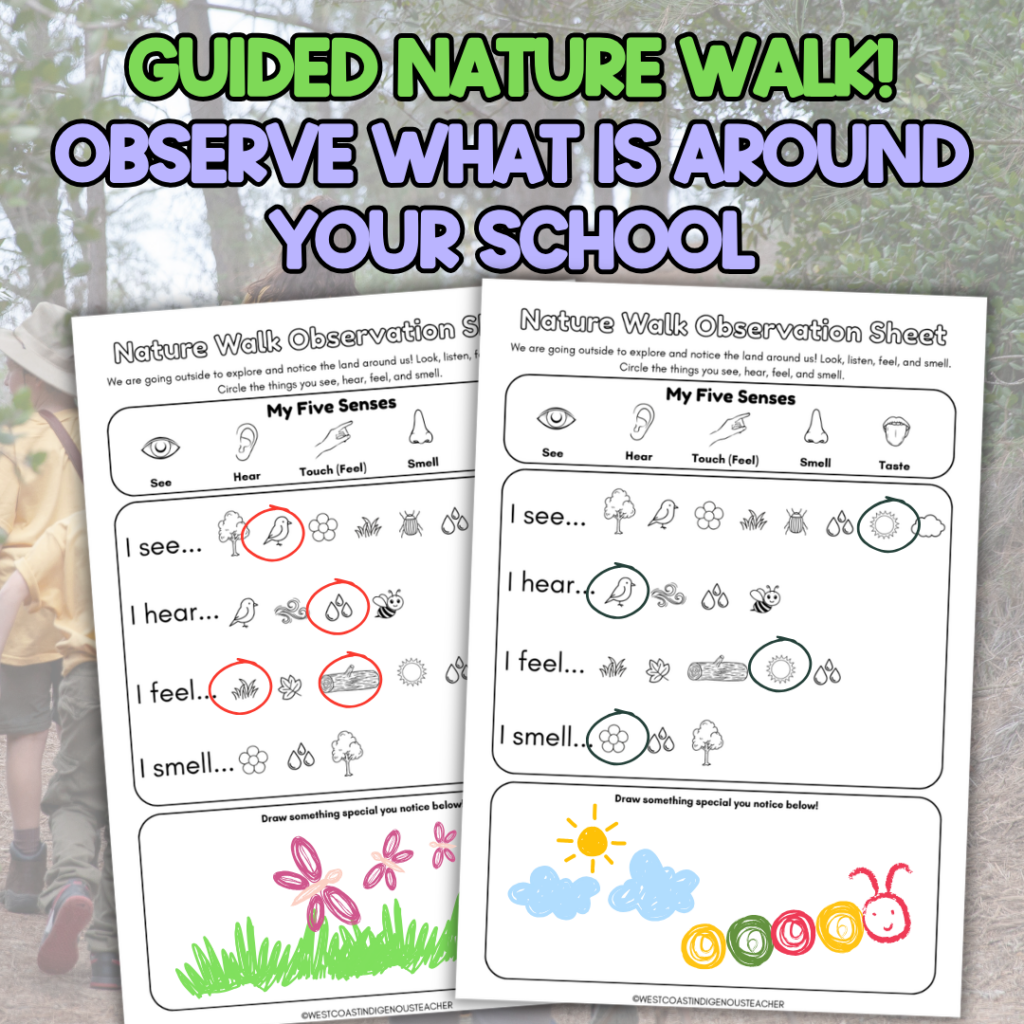
A walk around the school grounds gives children a familiar place to begin. Invite them to notice plants, trees, animals, water, and weather. Afterwards, ask them to draw something they noticed or share an observation with a partner.
Connect these experiences with learning about the local Nation or Nations. Introduce their names and explain that their relationships with this place continue today.
You might ask:
- What do you notice about the place where we learn?
- What would you like to learn about this place?
- Which Nation names are we practising?
- How can we take care of the places we use together?
Keep lessons short and revisit ideas through pictures, movement, shared reading, and conversation.
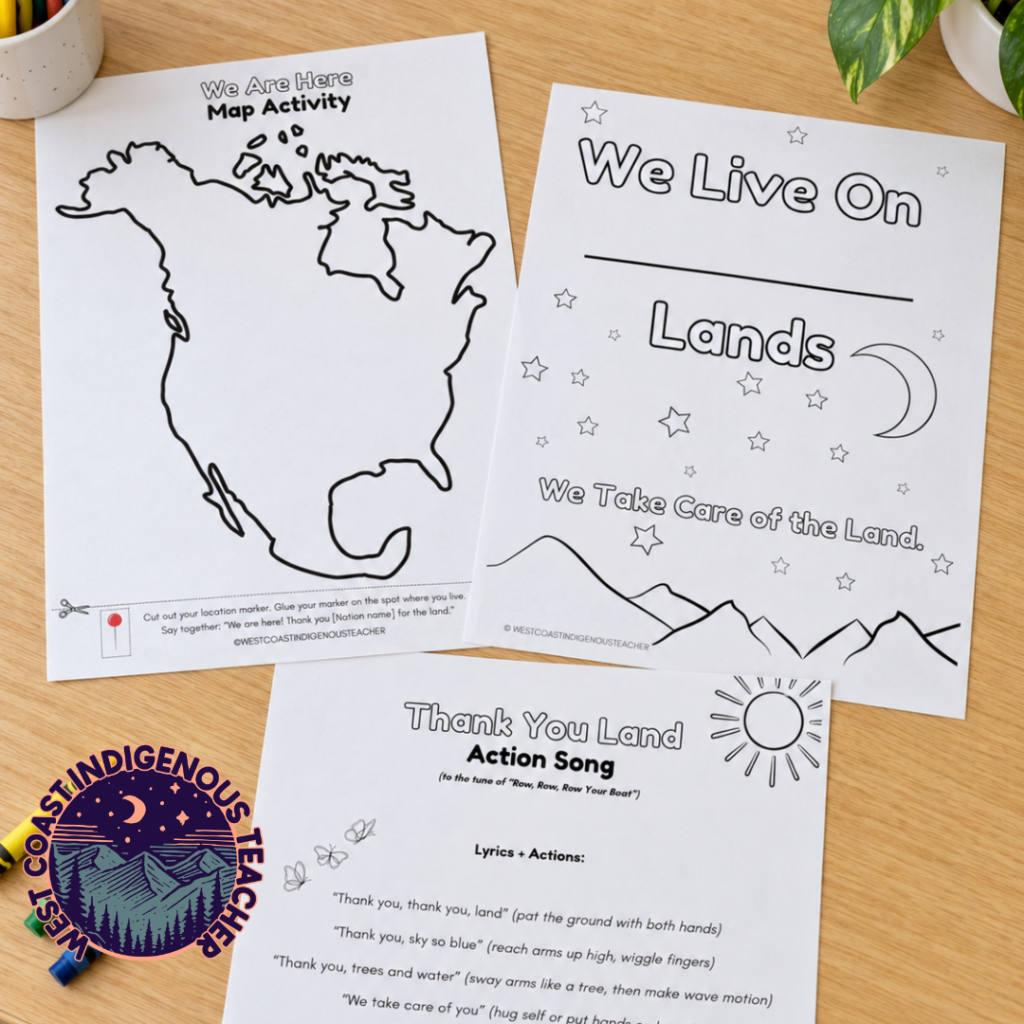
My Land Acknowledgement Activities for Kindergarten includes a guided nature walk, a collaborative handprint mural, “We Are Here” mapping activities, a colouring page, and three songs with movement and reflection. These activities give young learners different ways to participate as they begin exploring land, place, and community.
Find my land acknowledgement activity for kindergarten students here!
Allow children to show their understanding through drawing, speaking, noticing, and asking questions. These responses can help you decide what to explore next.
Land acknowledgement activities for primary students
Primary students can begin examining the meaning of the acknowledgement they hear at school.
Read a short section together. Pause at Nation names and unfamiliar words, and invite students to share what they understand. Choose one or two ideas to explore before returning to the full statement.
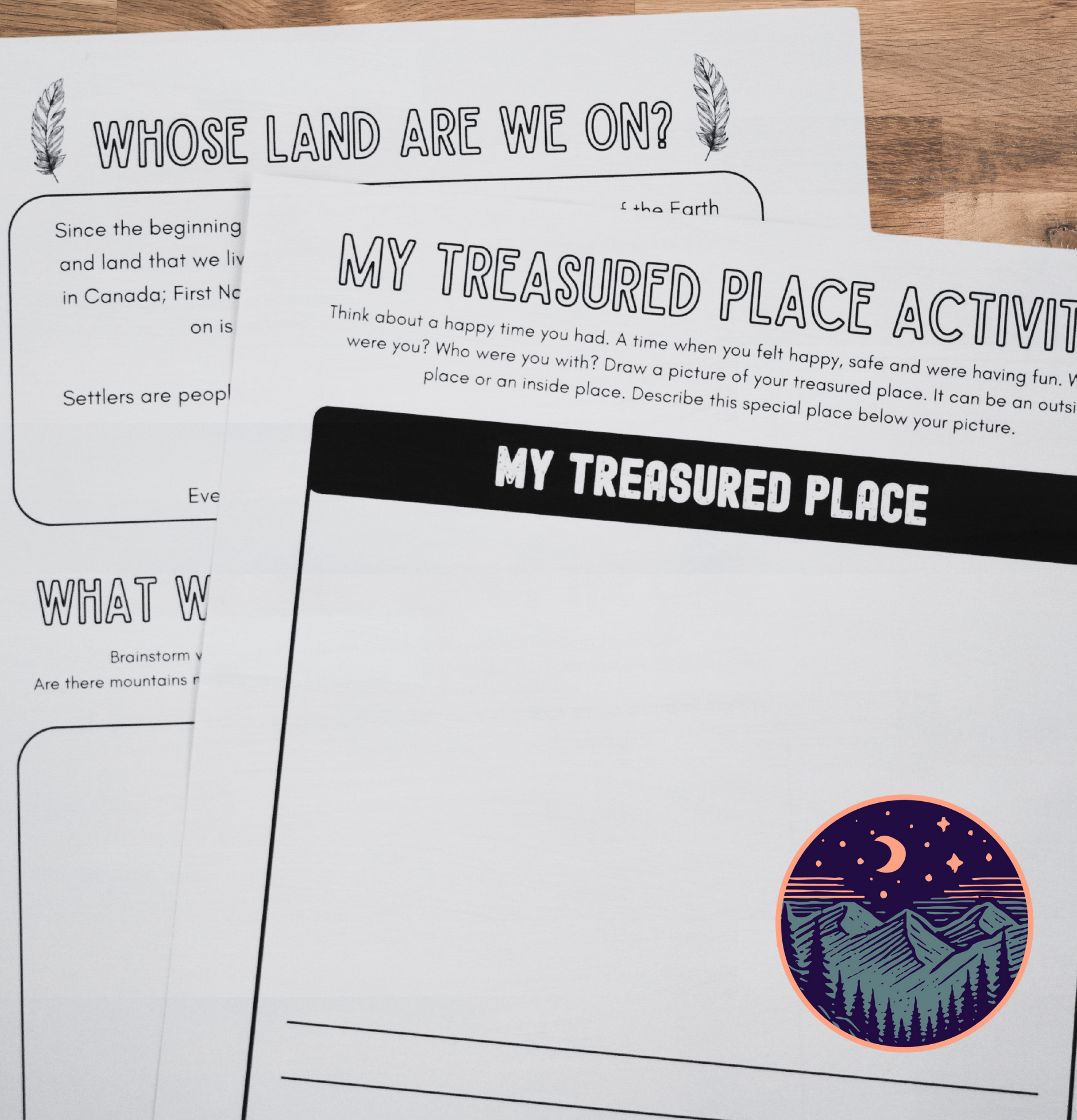
A personal reflection about place can also open up conversation. Ask students to draw or describe somewhere that matters to them. What makes that place important? What do they notice when they are there?
Use their responses as an entry point, then teach about the specific histories and continuing relationships local Indigenous Nations have with their territories.
My Land Acknowledgement Activity for Elementary Students guides students through understanding acknowledgements, learning about local lands, reflecting on a treasured place, and creating a class acknowledgement. It also includes a colouring page and bulletin board materials for sharing classroom learning.
Explore my Land Acknowledgement activity for elementary students here!
For younger students, gather ideas through partner talk and teacher-supported writing. Students who are ready can contribute their own written reflections.
When creating a class acknowledgement, check local information carefully and discuss the meaning of each part. Include a commitment students can understand and follow through on.
Use a mini booklet to support understanding and reflection
A mini booklet gives students a place to record ideas and revisit their learning.
My Land Acknowledgement Mini Booklet for Grades 2–5 includes eight half size pages, student reflection prompts, and a one-page teacher lesson plan. Students explore what land acknowledgements mean, why we acknowledge land, whose territory they are on, Nation names and pronunciation, vocabulary, and showing respect through action.
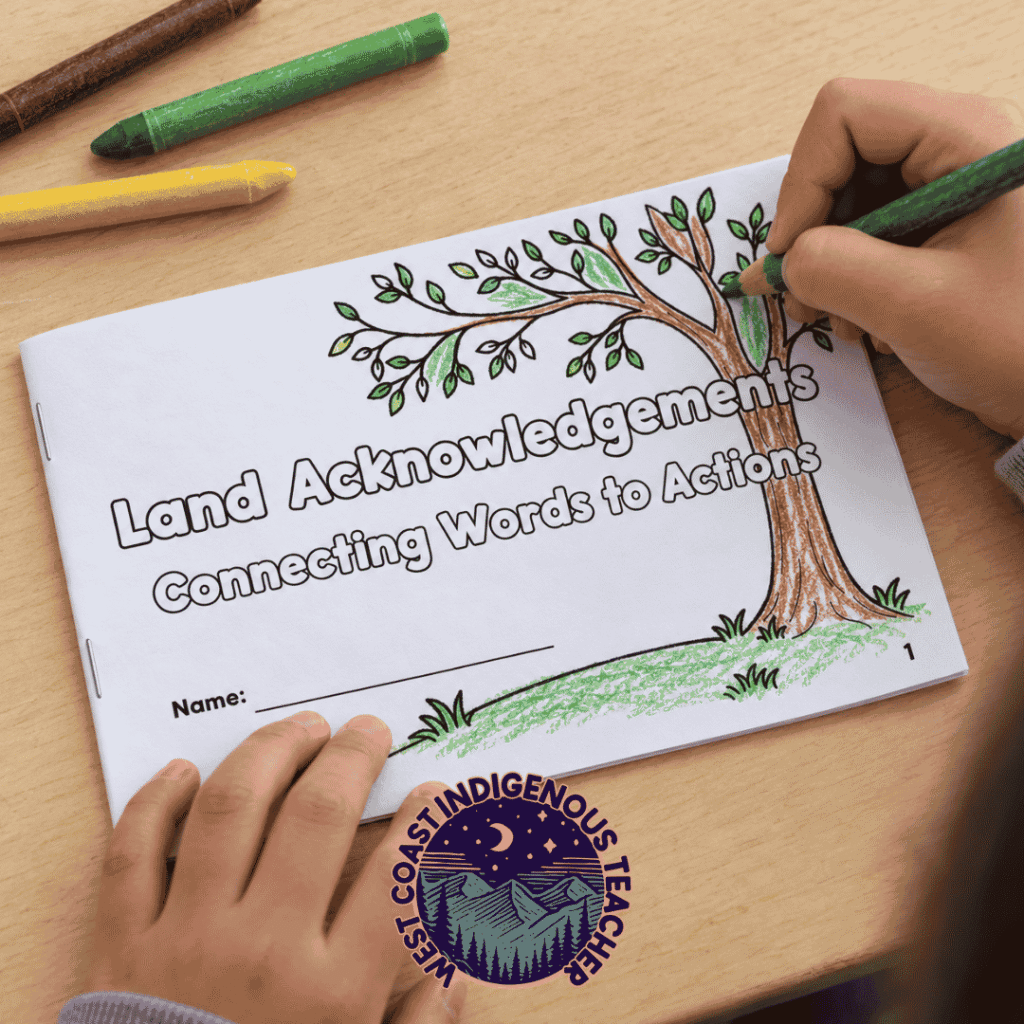
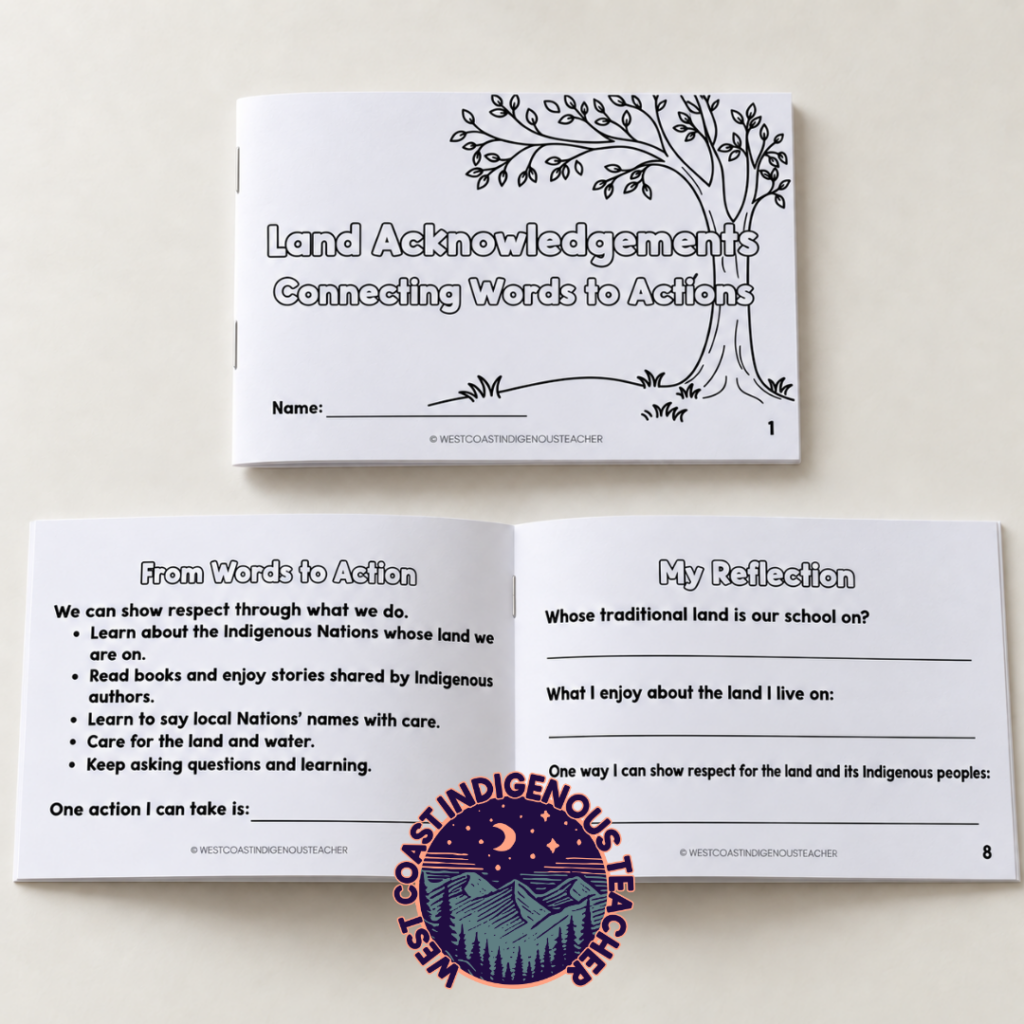
Grab my Land Acknowledgement Mini Booklet for Grades 2–5
You can work through the booklet over several short lessons. Read a section together, discuss the ideas, and give students time to respond.
Some learners may benefit from talking through their ideas before writing. Others may be ready to add information from local Nation resources and explain what they have learned.
Revisit earlier responses as learning continues. Ask students whether they would like to add something, explain an idea differently, or record a new question.
Adapt Land Acknowledgement Learning for Intermediate Students
Intermediate learners can investigate the information behind an acknowledgement and consider how the words connect with responsibility.
Begin with your school’s acknowledgement and teacher selected resources from local Nations. Ask students to identify what they understand and what they need to learn more about.
Useful questions include:
- Which Nations are named in our school’s acknowledgement?
- What have we learned about these communities today?
- Which words need further explanation?
- Where did our information come from?
- What actions could reflect the respect expressed in the acknowledgement?
If students encounter words such as “treaty” or “unceded,” teach their meanings in the context of your location. Give students opportunities to ask questions before expecting them to use these terms independently.
My Land Acknowledgement Activities for Intermediate Students supports this learning through research about local Indigenous Nations, personal reflection, and writing an individual land acknowledgement. The resource includes a writing checklist, reflection questions, and a “Learning From the Land” bulletin board kit to display student learning.
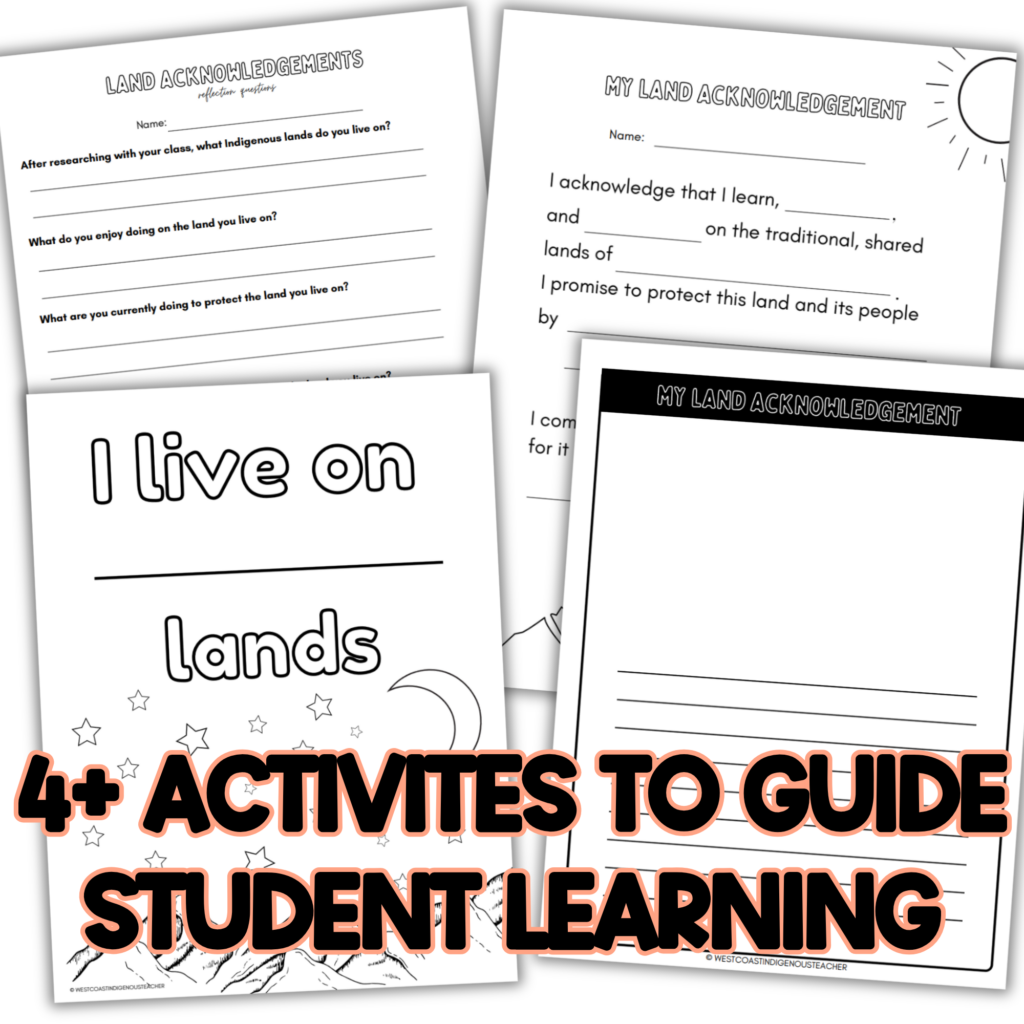
Explore my Land Acknowledgement Activities for Intermediate Students
As students write, encourage them to explain the ideas they include and choose a commitment they can follow through on. Revisit their acknowledgements as they continue learning.
Connect words with action
Help students choose a specific action that grows from their learning.
Your class might:
- Practice saying local Nation names accurately.
- Read and discuss books by Indigenous authors throughout the year.
- Continue learning from materials local Nations have shared publicly.
- Explore an Indigenous led initiative that welcomes school participation.
- Revisit a classroom commitment and reflect on what students have done.
Caring for the school grounds can also support conversations about responsibility to place. Keep these experiences connected to learning about local Nations, their continuing relationships with their territories, and their priorities.
Record the class commitment somewhere students can see it. Return to it with questions such as, “What have we done?” and “What do we still need to learn?”
Keep Land Acknowledgement Learning Going Throughout the Year
Students’ understanding grows as they connect the words of a land acknowledgement with what they learn about local Nations, the places they know, and their own responsibilities.
Return to your class acknowledgement after a read aloud, outdoor experience, or local inquiry. Invite students to share something they now understand, add a question, or reflect on how they are following through on a classroom commitment.
These small conversations help keep the learning meaningful throughout the year.
Land Acknowledgement Resources for Your Classroom
Whether you are introducing land acknowledgements to kindergarten students or helping older learners research, reflect, and write, these resources offer a starting point. Choose the activities that fit your students and build on them with learning about the Indigenous Nations connected to your school’s location.
🌳Kindergarten Land Acknowledgement Activity
🌳Land Acknowledgement activity for primary students
🌳Land Acknowledgement Mini Booklet for Grades 2–5
🌳Land Acknowledgement Activity for Intermediate Students
Start with one conversation, one question, or one activity, and give the learning room to grow. As students learn whose territory they are on and consider how to act with respect, the words they hear at school can become something they understand and put into practice.