Planning Remembrance Day lessons often means choosing a read-aloud, preparing for an assembly and finding a meaningful way for students to reflect.
It’s also an opportunity to consider whose stories your students will hear.
Including Indigenous Veterans in your Remembrance Day teaching helps students learn about the contributions and experiences of First Nations, Métis and Inuit people who have served Canada.
As a First Nations educator, I want to help teachers bring this learning into their classrooms with confidence and care. Start with a person’s story, make space for questions and give students a way to share what they learned.
Here are a few practical ways to get started.
Connect Indigenous Veterans Day and Remembrance Day
Indigenous Veterans Day is November 8, followed by Remembrance Day on November 11. Include both dates in your classroom conversations so students understand that Indigenous Veterans belong in the learning and remembrance connected to each.
For younger students, you might explain:
“First Nations, Métis and Inuit people have served in Canada’s military. We learn about their stories and honour their service on Indigenous Veterans Day and on Remembrance Day.”
Revisit that connection as you read, write and prepare for your school’s Remembrance Day assembly.
Start With a Person’s Story
A biography gives students someone specific to learn about and remember.
Introduce an Indigenous Veteran by name, including their Nation or community when that information is available. Explore their life and service, leaving room for students to notice details and ask questions.
Try asking:
- What did you learn about this person?
- Which detail stayed with you?
- What would you like others to know?
Keep the learning specific. First Nations, Métis and Inuit Veterans have diverse experiences, and one biography cannot represent every story.
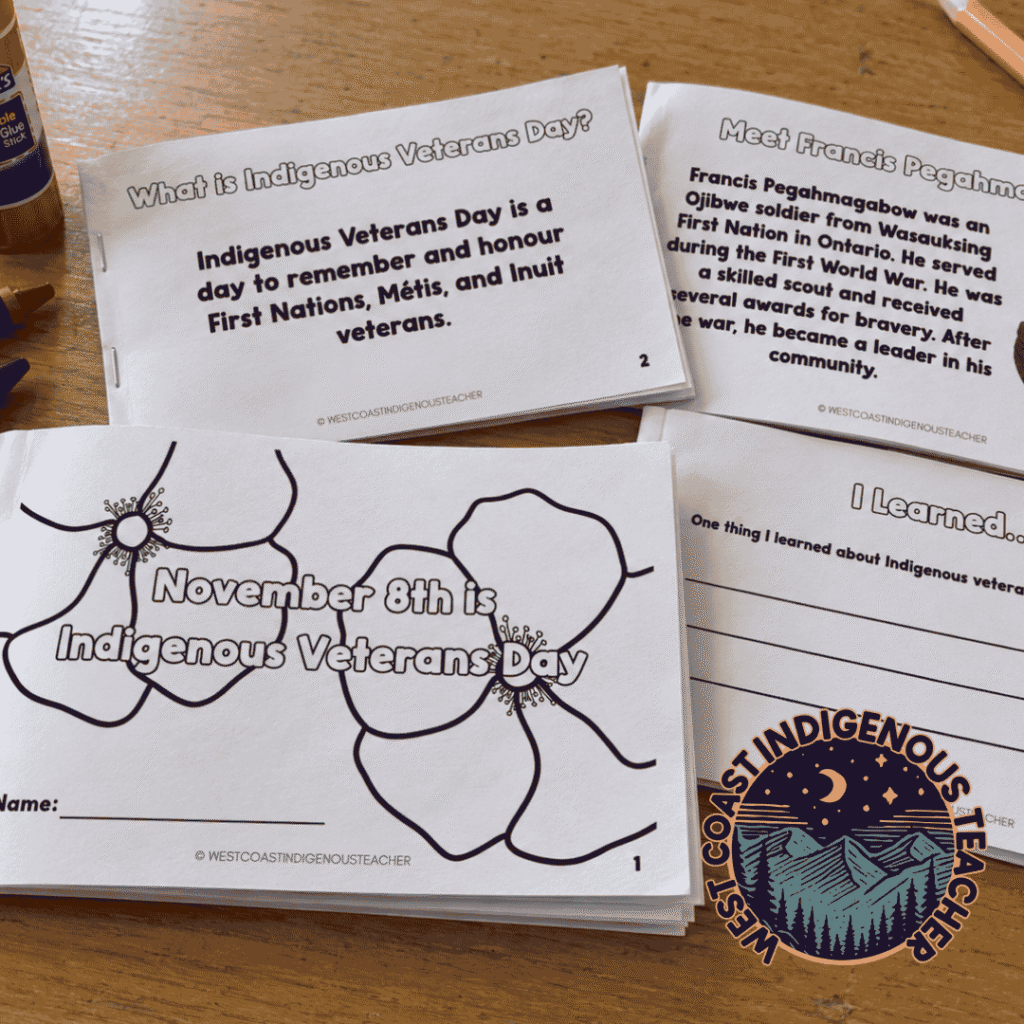
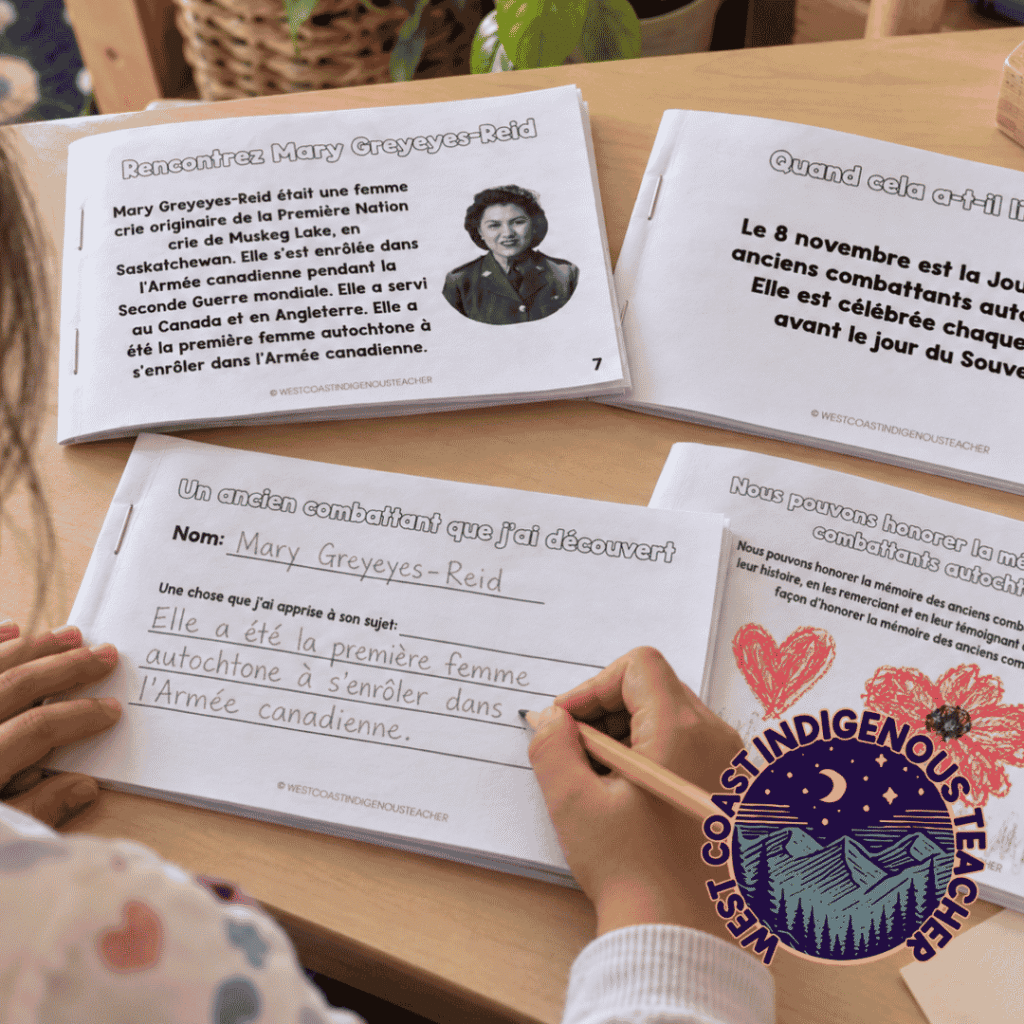
My Indigenous Veterans Day Mini Book gives primary students an approachable starting point. Short readings, Veteran spotlights and reflection pages bring reading and discussion together in a booklet students can revisit.
👉 Explore the Indigenous Veterans Day Mini Book
Bring Reading, Discussion and Writing Together
Meaningful Remembrance Day lessons for elementary students can follow a simple sequence: learn together, talk about the story and respond.
Younger learners might draw, label a picture or dictate a sentence. Older students can write a reflection supported by details from the biography.
Try these Remembrance Day writing prompts:
- “Today I learned…”
- “One person we are remembering is…”
- “Something I want others to know is…”
Some biographies also introduce discrimination and unequal treatment experienced by Indigenous Veterans. Give students time to discuss these experiences with age-appropriate questions about fairness and recognition.
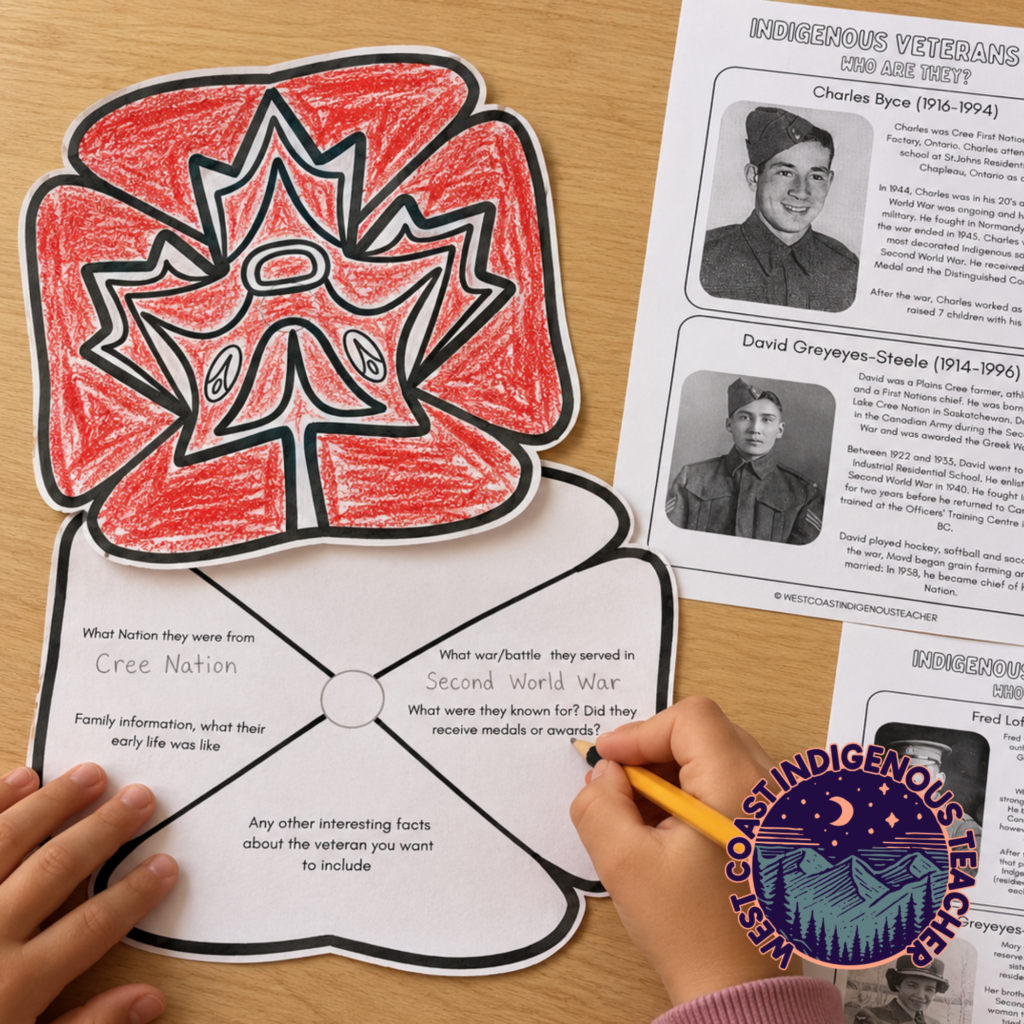
My Interactive Indigenous Veterans Day Poppy Craft connects biography learning with writing. Students learn about ten Indigenous Canadian Veterans, choose someone to focus on and use their interactive poppy to share what they discover.
👉 Explore the Interactive Indigenous Veterans Day Poppy Craft
Create a Remembrance Day Display That Shares the Learning
Remembrance Day art gives students another way to communicate what they have learned.
Before beginning, ask students what they want their contribution to share. It could be a Veteran’s name, a detail from their life or a short reflection.
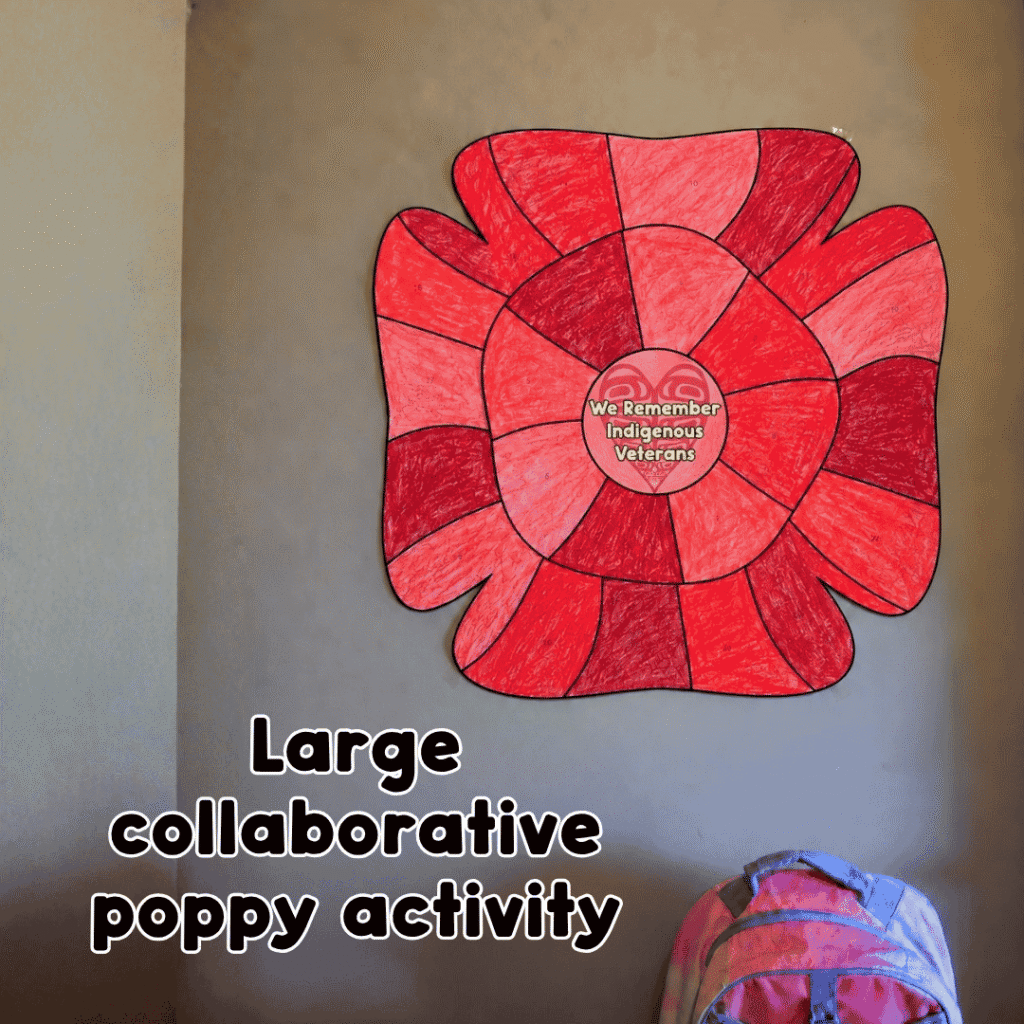
My Giant Collaborative Poppy brings individual contributions together into one class display. Its 25 pieces assemble around the words “We Remember Indigenous Veterans,” with options for Veteran names, writing responses or a blank version.
Display the finished poppy alongside student reflections for Indigenous Veterans Day and Remembrance Day. The writing helps other classes and visitors understand the learning behind the artwork.
👉 Explore the Giant Collaborative Poppy Activity
Remembrance Day Poppy Wreath Crafts
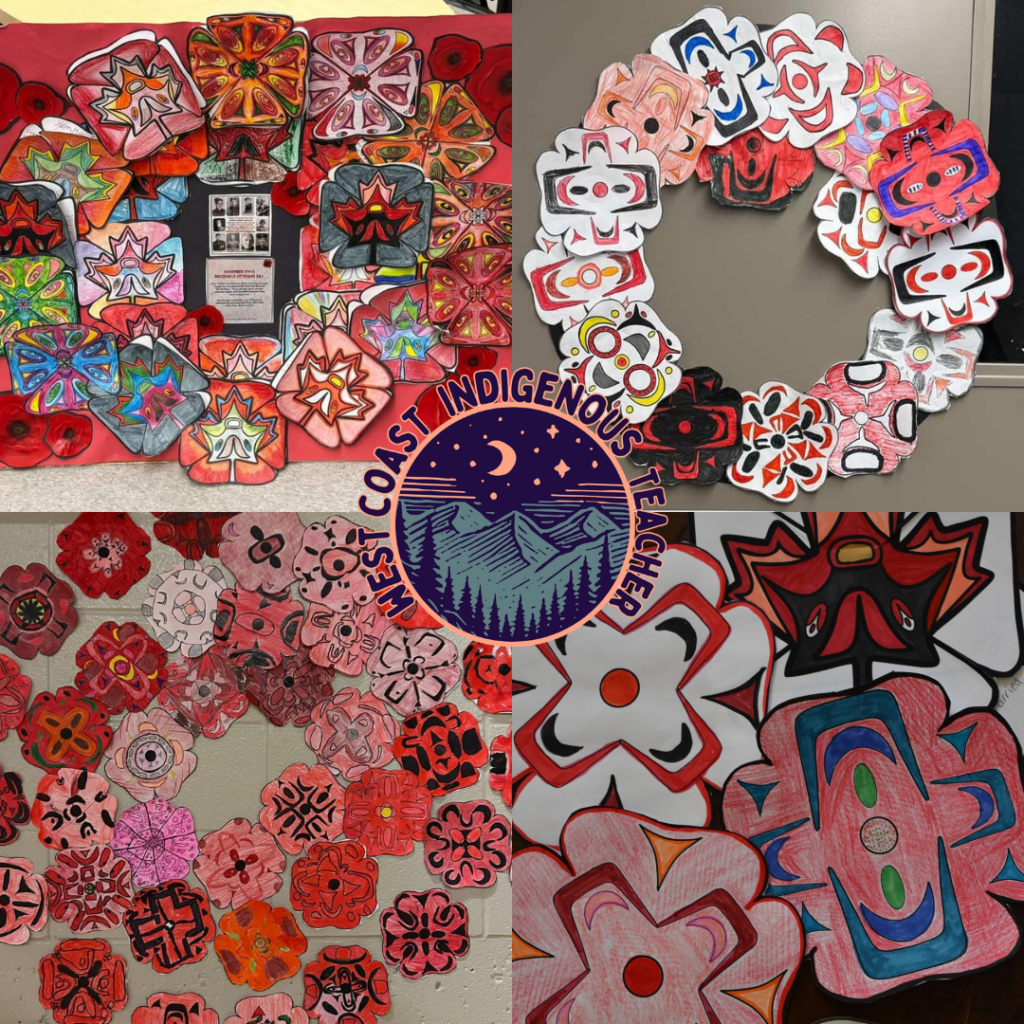
For another way to connect Remembrance Day art with cultural learning, my Métis Dot Art Poppy Wreath introduces students to Métis floral beadwork before they create dot painted poppies. My Northwest Coast Art Poppy Wreath includes a lesson and tracing practice exploring Northwest Coast art shapes and design elements. Both resources offer individual wreaths or a collaborative class wreath for your Remembrance Day display.
👉 Explore the Métis Dot Art Poppy Wreath
👉 Explore the Northwest Coast Art Poppy Wreath
Choose a Starting Point for Your Classroom
You do not need to use every resource. A primary class might begin with the mini book, while older students could explore biographies through the interactive poppy. The collaborative display can bring everyone’s learning together.
For more options, visit my Indigenous Veterans Day activities for students blog post!
👉My Interactive Indigenous Veterans Day Poppy Craft
❤️ Explore my Indigenous Veterans Day Mini Book
👉 Try my Giant Collaborative Poppy Activity
❤️ Make a Métis Dot Art Poppy Wreath
👉 Create a Northwest Coast Art Poppy Wreath
Including Indigenous Veterans in your Remembrance Day lessons can begin with one story and a thoughtful conversation. Give students time to learn about the person, ask questions and decide what they want to remember and share.