

Salmon Life Cycle Booklet & Activities with Indigenous Connections
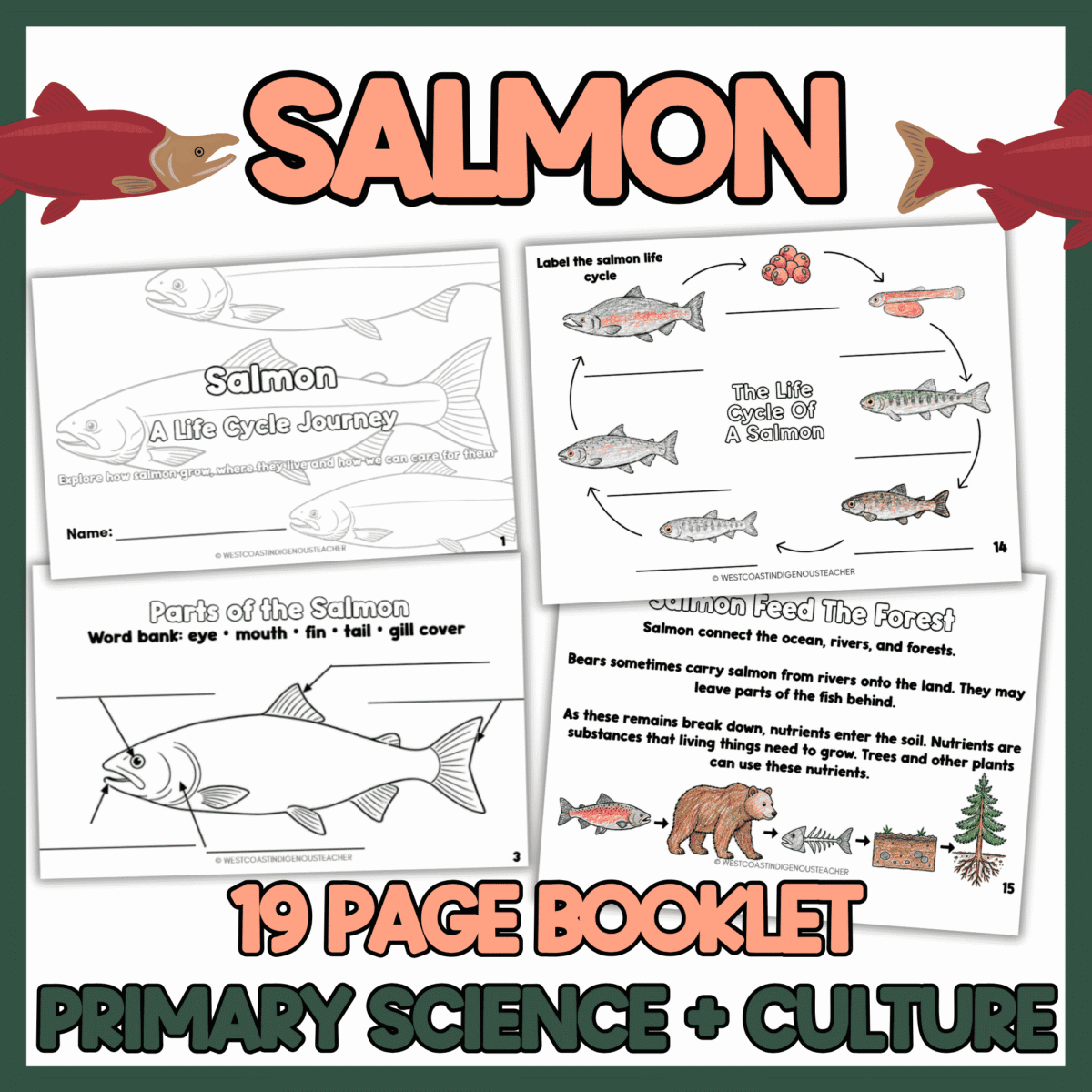
Explore the journey from egg to spawning adult with this salmon life cycle booklet for Grade 2. Short readings and printable activities help students learn about salmon’s changing bodies, habitats, and connections to the world around them.
Created by a Nuučaan̓ułʔatḥ educator, this resource brings together life science, Indigenous education, and local inquiry. Students explore the cultural importance of salmon, learn about Nuu-chah-nulth salmon stewardship, and investigate a waterway near their own community.
Explore the life cycle of a salmon
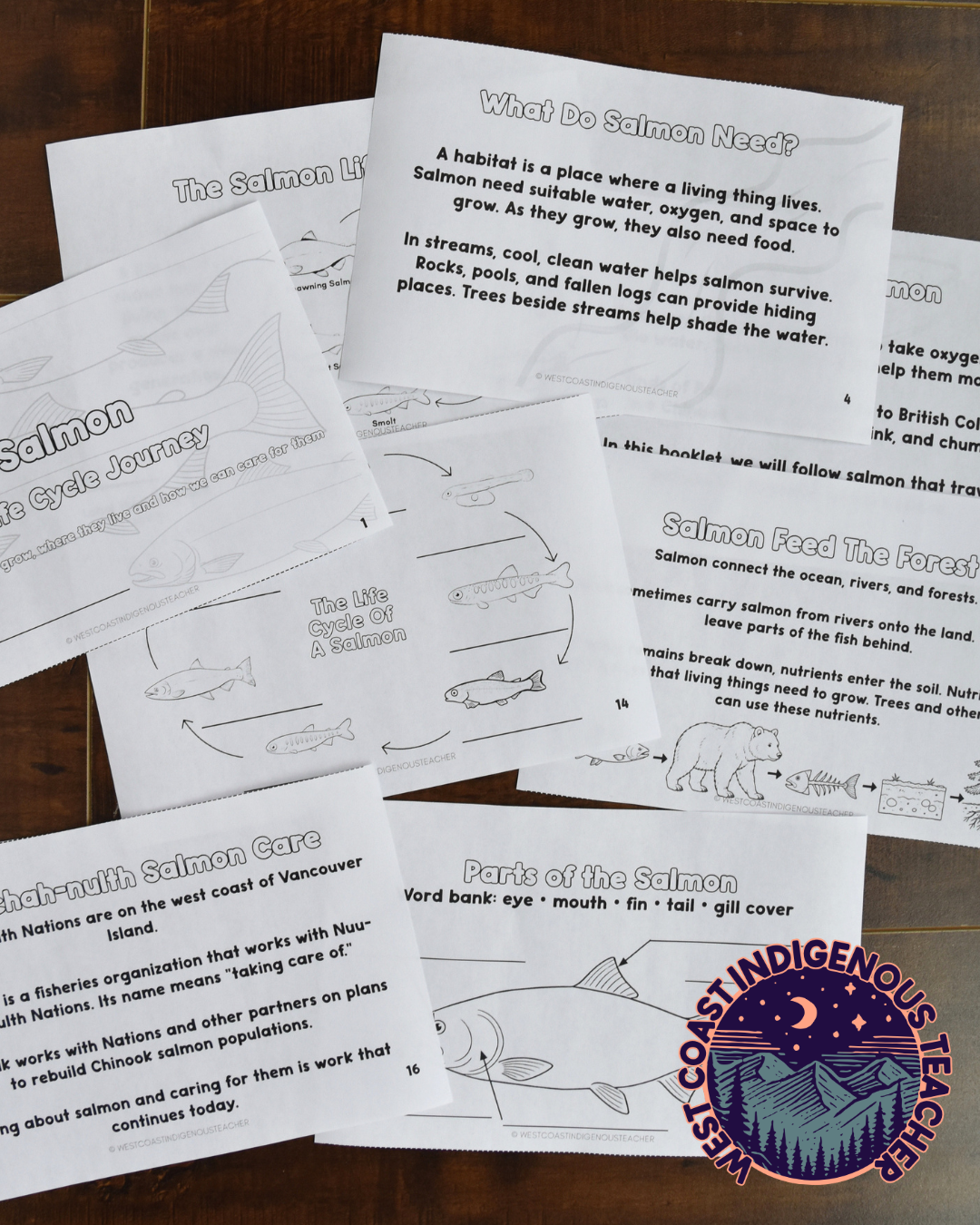
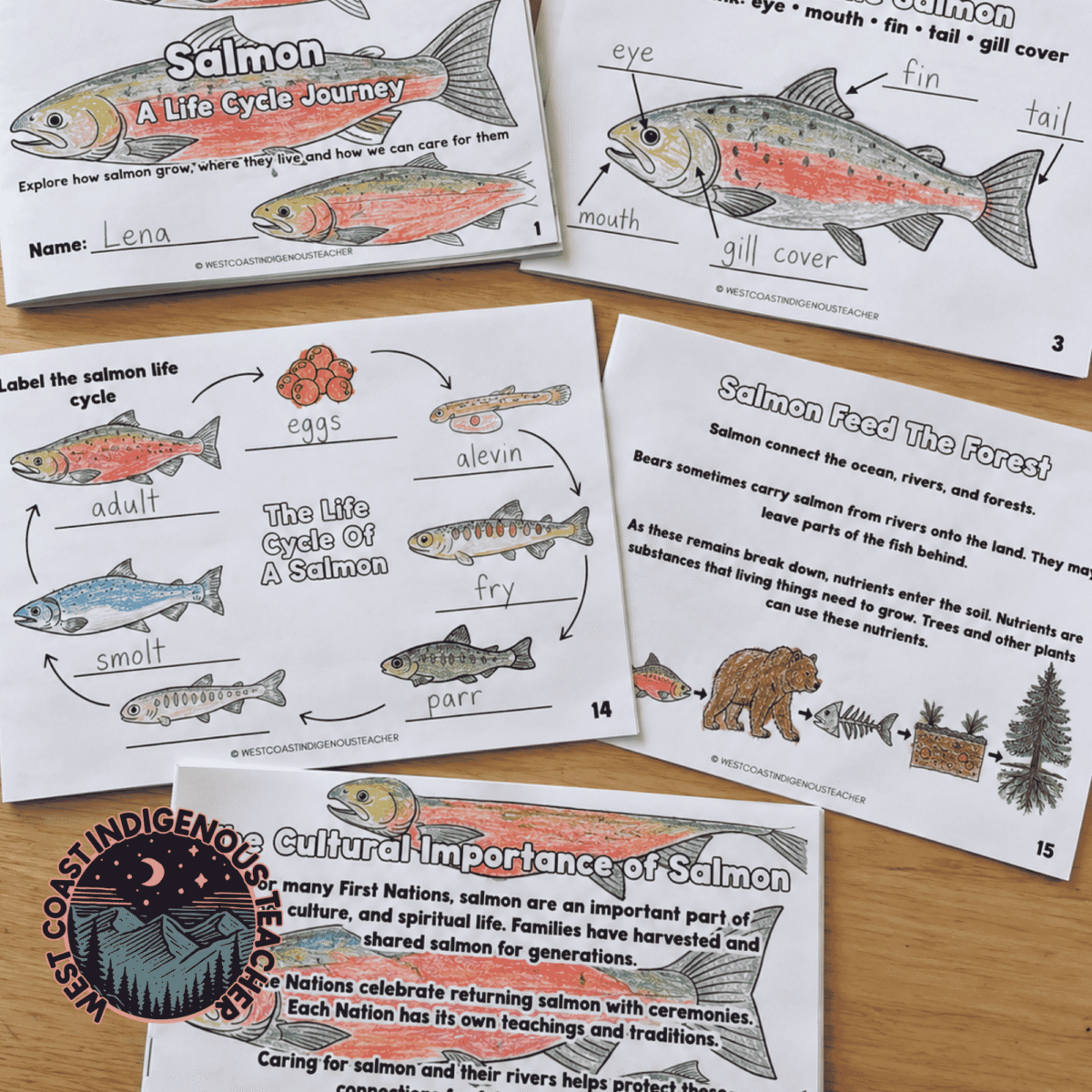
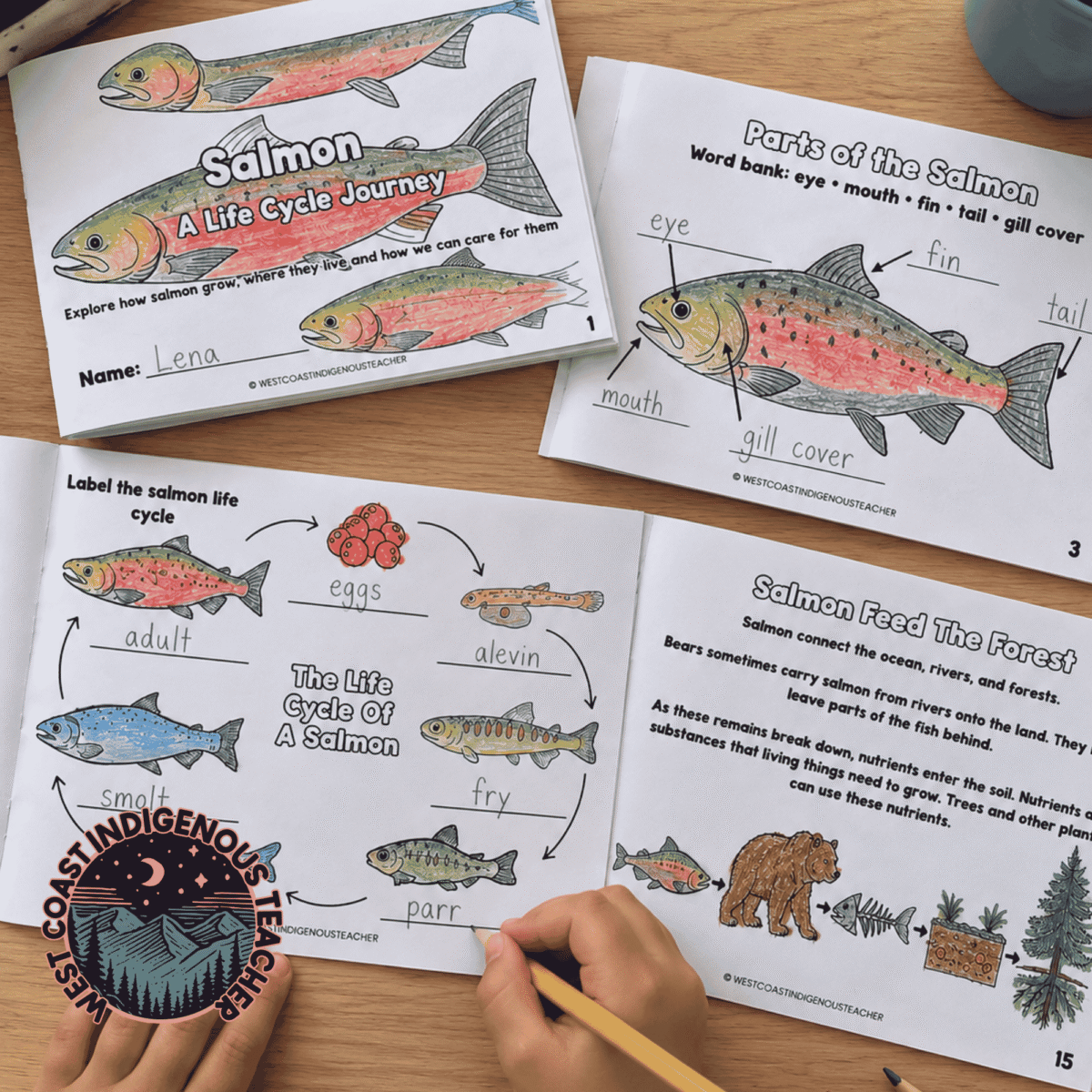
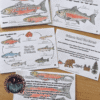
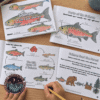
The half-page booklet introduces eggs, alevin, fry, parr, smolts, adults, and spawners. It explains that different salmon species follow different timelines and that not all have a distinct parr stage.
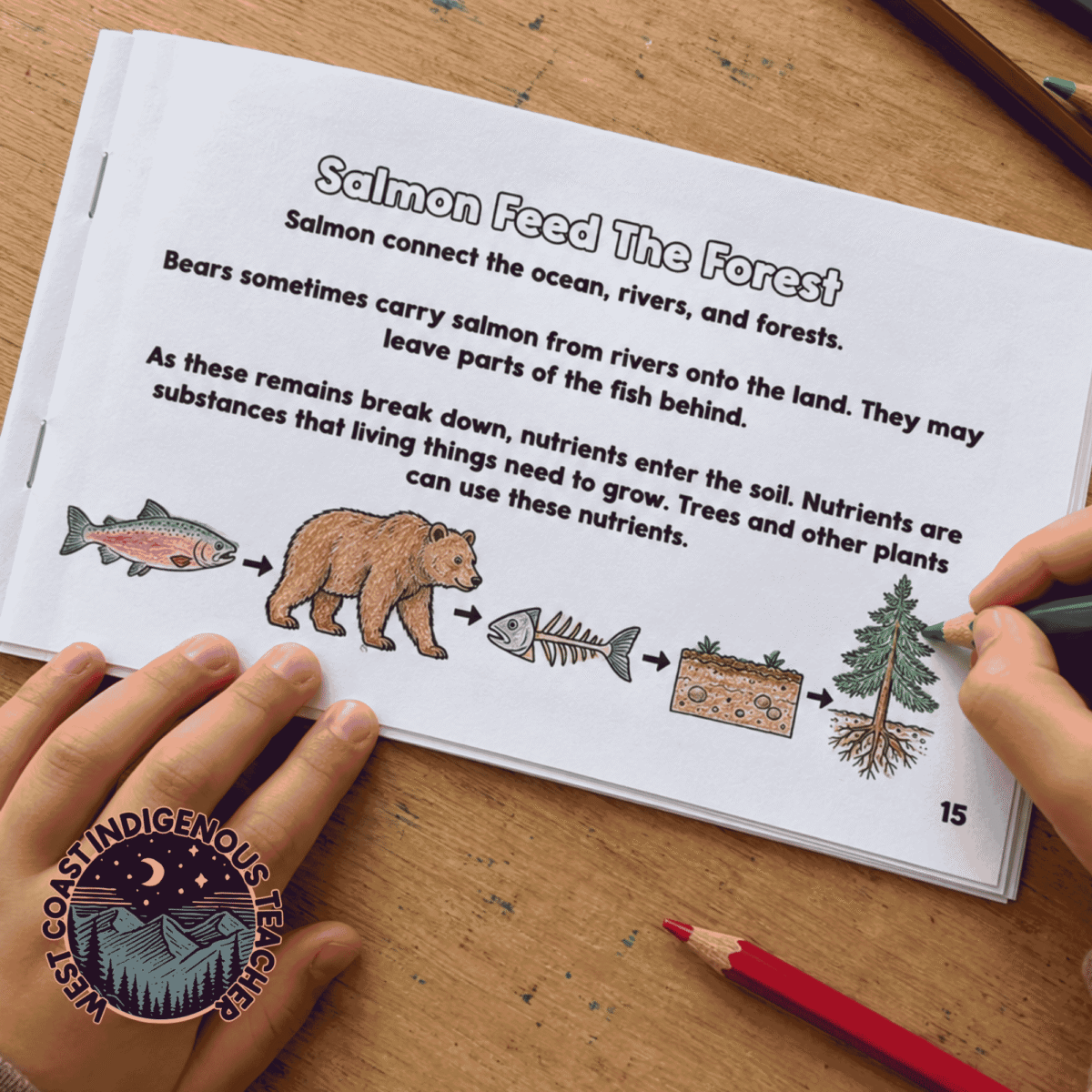
Students follow salmon through freshwater, estuaries, and the ocean while learning what they need to survive. They also discover how bears carry salmon into forests, where nutrients from fish remains can support soil and trees.
What’s included?
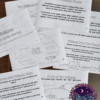
- Salmon life cycle activities: sequencing, drawing, comparison, and written responses
- Parts of a salmon worksheet: an unlabelled diagram and labelled reference
- Habitat learning: readings and activities about streams, estuaries, and the ocean
- Indigenous connections: cultural importance, a Nuu-chah-nulth stewardship example, and caring for future generations
- Local investigation: teacher-guided questions about a nearby waterway and the people caring for it
- Teacher support: a lesson plan for guiding reading, discussion, and activities
Supports BC Grade 2 science
These salmon life cycle worksheets support learning about animal life cycles, similarities and differences between young animals and their parents, and First Peoples use of life-cycle knowledge. Students practise asking questions and communicating their learning through words and drawings.
Connect classroom learning to place
Use the booklet as part of a salmon unit or alongside a stream visit, hatchery trip, or classroom salmon project. The local investigation helps students connect their learning to a real waterway and discover who is working to protect it.
A printable science resource that helps students understand salmon—and why caring for their habitats matters.
Explore More Related Resources
Continue learning about salmon through art with the Indigenous Art Animal Directed Drawing Bundle, which includes a step-by-step salmon drawing activity and cultural learning.
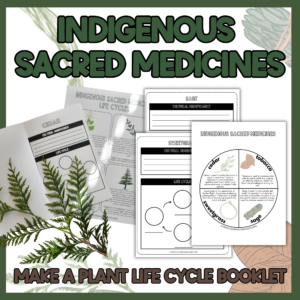
Take more learning outside with the Outdoor Education Activities Bundle, featuring a nature journal, sit spots, outdoor observation, Sacred Medicines and land-based learning.
Explore another culturally significant West Coast plant with the Cedar Tree Inquiry and Activity.
For an additional Indigenous art lesson, explore the First Nations Art Activity and Bulletin Board.
IMPORTANT INFORMATION
The resources provided here are designed to support the teaching of Indigenous cultures, including First Nations, Métis, and Inuit peoples. It is important to recognize that these communities are not monolithic; beliefs, traditions, and practices vary greatly from Nation to Nation, and even from community to community. The content shared in these materials reflects my own lived experience and understanding of Indigenous cultures, but it does not encompass the full diversity or richness of these traditions.
I encourage educators to approach these resources with respect, sensitivity, and openness to learning. When possible, please engage with local Indigenous communities or cultural experts to ensure that the information shared is accurate and culturally appropriate for the specific Nations or groups you are teaching about.
These resources are intended to foster understanding and appreciation for Indigenous people.


Reviews
There are no reviews yet.