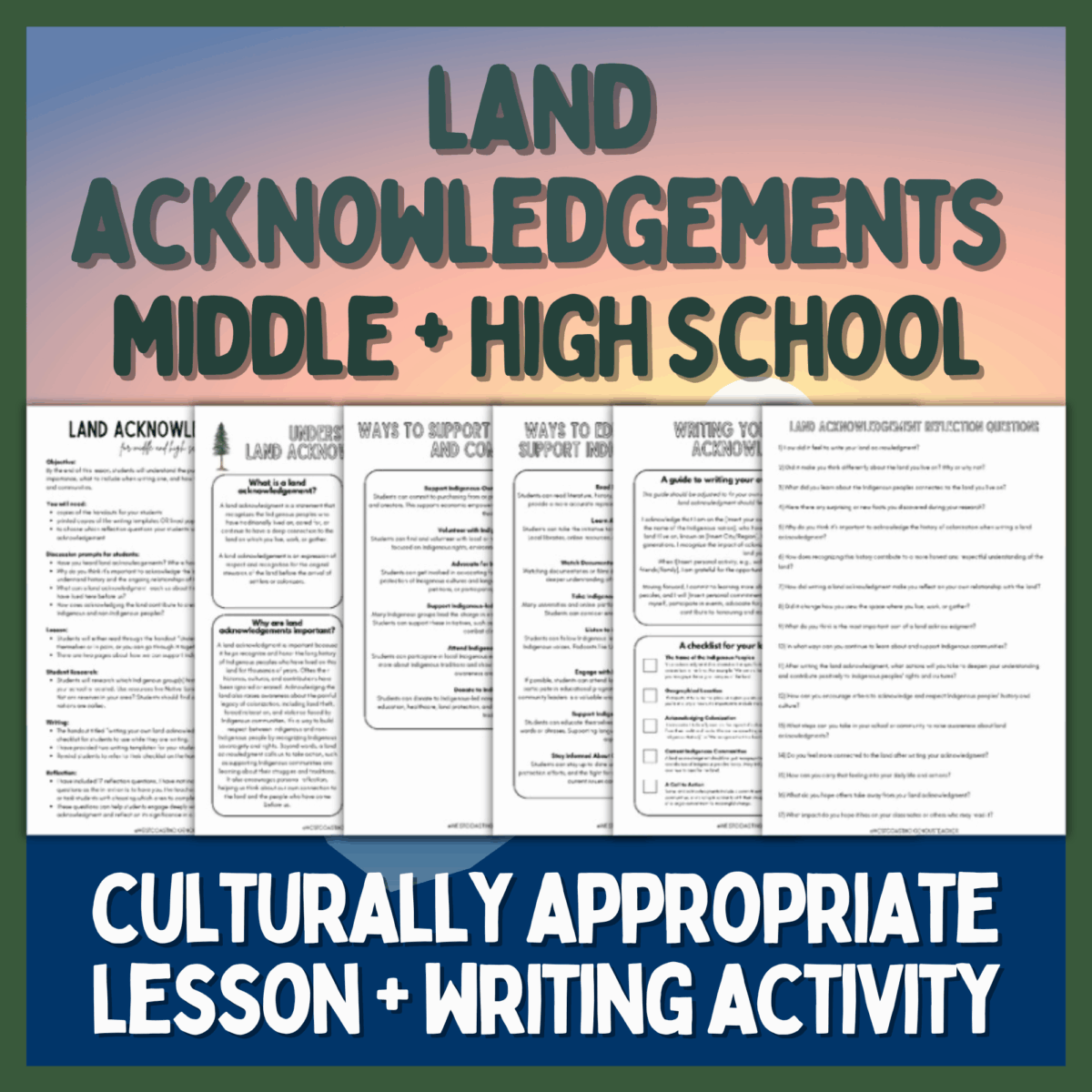


Looking for a meaningful land acknowledgement activity for high school? This eight-page resource guides students through the learning, research and reflection that should come before writing a land acknowledgement.
Students learn why land acknowledgements matter, explore ways to support Indigenous Peoples and communities and consider how they can continue educating themselves. Guided writing templates then help students create acknowledgements connected to their learning, responsibilities and future actions.
Land Acknowledgement Lesson and Activities
This resource includes:
☾ Land acknowledgement lesson plan
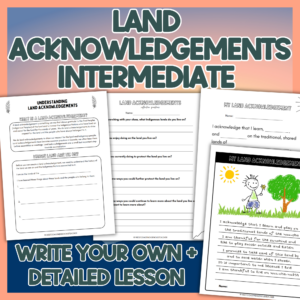
☾ Understanding land acknowledgements student handout
☾ Explanation of why land acknowledgements matter
☾ Ways to support Indigenous Peoples and communities
☾ Ways students can continue educating themselves
☾ Guided land acknowledgement writing activity
☾ Two writing templates
☾ Student reflection questions

Write a Meaningful Land Acknowledgement
Students are not simply given a prepared statement to copy. They learn what a land acknowledgement can include and why research, accurate language and local learning matter.
The guided templates support students as they write their own acknowledgements while still allowing room for individual learning, reflection and responsibility.

Move Beyond Acknowledgement
A land acknowledgement should be a starting point rather than the final action.
Students explore practical ways to support Indigenous communities, learn from Indigenous voices and continue educating themselves. Reflection questions encourage them to consider how acknowledgement can be connected to relationships, responsibility and continued learning.
Perfect For
☾ High school Indigenous education
☾ Middle school social studies
☾ Land acknowledgement lessons
☾ Truth and Reconciliation learning
☾ Canadian history and social studies
☾ English language arts
☾ Indigenous studies
☾ Orange Shirt Day
☾ National Indigenous History Month
☾ Beginning-of-year classroom learning
This land acknowledgement activity for high school students gives educators a clear, ready-to-use resource for connecting research, writing, reflection and meaningful action.
IMPORTANT INFORMATION
The resources provided here are designed to support the teaching of Indigenous cultures, including First Nations, Métis, and Inuit peoples. It is important to recognize that these communities are not monolithic; beliefs, traditions, and practices vary greatly from Nation to Nation, and even from community to community. The content shared in these materials reflects my own lived experience and understanding of Indigenous cultures, but it does not encompass the full diversity or richness of these traditions.
I encourage educators to approach these resources with respect, sensitivity, and openness to learning. When possible, please engage with local Indigenous communities or cultural experts to ensure that the information shared is accurate and culturally appropriate for the specific Nations or groups you are teaching about.
These resources are intended to foster understanding and appreciation for Indigenous people.
Reviews
There are no reviews yet.