Every June, teachers across Canada begin looking for meaningful National Indigenous History Month activities and resources for National Indigenous Peoples Day.
And by June, most teachers are also juggling report cards, field trips, year-end celebrations and students who are very aware that summer is coming.
There is often pressure to find the right lessons, the right books and the right words. Many educators want to recognize National Indigenous History Month in a meaningful way, but they are not always sure where to begin or how to move beyond a single activity.
That is exactly why I created these Indigenous Peoples Day resources.
Indigenous Cultures Are Not Only Defined by Hardship
Indigenous education often focuses heavily on residential schools, the Indian Act, Orange Shirt Day and Missing and Murdered Indigenous Women and Girls.
These are incredibly important truths that must be taught with care, honesty and age appropriate context.
But they are not the whole story.
First Nations, Inuit and Métis Peoples have distinct histories, languages, cultures, teachings and ways of life. Indigenous cultures are not frozen in the past. They are living, changing and present today.
When students encounter Indigenous content only through stories of trauma, they can leave with an incomplete understanding of who Indigenous Peoples are.
National Indigenous History Month gives teachers an opportunity to broaden that learning by also exploring Indigenous identity, leadership, culture, creativity and contributions.
Why I Created These National Indigenous History Month Activities
As a Nuučaan̓ułʔatḥ educator, I wanted to create resources that help teachers approach June with more confidence and less overwhelm.
These activities were designed to:
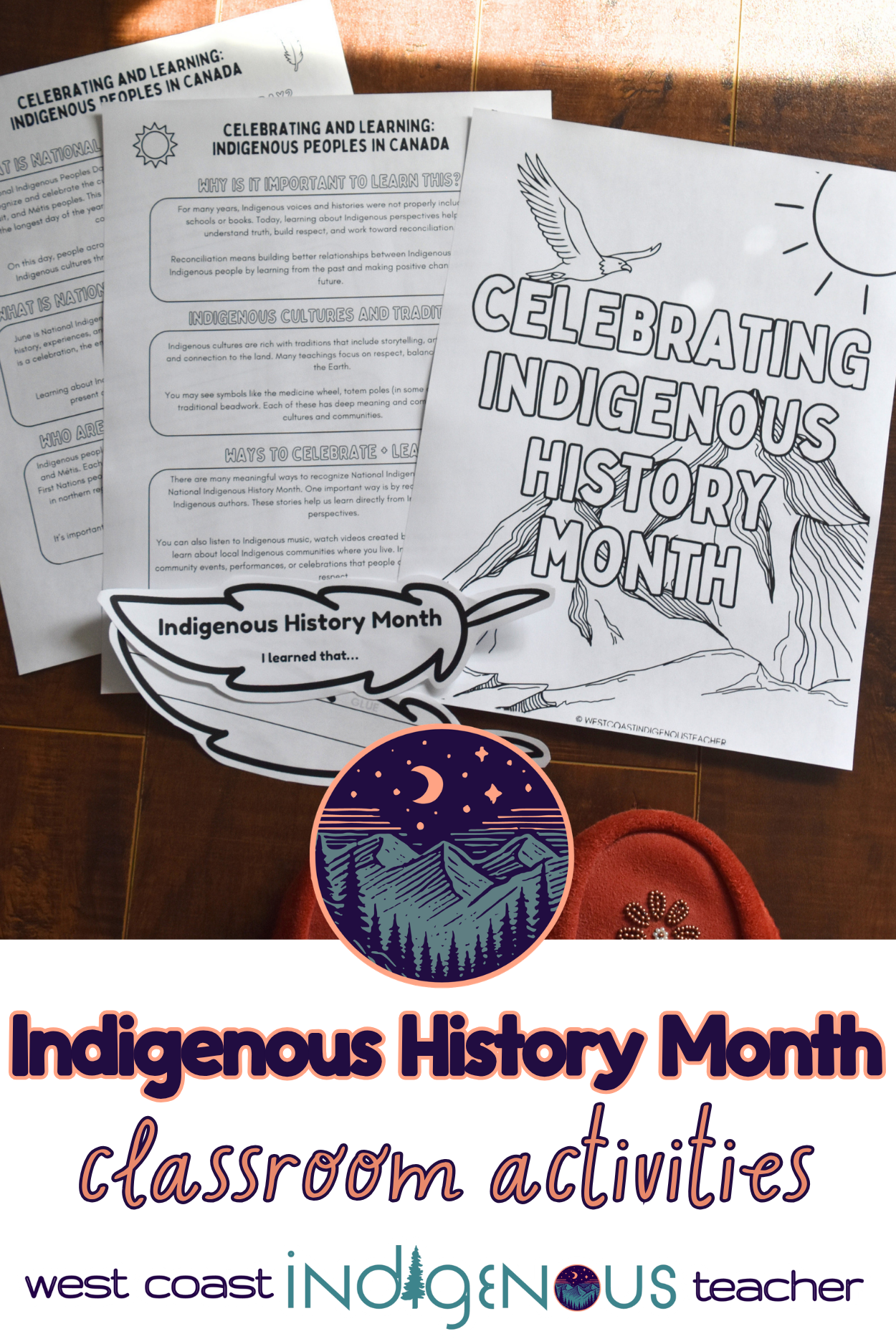
- Introduce National Indigenous Peoples Day in a clear and age-appropriate way
- Highlight living Indigenous cultures and contemporary Indigenous people
- Create opportunities for student writing, research and reflection
- Support meaningful discussion without requiring weeks of preparation
- Give students a way to share their learning through art and collaborative projects
The goal is not to fit all of Indigenous education into one month. That would be impossible.
Instead, these National Indigenous History Month activities give teachers a thoughtful place to begin or a way to continue learning that has already been happening throughout the year.
National Indigenous Peoples Day Activity Bundle
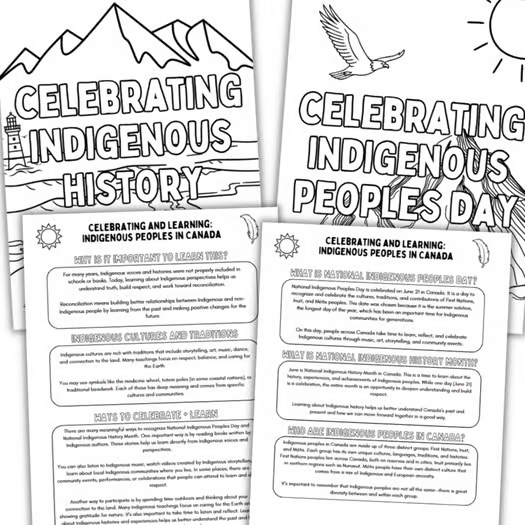
My National Indigenous Peoples Day Activity Bundle brings several of my June classroom resources together in one ready-to-use package.
The bundle includes:
- A 17 page National Indigenous Peoples Day slideshow lesson
- An Indigenous art inspired writing craft
- An Indigenous heroes research project
- Two collaborative classroom posters
- A National Indigenous Peoples Day bulletin board kit
- Three student activities
Teachers can use the complete bundle throughout June or choose individual activities based on their students, schedule and learning goals.
Learn About Indigenous Heroes in Canada
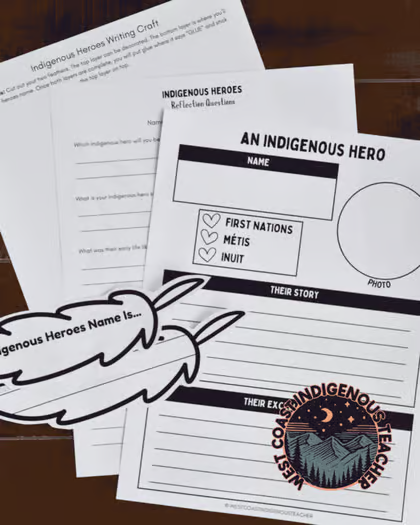
The Indigenous Heroes in Canada Research Project helps students learn about notable First Nations, Inuit and Métis people.
Students choose an Indigenous person to research and use the included template, checklist and reflection questions to organize their learning.
This project helps shift the focus toward Indigenous leadership, strength and contributions while building research and writing skills.
Indigenous Peoples Day Writing and Collaborative Art
The Indigenous Peoples Day Writing Craft gives students a creative way to reflect on what they have learned. It can also be used to create a meaningful National Indigenous Peoples Day classroom display.
The Indigenous History Month Collaborative Posters allow every student to contribute to a shared piece of classroom art. Each student completes one section before the pieces are combined to reveal the finished poster.
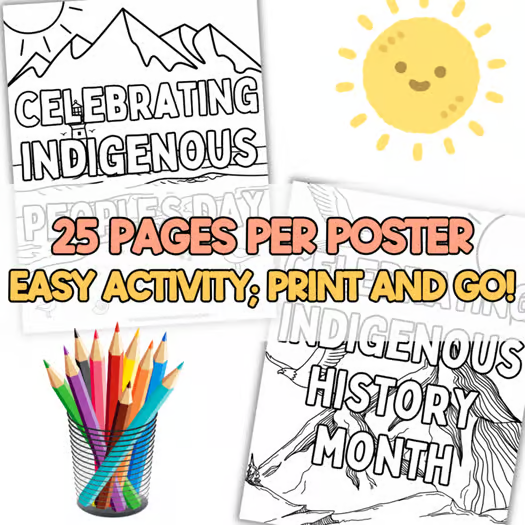
It is simple to prepare, easy for students to complete and makes a beautiful display of their shared learning.
Meaningful Learning Without the June Overwhelm
National Indigenous History Month activities do not need to be complicated to be meaningful.
A thoughtful lesson, research project, writing activity or collaborative display can help students see Indigenous Peoples through a broader and more accurate lens.
These resources were created to make that learning easier to bring into the classroom while keeping Indigenous voices, cultures and present-day experiences at the centre.
Explore the complete National Indigenous Peoples Day Activity Bundle.