Land acknowledgements have become part of the daily routine in many Canadian schools. But hearing or repeating one each morning does not necessarily mean students understand what the words mean.
Meaningful land acknowledgement activities for students should go beyond asking a class to memorize or repeat a prepared statement. Students need opportunities to learn whose lands they are on, identify the Indigenous Nation or Nations connected to those lands and reflect on their own relationships and responsibilities to the land.
Words are easy to repeat. Understanding takes a little more time.
As a First Nations educator, I created this land acknowledgement activity for elementary students to guide students through that learning before they work together to create a class land acknowledgement.
Why Land Acknowledgement Activities Matter
A meaningful land acknowledgement for students should do more than teach them the correct words to say.
Students should have opportunities to think about:
- The land where they live and learn
- The Indigenous Nation or Nations connected to that land
- Indigenous Peoples as present day communities
- Their own relationships with the land
- Why land acknowledgements matter
- What responsibilities can accompany an acknowledgement
- How their learning can continue throughout the year
This is especially important for younger students. The full history and responsibility connected to land acknowledgements can feel complicated, but children can begin by noticing the land around them and making connections to places that are important in their own lives.
These early conversations can create a foundation for deeper learning as students grow.
Land Acknowledgement Activities by Grade Level
Different age groups need different ways to approach land acknowledgements. Choose the resource that best matches your students and the depth of learning they are ready for.
| Grade level | Learning focus | Resource |
|---|---|---|
| Kindergarten and early primary | Nature walks, mapping, movement and noticing the land | Kindergarten Land Acknowledgement Activities |
| Elementary | Treasured-place reflection and a collaborative class acknowledgement | Elementary Land Acknowledgement Activity |
| Intermediate | Local Nation research, guided writing and individual reflection | Intermediate Land Acknowledgement Activities |
| Middle and high school | Research, responsibility, continued learning and meaningful action | High School Land Acknowledgement Activity |
Begin With the Land
Before creating a class land acknowledgement, begin by helping students notice the land itself.
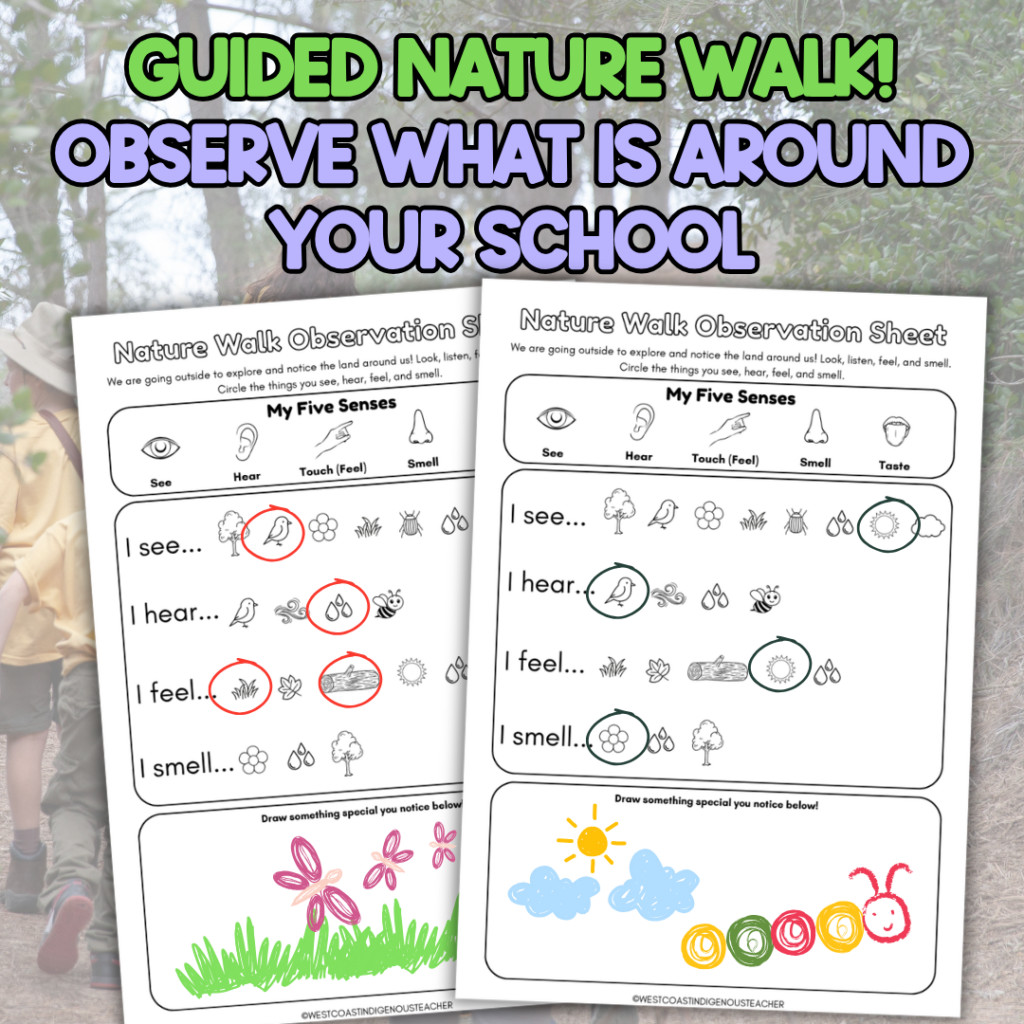
What plants and animals live nearby? Are there mountains, forests, rivers or oceans in the area? What places are important to your students? How do they use, enjoy and care for the land?
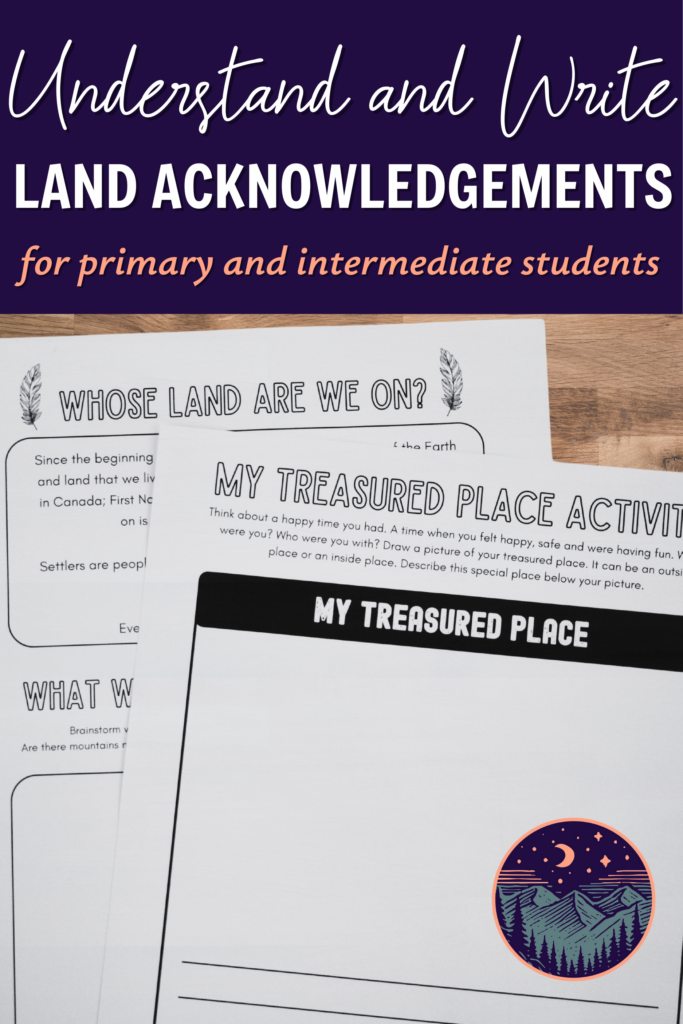
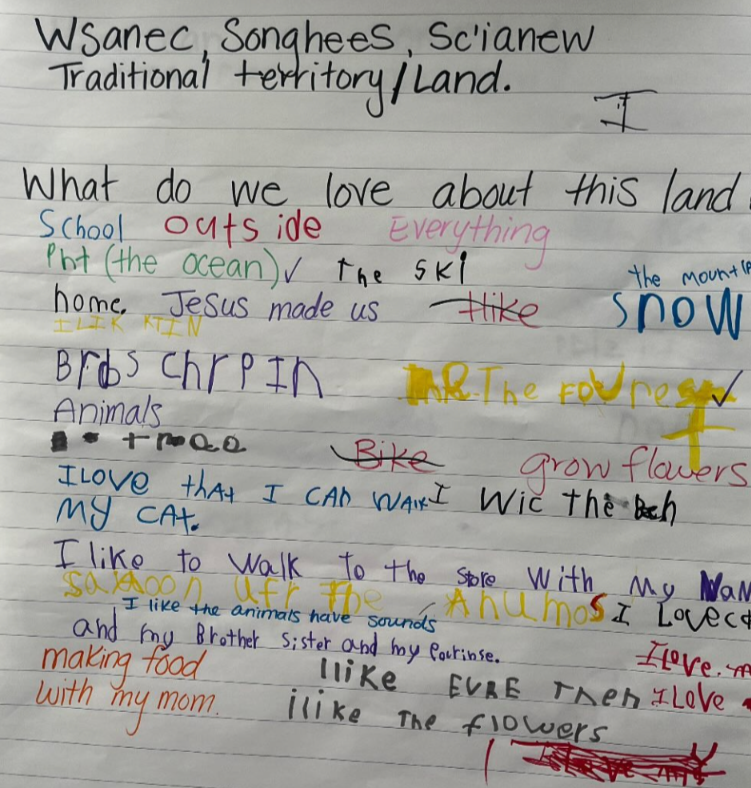
One activity in the elementary resource asks students to reflect on a treasured place. It might be a beach, forest, park, backyard or another place where they feel happy, safe or connected.
This gives students a personal and accessible way to begin thinking about land, place and belonging.
It also helps them understand that land is not simply the ground underneath us. Land is connected to relationships, memories, histories, knowledge and responsibilities.
For younger learners, my Kindergarten Land Acknowledgement Activities use nature walks, mapping, movement, art and observation to introduce these ideas in a developmentally appropriate way.
Learn About Local Indigenous Nations
Land acknowledgement activities should always include learning about the specific Indigenous NaLand acknowledgement activities should include learning about the specific Indigenous Nation or Nations connected to the local area.
Whenever possible, use information from official Nation, Tribal Council, cultural centre, friendship centre or local Indigenous education websites. These sources can help you find accurate Nation names, pronunciations and information about the lands where your school is located.
Students should also understand that Indigenous Peoples are not only part of history. Indigenous Nations are present day communities with longstanding and ongoing relationships with their lands.
You might explore questions such as:
- Which Indigenous Nation or Nations are connected to this area?
- What names do those Nations use for themselves?
- How are those names pronounced?
- What is the original or traditional name of this place?
- Is this area part of a treaty?
- What information has the Nation chosen to share publicly?
- What can we learn from official local Indigenous sources?
- How can our class continue learning throughout the year?
Teachers do not need to position themselves as experts on a local Nation. The goal is to help students ask thoughtful questions and find reliable, Nation-specific information.
How to Create a Class Land Acknowledgement With Students
Once students have learned about the land and the local Indigenous Nations connected to it, they can begin creating a class land acknowledgement.
Start by discussing what the acknowledgement should include. Depending on your location and the age of your students, your class might:
- Name the Indigenous Nation or Nations connected to the land
- Recognize their longstanding and present-day relationships with the land
- Express gratitude for the opportunity to live and learn there
- Reflect on the class’s relationship with the land
- Include something students want to continue learning
- Identify an action or responsibility the class wants to carry forward
Students can contribute ideas while the teacher helps organize them into one shared acknowledgement.
Creating the acknowledgement together gives students a deeper understanding of the words. They know why particular ideas were included because they participated in the learning, discussion and writing.
The acknowledgement does not need to remain unchanged forever. As students learn more, revisit it together. Consider whether the words still represent the class’s understanding and commitments.
A Land Acknowledgement Lesson Plan for Elementary Students
If you are looking for a ready to use land acknowledgement lesson plan, the elementary resource breaks the learning into manageable activities.
The resource includes:
- An introduction to land acknowledgements
- Learning about why land acknowledgements matter
- Exploring what belongs in an acknowledgement
- Learning about the lands where students live and learn
- A “My Treasured Place” reflection activity
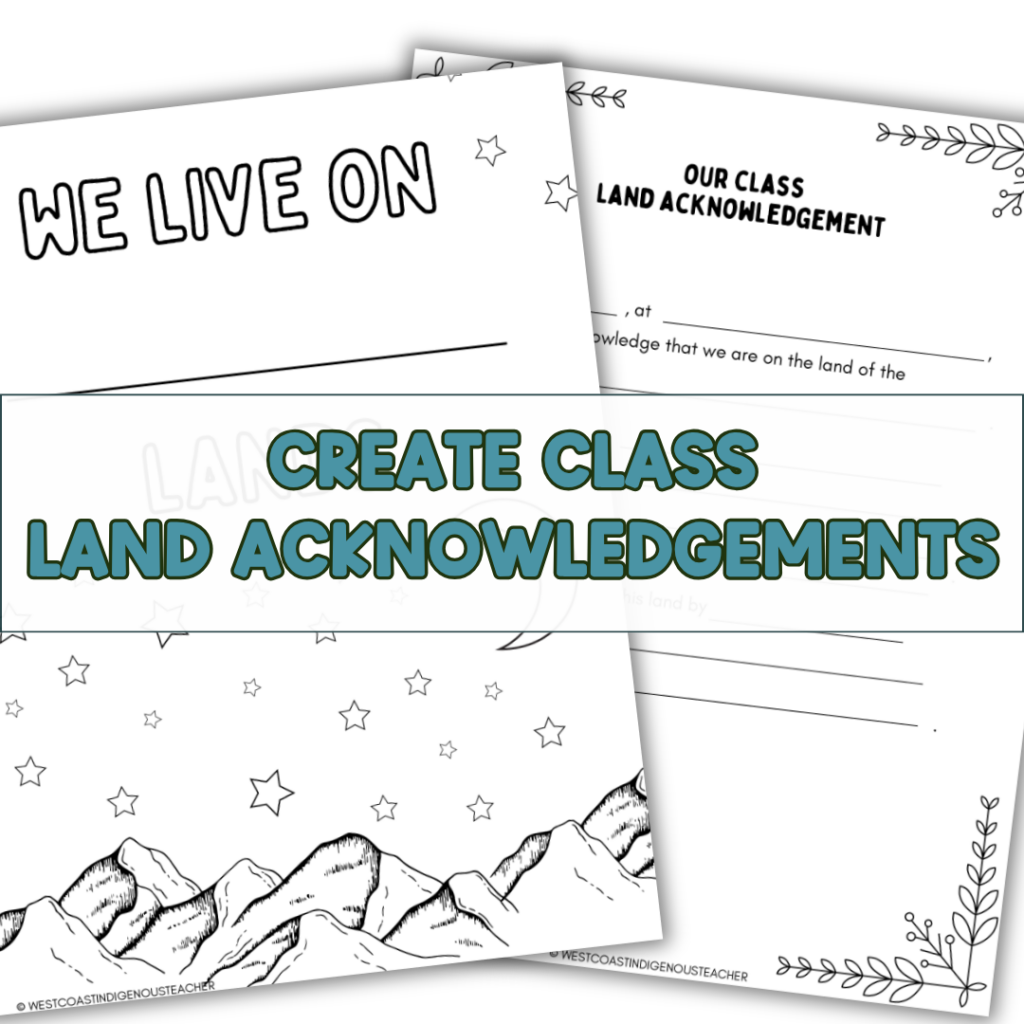
- A collaborative class land acknowledgement
- A “We Live On…” colouring page
- An “Our Class Land Acknowledgement” bulletin board
- Nature-themed bulletin board pieces
The activities can be completed over several lessons. You do not need to fit the learning, local research, reflection and writing into one class period.
👉 Explore the Elementary Land Acknowledgement Activity
Why This Approach Works for Younger Students
A land acknowledgement for elementary students needs to be concrete, personal and accessible.
Young students learn through conversation, drawing, writing, movement and connections to their own experiences. These activities give students several ways to participate, even if they are not yet confident writers.
Students can:
- Draw a place that is meaningful to them
- Share observations about the natural world
- Explore maps of where they live and learn
- Contribute ideas during class discussions
- Learn the names of local Indigenous Nations
- Help create a collaborative acknowledgement
Their completed work can be added to the included land acknowledgement bulletin board. This keeps the learning visible and gives the class something they can revisit throughout the year.
The bulletin board is not simply classroom decoration. It becomes a reminder of what students learned about land, local Indigenous Nations and their shared responsibilities.
Make Land Acknowledgements More Than Words
The learning should not end when the class finishes writing its acknowledgement.
Return to it throughout the year. Continue learning about local Indigenous Peoples through books, art, language, history and present-day voices. Revisit the ideas and commitments students included.
You might ask:
- What have we learned since creating our acknowledgement?
- Are there words we understand differently now?
- What have we learned about the local Indigenous Nations?
- How have we shown care for the land?
- What else would we like to learn?
- Are our actions reflecting the words we say?
- Does our acknowledgement need to change as our learning grows?
A land acknowledgement cannot do the work of reconciliation on its own. It can, however, become a meaningful starting point for continued learning, relationships, reflection and action.

Find the Right Land Acknowledgement Resource
Choose the version created for your students:
- Land Acknowledgement Activities for Kindergarten and Early Primary
- Land Acknowledgement Activity for Elementary Students
- Land Acknowledgement Activities for Intermediate Students
- Land Acknowledgement Activity for Middle and High School
These land acknowledgement activities for students are designed to help learning come before the words. Each resource gives students age-appropriate ways to explore land, local Indigenous Nations, reflection and responsibility.
Continue Your Indigenous Education Learning
You may also enjoy:
10 Indigenous Education Resources Every Teacher Should Have
How to Start Teaching Indigenous Content